
Barcelona Travel Guide: Everything You Need to Know Before You Go
This blog post may contain affiliate links, meaning that if you click on a link and make a purchase, I may receive a small commission at no extra cost to you. I only recommend products and services I truly believe in and use myself.
Barcelona is one of those cities that genuinely lives up to the hype — which is saying something, because the hype is considerable. It has world-class architecture, a food scene that punches well above its weight, beaches that most European capitals would kill for, and a street energy that is entirely its own. It is also, depending on when and how you visit, genuinely overwhelmed by tourism in ways that are worth understanding before you arrive.
Barcelona is a great jumping off point for cruises. I first visited Barcelona on a Windstar Cruise. If you’re cruising into or out of this great Spanish city, it’s worth booking a couple of extra days to explore.
I want to give you an honest picture of the city — the extraordinary parts and the complicated parts — so you can visit in a way that serves you well and respects the place you’re visiting. Here’s everything you need to know.
A Brief History of Barcelona
Barcelona’s story starts more than 2,000 years ago. The Romans founded a settlement called Barcino here around 10 BC, and remnants of that original city still exist beneath the Gothic Quarter — you can walk through them at the Barcelona History Museum and see Roman-era streets, mosaic floors, and wine production facilities that predate most of Western history as we typically think about it.
After the fall of Rome, Barcelona passed through Visigoth and Moorish hands before becoming the capital of the County of Barcelona in the 9th century. Under the Crown of Aragon, the city grew into one of the most powerful trading centers in the Mediterranean. The 14th and 15th centuries produced much of what you see in the Gothic Quarter today — the cathedral, the Plaça del Rei, the medieval palaces along Carrer dels Montcada.
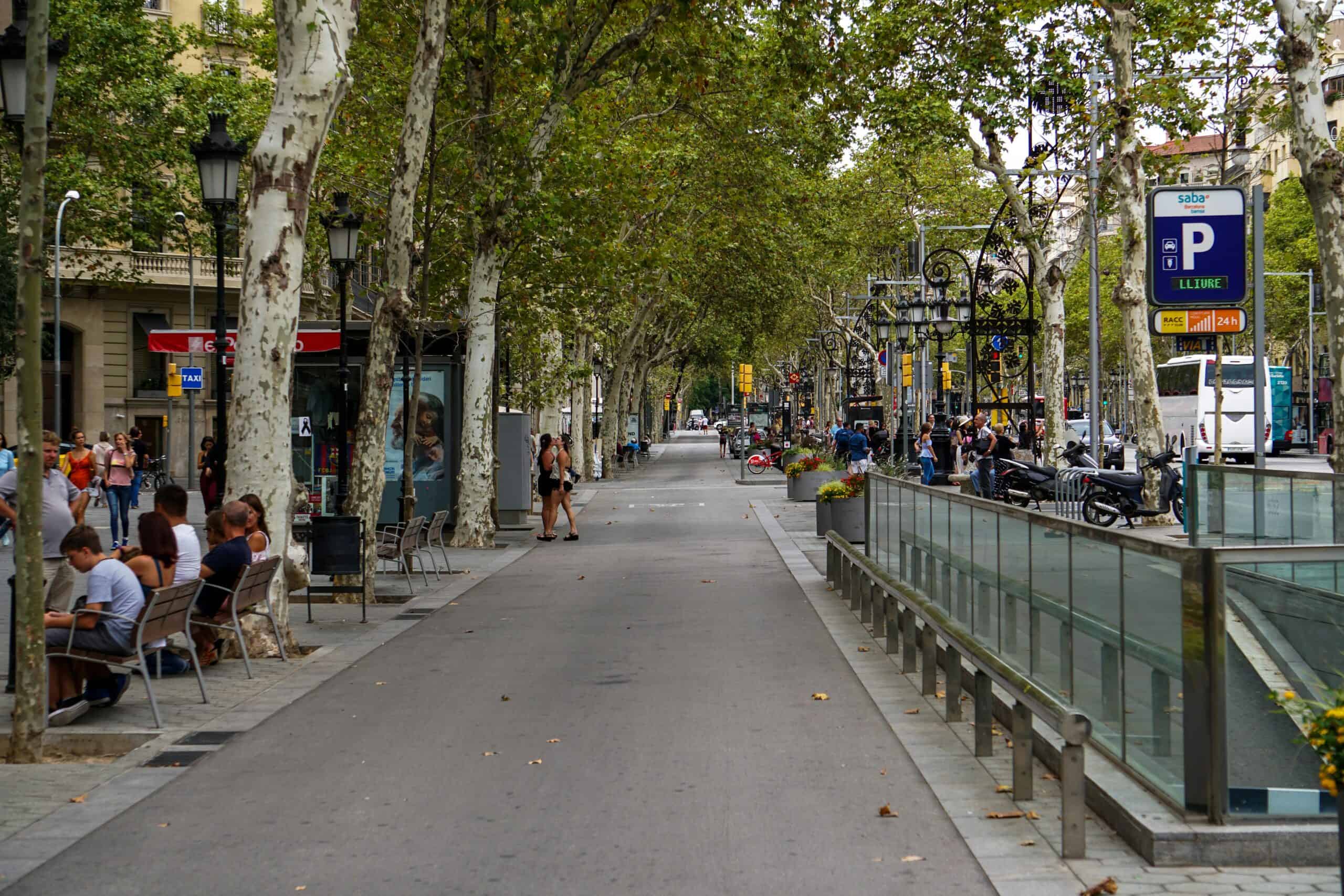
The 19th century brought industrial prosperity and the city’s most dramatic physical transformation: the Eixample. In 1859 engineer Ildefons Cerdà designed an entirely new neighborhood to relieve the overcrowding of the old city — a revolutionary grid of octagonal blocks with chamfered corners that allowed light and air into every intersection. The Eixample is where Antoni Gaudí left his most visible mark, and it remains one of the most livable and beautiful urban planning achievements in European history.
The 20th century brought the Spanish Civil War, Franco’s dictatorship, the suppression of Catalan culture and language, and eventually — after Franco’s death in 1975 — a remarkable cultural and political renaissance. The 1992 Olympic Games transformed the waterfront, created the Vila Olímpica neighborhood, and announced Barcelona’s arrival as a modern European city to the rest of the world.
Today Barcelona is the capital of Catalonia, a region with its own language, culture, and complicated political relationship with the Spanish central government. The Catalan independence movement remains active and is worth understanding before you visit — not because it affects tourists directly, but because it shapes the city’s identity in ways that will become apparent once you’re there.
Best Things to Do in Barcelona
Sagrada Família
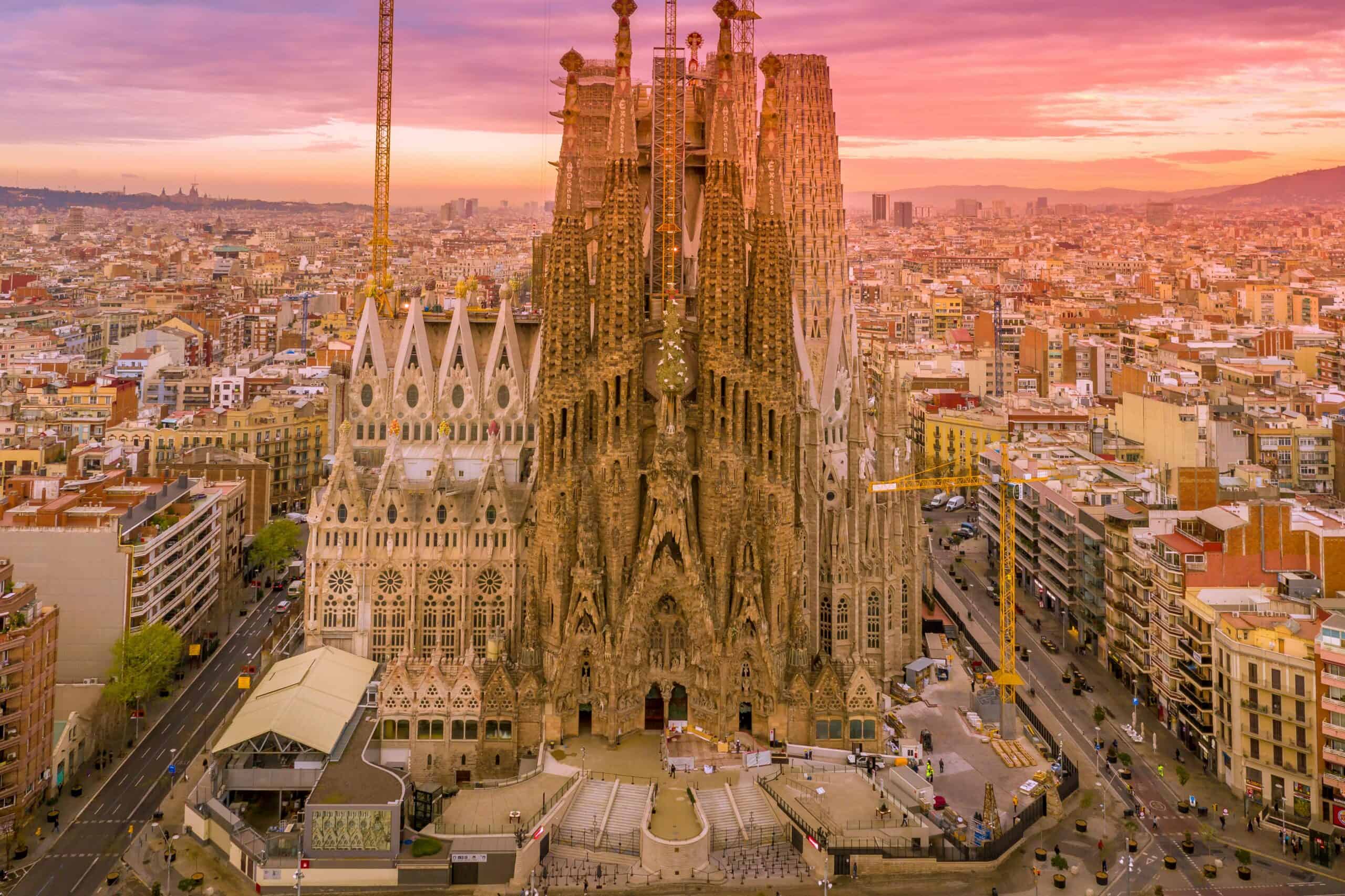
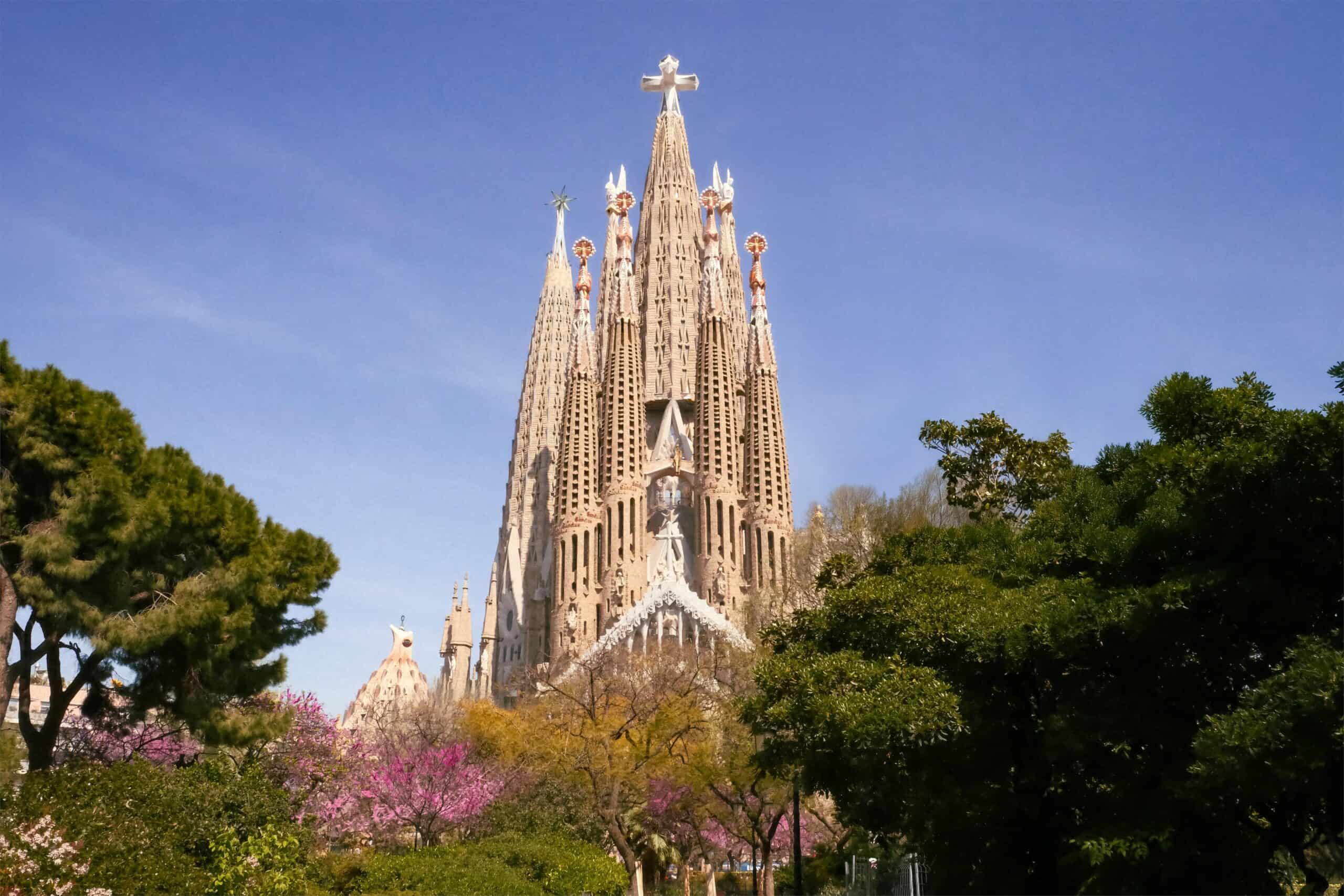
Antoni Gaudí’s unfinished basilica is the most visited monument in Spain and one of the most extraordinary buildings on earth. Construction began in 1882 and continues today, funded entirely by visitor admissions — the current projected completion date is 2026, marking the centenary of Gaudí’s death, though some elements will extend beyond that.
Standing inside the Sagrada Família for the first time is genuinely overwhelming. The interior forest of branching stone columns, the kaleidoscopic light through the stained glass, the scale of the whole thing — it doesn’t feel like a building. It feels like being inside a living organism.
Book tickets well in advance — months ahead in summer. Include the tower access in your ticket for views over the city.
→ For the best experience, book a Skip the Line tour with a guide
Park Güell
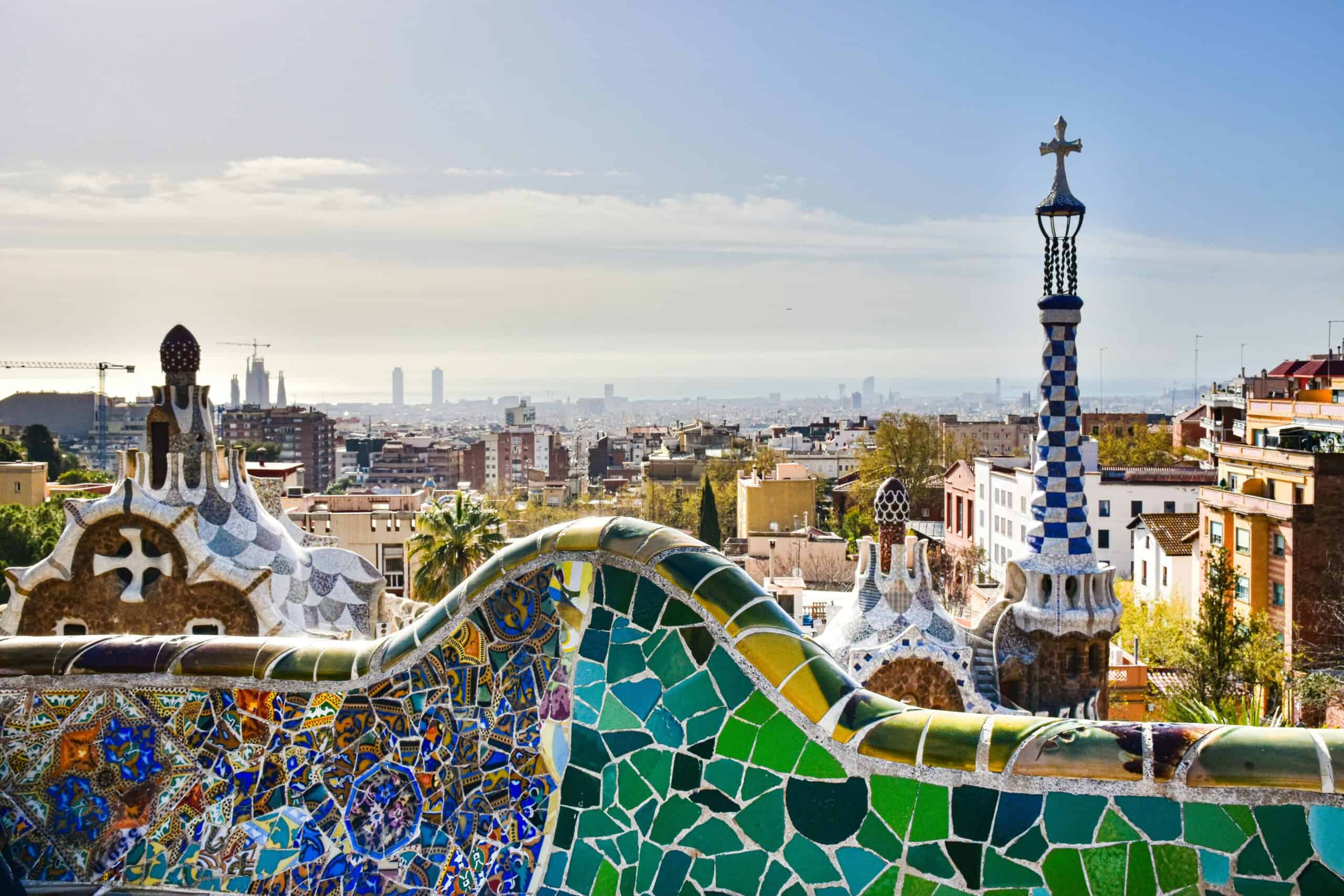
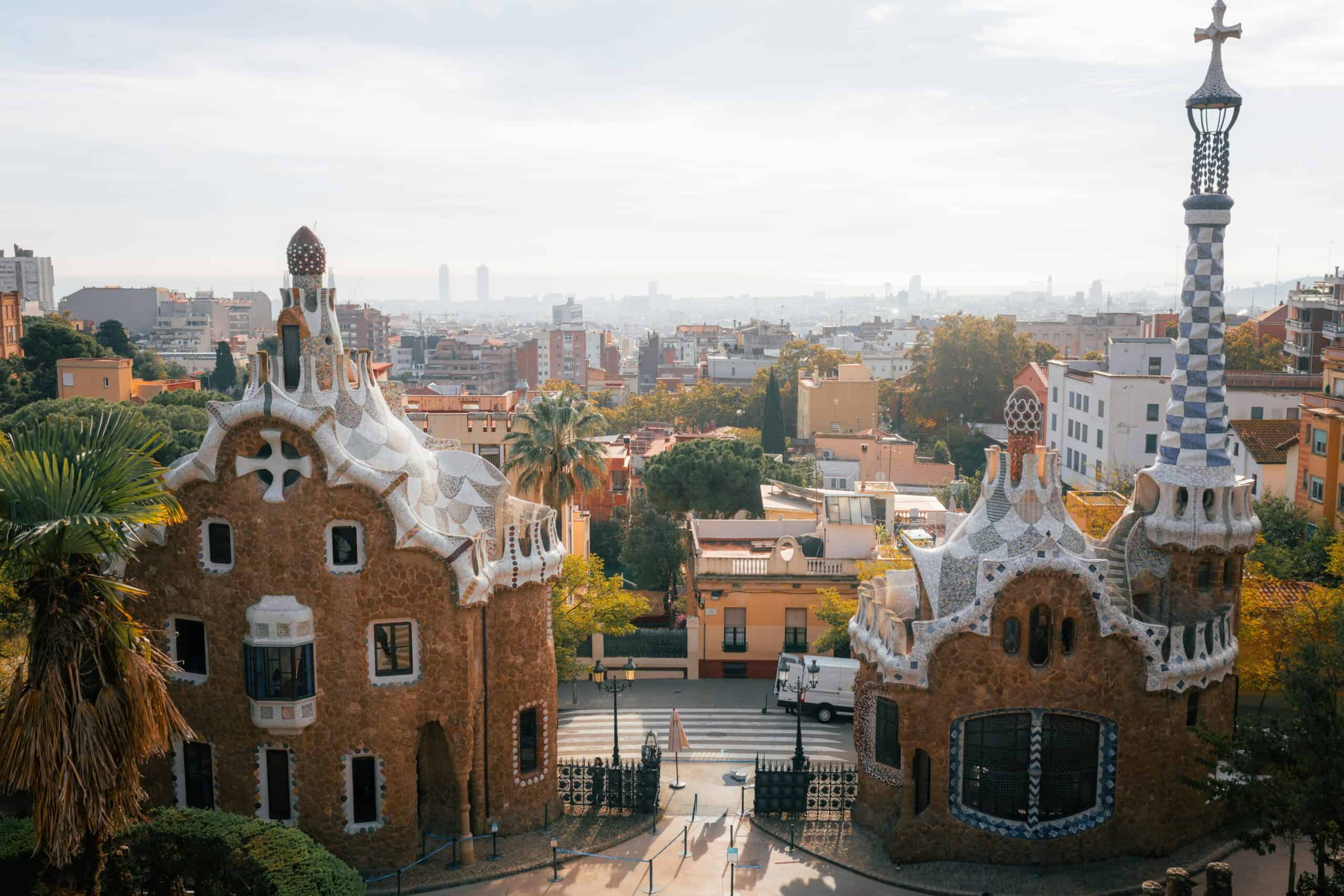
Gaudí’s public park in the hills above central Barcelona is one of the most visually distinctive places in the city — mosaic terraces, organic stone archways, a gingerbread gatehouses, and panoramic views of Barcelona and the sea below. The central monumental zone requires a timed ticket purchased in advance. The surrounding park is free and worth exploring even if the ticketed zone is sold out.
Go early. The monumental zone opens at 9:30am and the first hour is dramatically less crowded than midday.
→ See why these park tour sell out continuously and book early.
The Gothic Quarter
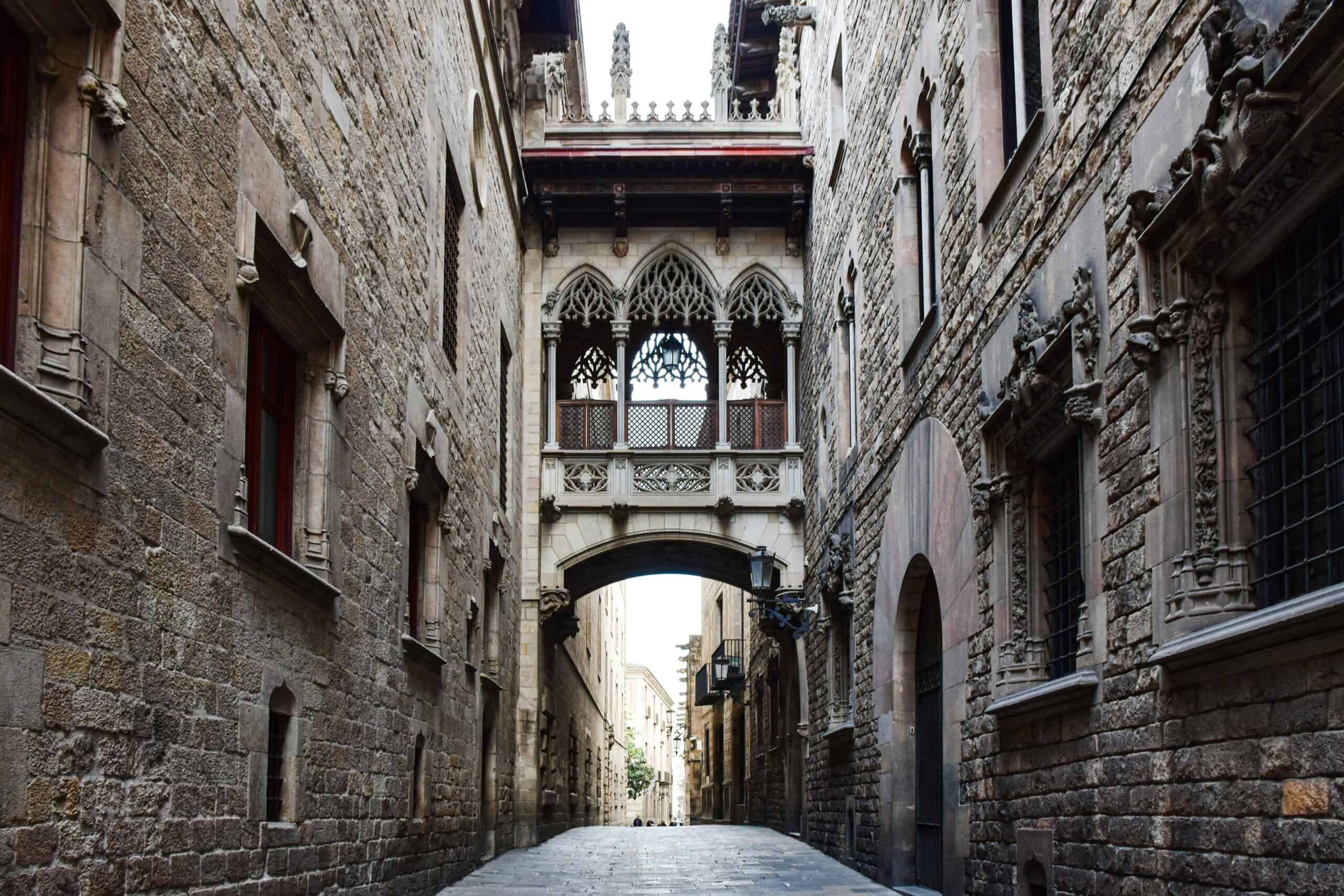
The Barri Gòtic is one of the best-preserved medieval neighborhoods in Europe and also one of the most confusing to navigate — which is part of the point. Put your phone in your pocket and wander. You’ll find the Barcelona Cathedral (free entry in the early morning), the Plaça del Rei where Columbus reportedly presented his case to the Catholic Monarchs after returning from the Americas, the remains of a Roman temple to Augustus tucked into a medieval courtyard, and more café terraces than you’ll have time to sit at.
→ Find the perfect walking tour of the Gothic Quarter including private and small group tours
Palau Güell
Gaudí’s first major commission, built for his patron Eusebi Güell in the 1880s, sits just off La Rambla and is criminally undervisited compared to the Sagrada Família and Park Güell. The building is extraordinary — a proto-Modernista mansion with a central hall rising six floors under a parabolic dome, rooftop chimneys encrusted with broken tile mosaic, and ironwork that looks like it belongs in a fever dream. Ticket prices are modest and queues are manageable.
Casa Batlló and La Pedrera
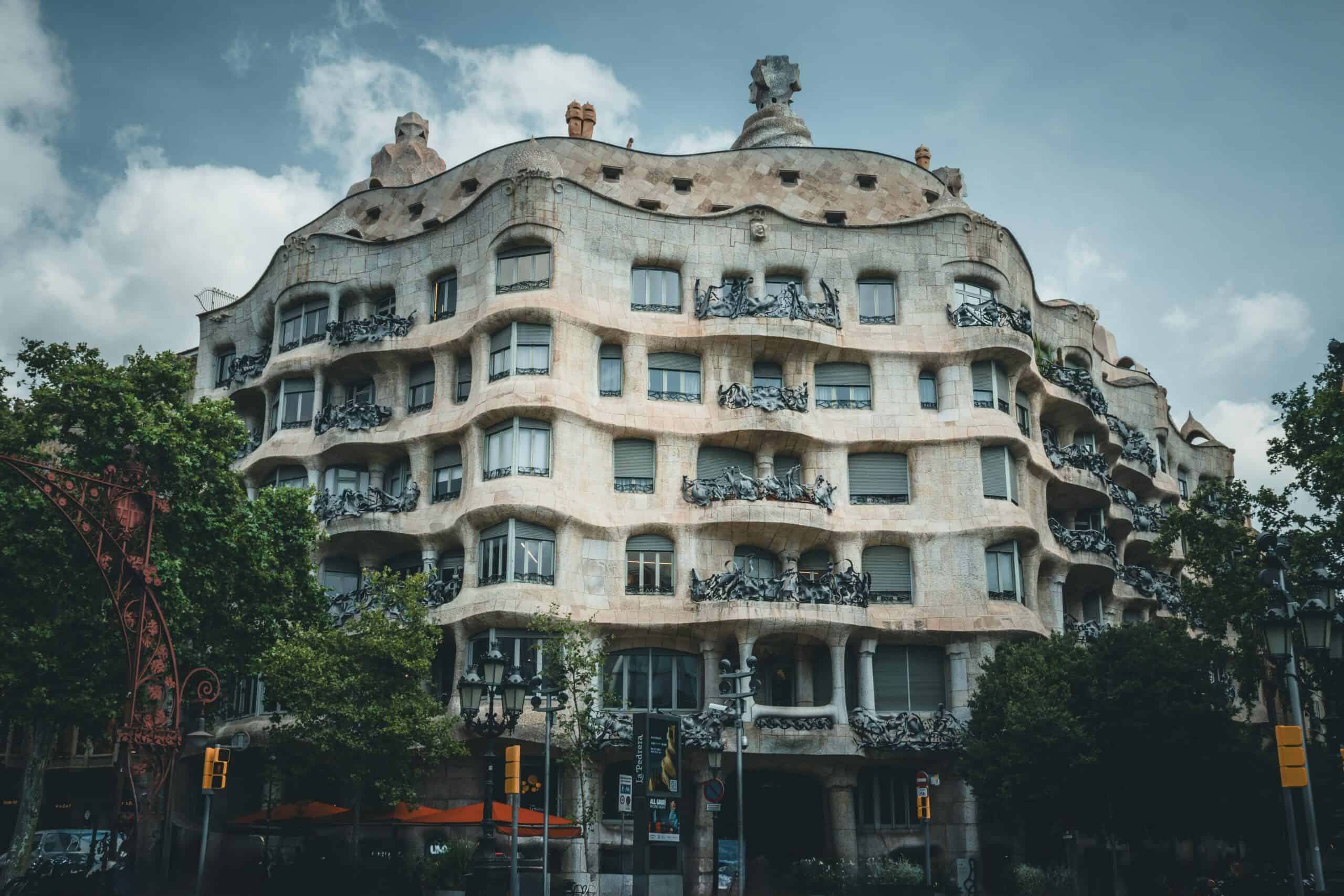
Both are Gaudí buildings on Passeig de Gràcia, within a block of each other, both open to visitors. Casa Batlló’s facade is the more famous — a shimmering dragon-scale mosaic with bone-like balconies — but La Pedrera (Casa Milà) has the better rooftop, an undulating landscape of chimneys and terraces with views across the Eixample toward the sea. If you only do one, do La Pedrera for the roof. If you do both, do Casa Batlló first for the interior. Book tickets for both in advance.
→ Don’t miss the most memorable experience ever and book a nighttime tour
The Picasso Museum
Housed in five connected medieval palaces on Carrer dels Montcada in El Born, the Picasso Museum holds one of the most important collections of Pablo Picasso’s early work in the world. The building alone is worth the visit — the Gothic courtyards and stone staircases are extraordinary. The collection traces Picasso’s development from his academic training in Barcelona through his Blue and Rose periods and into Cubism. The museum is closed on Mondays.
→ Trust me, you’ll want to book the Skip the Line tour.
Fundació Joan Miró
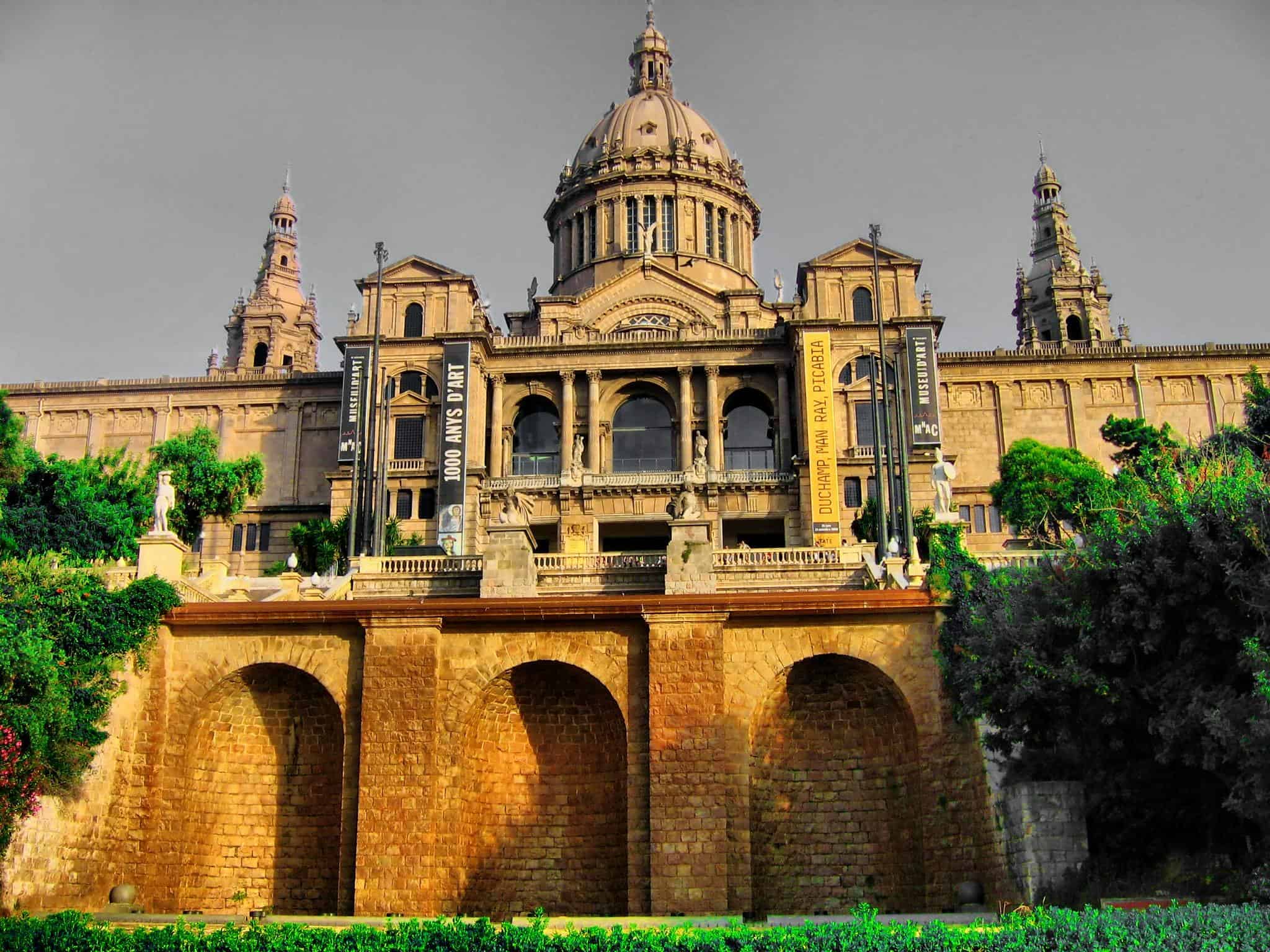
On the slopes of Montjuïc, the Fundació Joan Miró is one of the great modern art museums in Europe and consistently underrated relative to the Picasso Museum. The building — designed by Miró’s friend Josep Lluís Sert — is a masterpiece of rationalist architecture, flooded with natural light. The collection spans Miró’s entire career and includes sculptures, tapestries, and works on paper alongside the paintings. The rooftop sculpture terrace has views over the city. Take the funicular from Paral·lel metro station. Worth every minute.
La Barceloneta and the Beaches
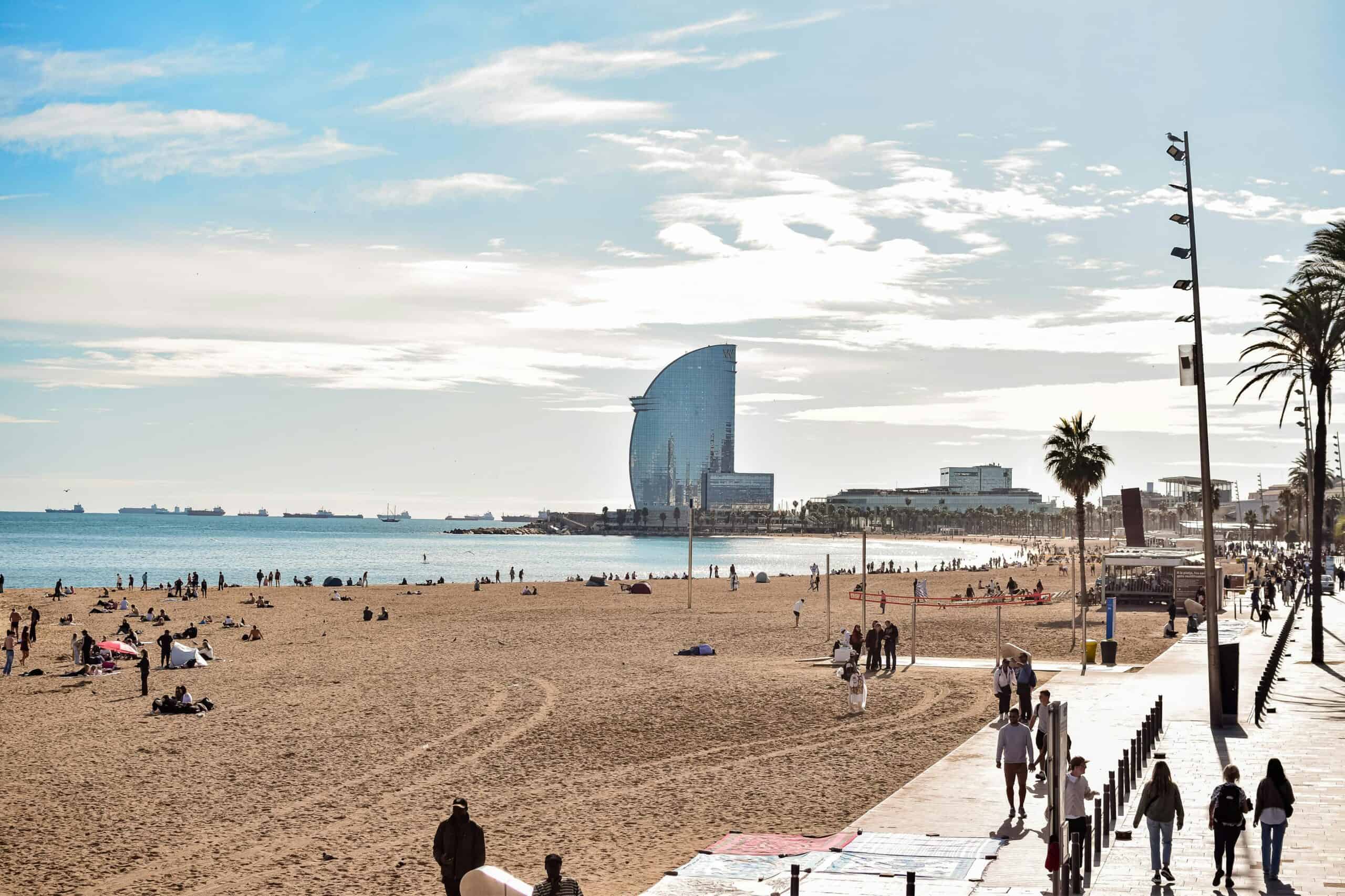
Barcelona has approximately 4.5 kilometers of city beaches, which remains slightly surprising even if you know it’s true. La Barceloneta is the most central and most crowded beach — fine for a swim and a beer, overwhelming in July and August. The beaches to the northeast — Bogatell, Mar Bella, Nova Icaria — are less crowded and more local.
The waterfront promenade (Passeig Marítim) is excellent for an early morning walk or run before the day heats up. The Barceloneta neighborhood behind the beach has some of the city’s best seafood restaurants and a genuinely local feeling that contrasts sharply with the tourist-facing La Rambla a kilometer away.
El Born and Santa Maria del Mar
El Born is one of Barcelona’s most beautiful neighborhoods — medieval streets, independent boutiques, wine bars, and at its center, the Gothic church of Santa Maria del Mar. Built between 1329 and 1383 by the merchants and workers of the Ribera neighborhood, Santa Maria del Mar is one of the finest examples of Catalan Gothic architecture in existence. Unlike the cathedral in the Gothic Quarter, it is relatively undecorated, which makes its proportions and its light feel almost impossibly serene. Entry is free in the early morning. Go then.
Camp Nou
FC Barcelona’s stadium is one of the largest in the world and a genuine pilgrimage site for football fans. The museum and stadium tour is worth doing even if football is not your primary interest — the scale of the place is staggering and the museum traces a century of Catalan sporting culture. If you can get match tickets, do. The experience of Camp Nou on match day is something genuinely memorable. Note: Camp Nou is currently undergoing major renovation and capacity and access arrangements may vary. Check current status before visiting.
→ Book one of these top-rated and discounted tours before they sell out
Where to Stay in Barcelona (By Neighborhood)
Choosing the right neighborhood in Barcelona makes a noticeable difference in how your trip feels. Some areas are ideal if you want to walk everywhere and be surrounded by architecture and culture, while others are better for food, nightlife, or beach access. Here’s how to pick the right base, along with hotels that consistently book up.
El Born (Best for Walkability + Food + Atmosphere)
If you want Barcelona to feel intimate, historic, and effortlessly walkable, El Born is one of the best places to stay. You’re steps from La Boqueria, the Gothic Quarter, and some of the city’s best tapas bars, all within a maze of narrow, lively streets.
- Hotel Rec Barcelona
A stylish adults-only hotel with a rooftop pool and bar, perfect if you want a social atmosphere without sacrificing location.
→ Check rates for your dates before prices climb - Miiro Borneta
Overlooking Parc de la Ciutadella, this hotel blends comfort and convenience with a location that makes exploring the city incredibly easy.
→ See if your travel dates are still available - Chic & Basic Born Boutique Hotel
A design-forward, budget-friendly option with a fun, modern vibe in the heart of one of Barcelona’s most charming neighborhoods.
→ Lock in your room while it’s still open
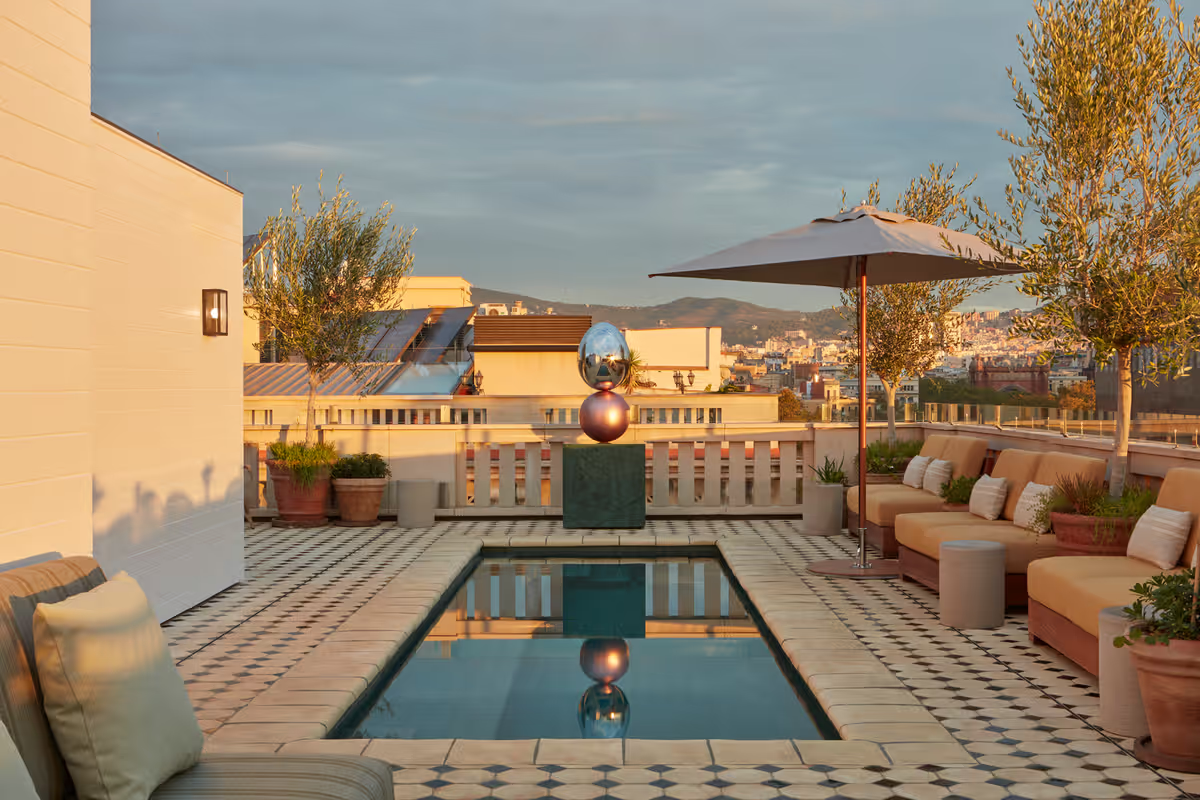
Eixample (Best for First-Time Visitors + Architecture + Central Location)
Eixample is where Barcelona opens up, with wide boulevards, iconic architecture, and easy navigation. You’re close to major landmarks like Sagrada Família and high-end shopping along Passeig de Gràcia, making it ideal for a first visit.
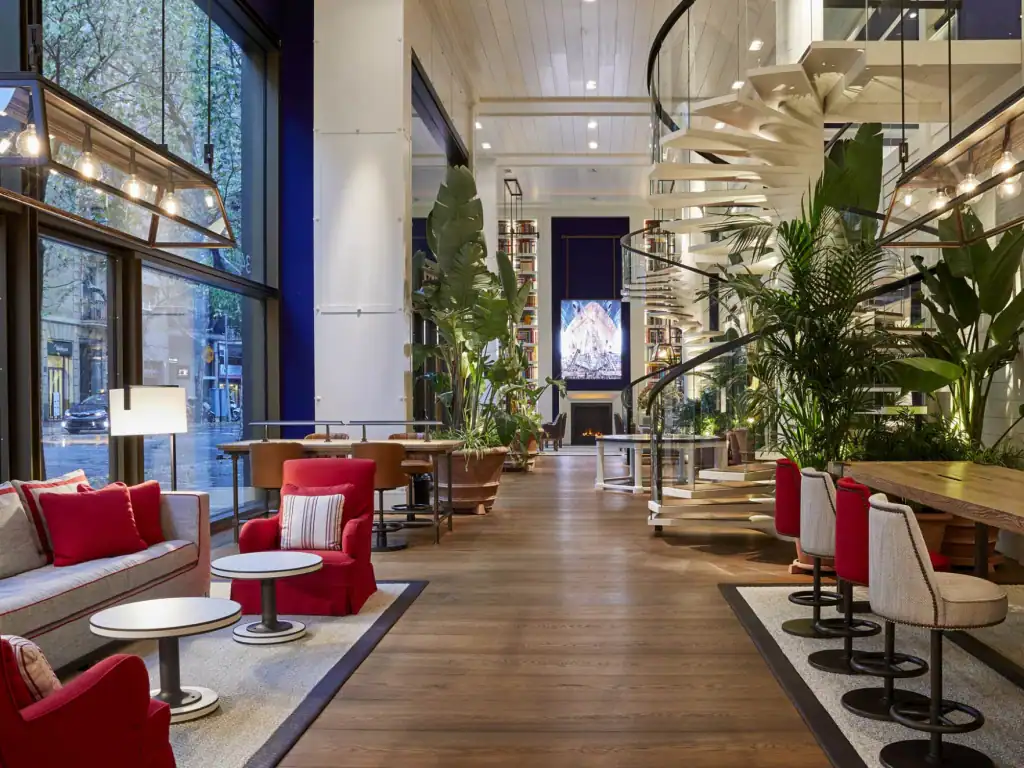
- Hotel El Palace Barcelona
A classic luxury hotel with a rooftop garden and pool, offering an elevated experience right in the center of the city.
→ Find the best rate for your stay right now - Hotel Seventy Barcelona
This was one of my favorite stays! Stylish, genuinely design-forward interiors, a rooftop bar that’s excellent for evening cocktails, and personalized service that feels more like a small property. Central location ideal for exploring on foot.
→ Book now if you want to stay in this area - Room Mate Gerard
Bright, modern, and consistently popular, this hotel delivers great value with a rooftop terrace in a prime location.
→ Reserve your spot in this location before it sells out - H10 Casa Mimosa
A stylish boutique stay near Casa Milà, with a peaceful garden and pool that feels like a hidden retreat in the city.
→ Compare rooms and availability for your trip
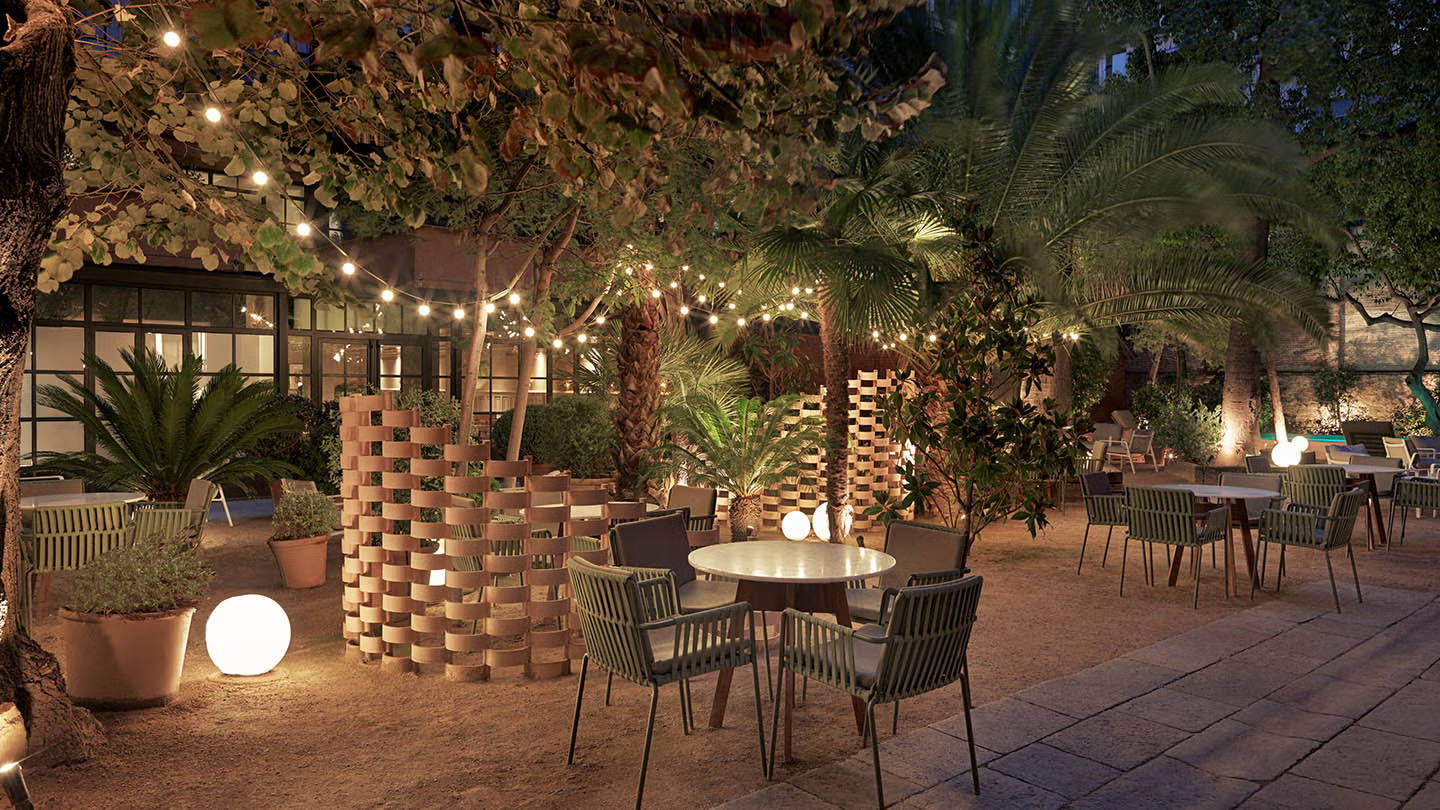
Gothic Quarter (Best for History + Landmarks + First-Time Energy)
Staying in the Gothic Quarter puts you in the middle of Barcelona’s oldest and most atmospheric area. It’s incredibly walkable, with landmarks like Barcelona Cathedral and endless cafés, though it can be busy and lively at night.
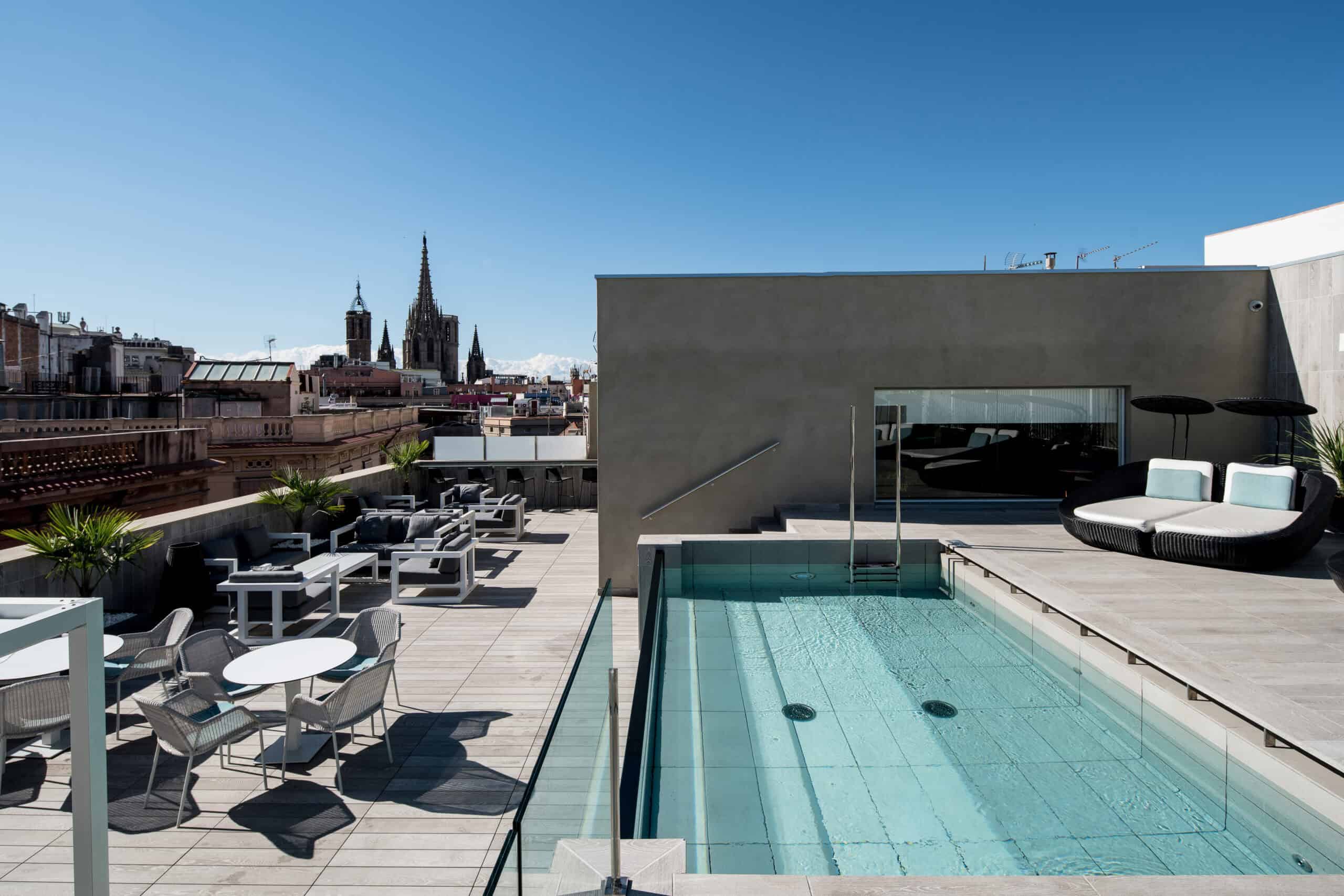
Top hotels:
- Lamaro Hotel Barcelona
Known for its direct views of the cathedral, this hotel is hard to beat if you want a classic Barcelona setting.
→ See current pricing and room options - H10 Madison
A polished boutique hotel with a rooftop terrace and pool, offering a quieter retreat within the historic center.
→ Grab a room here before it’s gone - Catalonia Magdalenes
A consistent favorite for its rooftop pool and excellent location, ideal for walking to major sights.
→ Check availability for your exact travel dates
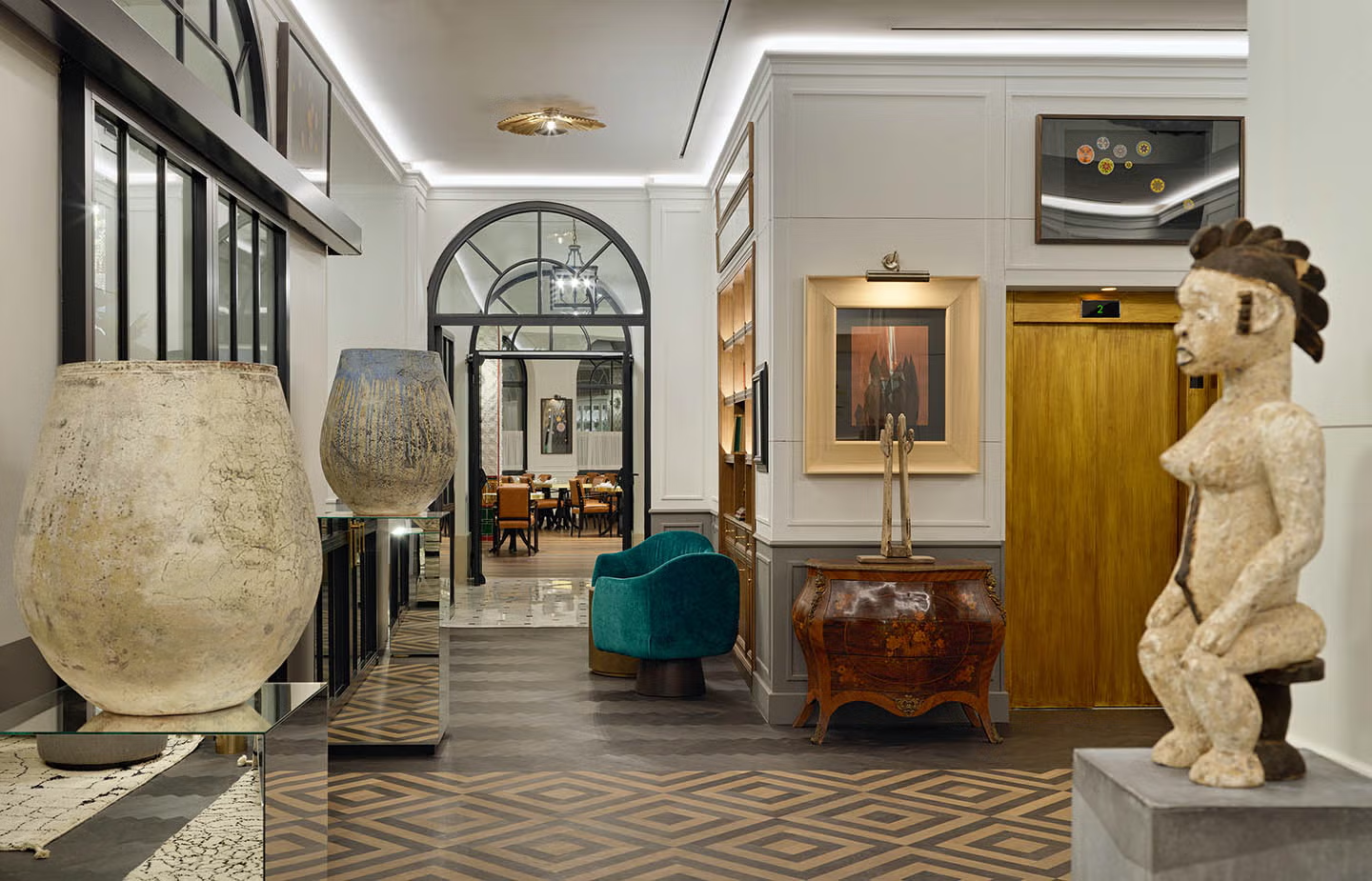
Gràcia (Best for Local Feel + Cafés + Slower Pace)
Gràcia feels more like a small town than a major city neighborhood, with leafy squares, independent shops, and a strong local vibe. It’s a great choice if you want to stay somewhere quieter while still being a short metro ride from the main attractions.
Top hotels:
- Hotel Casa Fuster
A historic modernist building turned luxury hotel, offering elegance and easy access to both Gràcia and Eixample.
→ Secure your stay in one of Barcelona’s best locations - Radisson Blu 1882 Hotel Barcelona Sagrada Familia
A modern hotel with a rooftop pool and views of Sagrada Família, ideal if you want comfort with a slightly more relaxed setting.
→ See why this hotel books out so quickly
Barceloneta (Best for Beach + Seafood + Summer Trips)
If your Barcelona trip includes beach time, Barceloneta is the obvious choice. You’ll be steps from the Mediterranean, with easy access to seafood restaurants and a lively promenade, though it’s a bit farther from historic sights.
Top hotels:
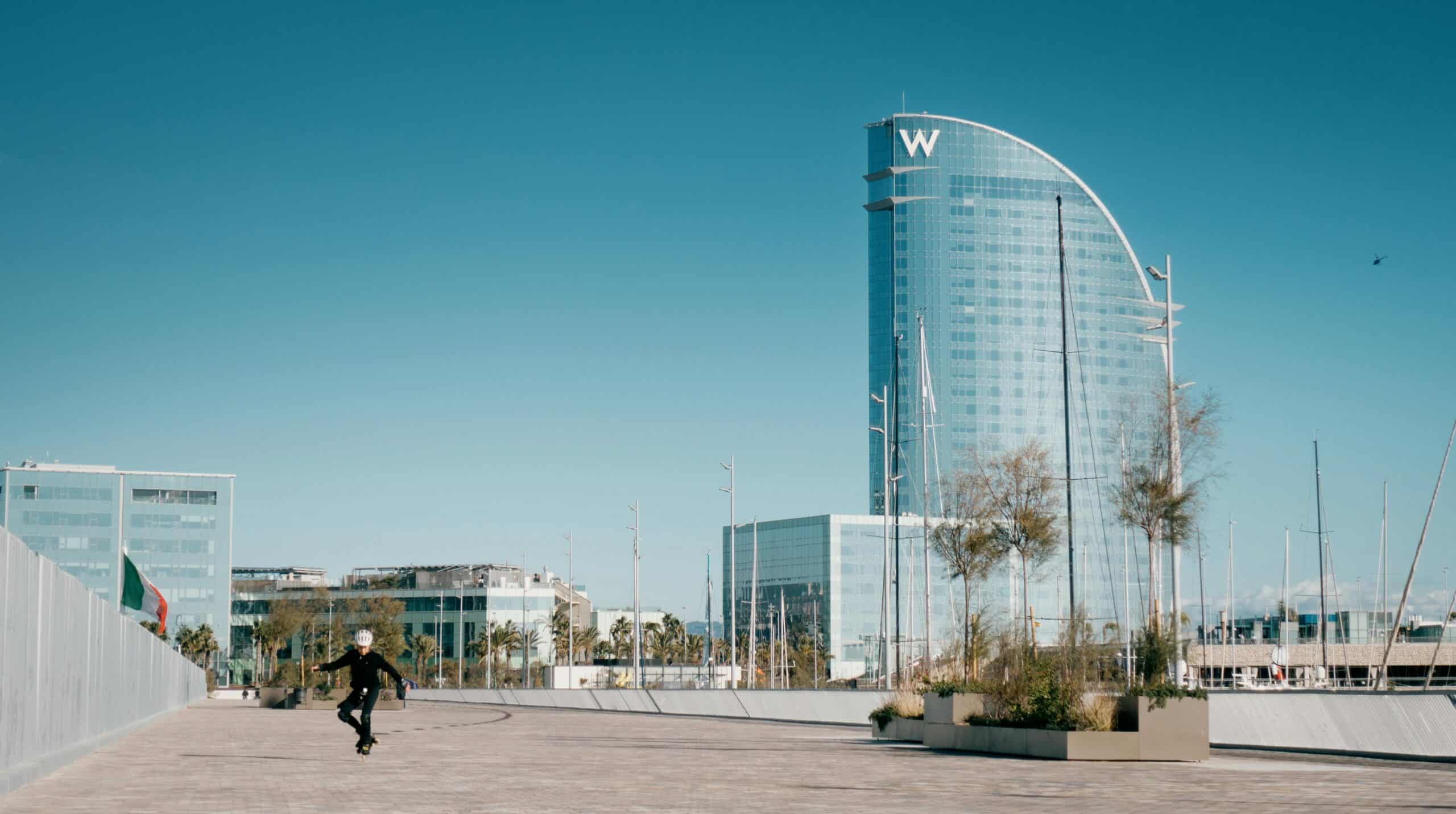
- W Barcelona
One of the most recognizable hotels in the city, known for its beachfront location, rooftop pool, and vibrant social scene.
→ This is a popular one! Book early! - Hotel Arts Barcelona
A high-end stay with ocean views, a renowned spa, and multiple restaurants, perfect if you want a resort-style experience in the city.
→ Book this one before it sells out
Quick Comparison
If you want to walk everywhere and be surrounded by food and culture, El Born is hard to beat. For a polished, central base with easy navigation, Eixample is the safest choice. The Gothic Quarter delivers atmosphere and history but comes with crowds, while Gràcia offers a quieter, more local feel. Barceloneta is best if your priority is beach time and a more relaxed, coastal vibe.
For most first-time visitors, Eixample or El Born tend to deliver the best balance of location, walkability, and overall experience.
Barcelona’s Food Scene
Barcelona’s food scene is one of the best in Europe, full stop. It operates on several levels simultaneously — the casual tapas bar culture that locals actually live in, the market-driven cooking that made the city internationally famous, the avant-garde fine dining that grew out of Ferran Adrià’s elBulli revolution, and a new generation of chefs doing genuinely interesting things in neighborhoods most tourists never reach.
The tapas culture is the foundation of eating in Barcelona. A proper tapas meal is not a quick snack — it’s a long, leisurely procession of small plates with wine or beer, eaten standing at a bar or crowded around a small table, usually starting no earlier than 9pm. The social ritual is as important as the food. Don’t rush it.
→ Book a food tour of Barcelona before they sell out your dates
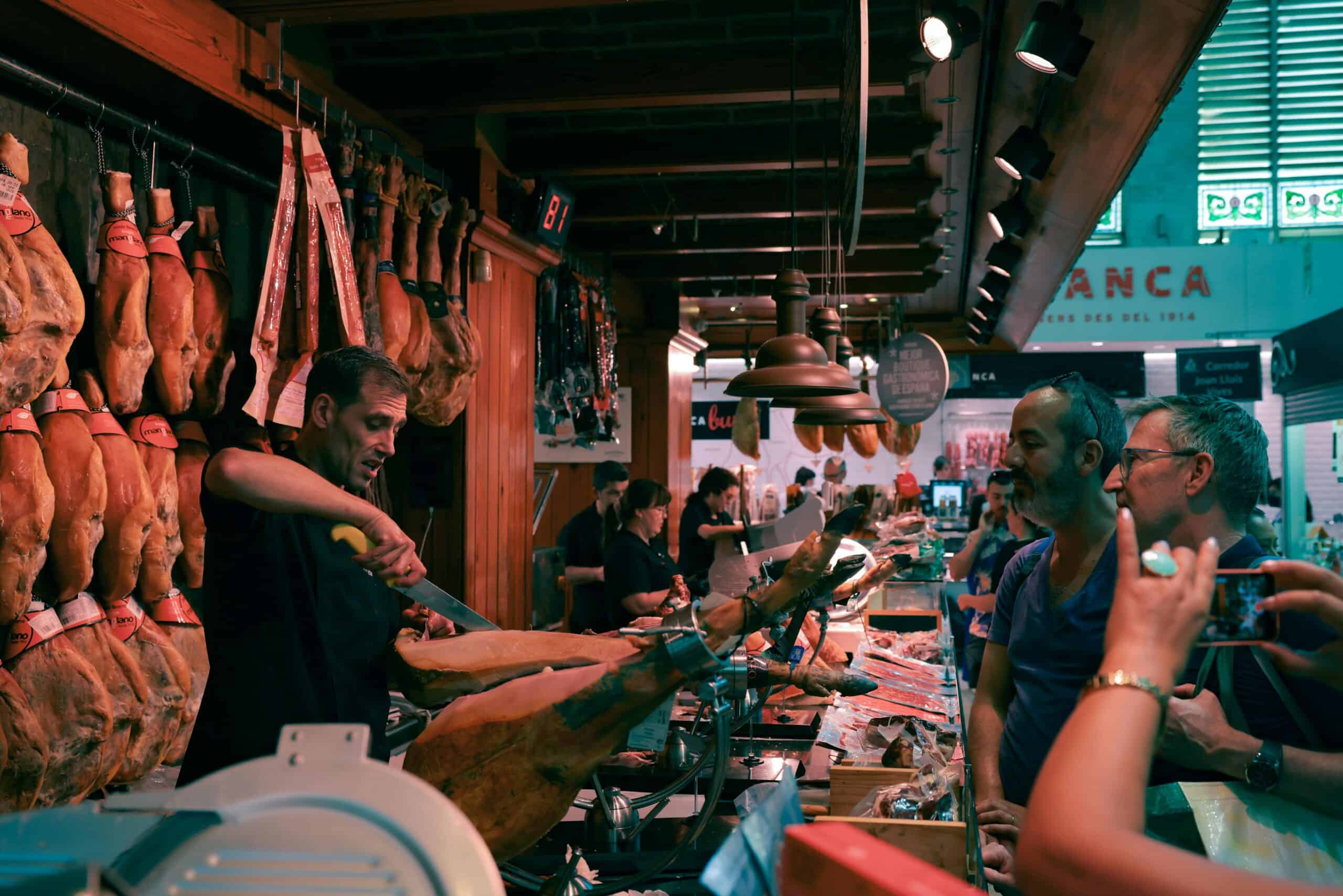
What to eat in Barcelona:
Pa amb tomàquet — Catalan bread rubbed with ripe tomato and olive oil. Simple, perfect, everywhere. This is the foundation of Catalan cooking and the thing you’ll miss most when you leave.
Patatas bravas — Fried potatoes with spicy tomato sauce and aioli. Every bar has them. Quality varies enormously. The best ones have a genuine crisp exterior and are served immediately.
Croquetas — Fried béchamel croquettes, usually filled with jamón or salt cod. A good croqueta is one of the great pleasures of Spanish bar food.
Bombas — A Barcelona-specific specialty from La Barceloneta. Meat-filled potato balls, deep fried, served with alioli and a spicy sauce. Named, allegedly, after a 19th century anarchist bomb.
Fideuà — Barcelona’s answer to paella, made with thin noodles instead of rice, cooked in seafood broth and topped with alioli. Arguable whether it’s better than paella. I think it is.
Escalivada — Roasted and peeled red peppers and eggplant, dressed with olive oil. A quintessential Catalan dish that appears everywhere and is somehow always better than you expect.
Crema catalana — The original custard with a caramelized sugar crust that the French later rebranded as crème brûlée. Order it in Barcelona to settle the historical record.
Where to eat in Barcelona:
The most important rule: don’t eat on La Rambla. The restaurants directly on La Rambla are almost universally overpriced and mediocre. Walk one block in either direction and the quality improves dramatically.
El Born has some of the city’s best restaurants — Bar del Pla, El Xampanyet, and Espai Mescladís are all worth finding.
Sant Antoni is where Barcelona’s food scene is most alive right now — the renovated Sant Antoni market anchors a neighborhood of excellent wine bars, natural wine shops, and restaurants that are doing genuinely interesting things.
Gràcia is the neighborhood for long, leisurely meals at neighborhood restaurants where you’re likely to be the only tourist at the table.
La Barceloneta is the beach neighborhood and the place for seafood — specifically paella, fideuà, and fresh fish. Quality varies. Ask locals where they actually go rather than following the tourist trail.
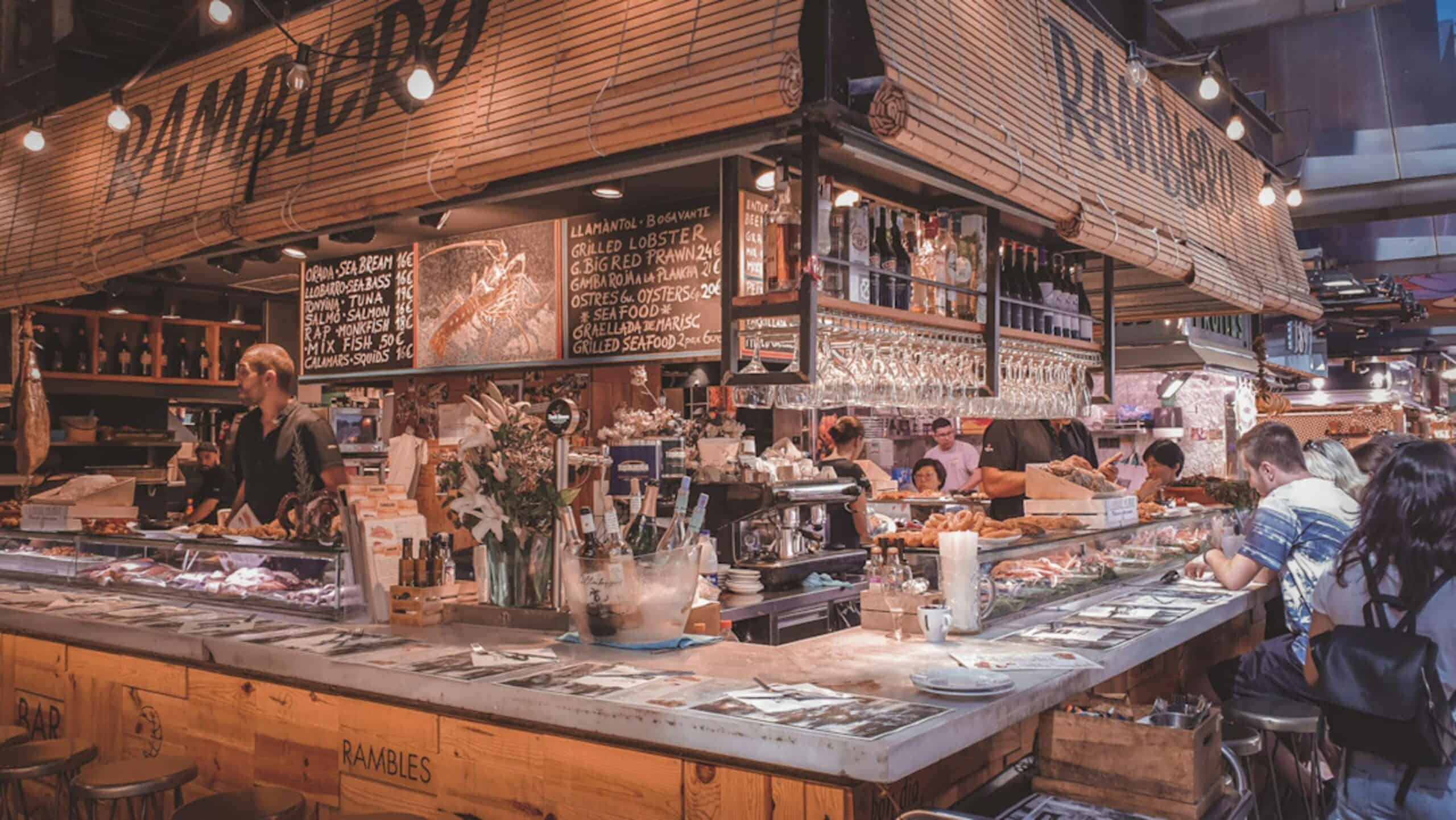
For the full guide to eating in La Boqueria market — the city’s iconic covered market on La Rambla — read my La Boqueria Barcelona guide here.
One of my favorite ways to eat like a local is through EatWith, a platform that connects travelers with local hosts for intimate dining experiences — think home-cooked meals in someone’s kitchen, chef-led supper clubs, and small-group food experiences that you’d never stumble across on your own. It’s a world away from the tourist-trap restaurants that tend to fill up the main squares, and honestly one of the best ways to understand a destination through its food culture. Whether you’re looking for a hands-on cooking class or a long table dinner with locals, EatWith has experiences in destinations all over the world worth exploring before you go.
Is Barcelona Walkable?
Exceptionally so, at least in the central areas. We certainly got our steps in, repeatedly! The old city — Gothic Quarter, El Born, La Barceloneta — is compact and best explored entirely on foot. The Eixample’s grid layout makes it logical to navigate even without a map. La Rambla connects the old city to Plaça de Catalunya in a straight 20-minute walk.
→ Take a walking tour of Barcelona on your first day so you can get the layout of the city.
The hills are the main walking challenge. Montjuïc to the southwest and the Tibidabo hills to the northwest are steep enough that the city has installed funiculars and cable cars for a reason. If you’re walking up to the Fundació Joan Miró or the Castell de Montjuïc, wear comfortable shoes and budget more time than you think you need.
Barcelona’s metro system is excellent for longer distances — clean, frequent, and inexpensive. The T-Casual card (10 trips) is the most economical option for most visitors. Taxis and rideshares (Cabify is widely used) are readily available for late nights or when your feet give out.
Neighborhoods within walking distance of each other:
- Gothic Quarter to El Born: 10 minutes
- Gothic Quarter to La Barceloneta (beach): 15 minutes
- Gothic Quarter to El Raval: 5 minutes
- Plaça de Catalunya to Passeig de Gràcia: 10 minutes
- Passeig de Gràcia to Sagrada Família: 20 minutes
What requires the metro or a taxi: Poblenou and the northern beaches, Montjuïc (or take the cable car from Barceloneta), Park Güell (unless you enjoy a serious uphill walk), and Tibidabo.
Getting Around Barcelona
Metro — The best way to cover longer distances. Clean, frequent, inexpensive. A T-Casual card (10 trips) covers most of what you need for a week. Runs until midnight Sunday through Thursday, 2am Friday, and all night Saturday.
Walking — The best way to experience the central neighborhoods. The Gothic Quarter, El Born, El Raval, and the lower Eixample are all best navigated on foot.
Bus — Useful for reaching Montjuïc and some neighborhoods not served directly by the metro. The hop-on hop-off tourist bus is overpriced for what it offers — take the regular bus instead.
Taxi/Rideshare — Readily available. Cabify and Uber operate in Barcelona alongside traditional taxis. Useful for late nights and Montjuïc.
Cable Car and Funicular — The Montjuïc funicular runs from Paral·lel metro station to the Fundació Joan Miró and Castell de Montjuïc. The Aeri del Port cable car connects Barceloneta beach to Montjuïc — spectacular views, worth doing once.
Cycling — Barcelona has an extensive bike lane network and the Bicing public bike share scheme. Rental bikes are available throughout the city. The beachfront and Eixample are excellent cycling territory. The Gothic Quarter is navigable but narrow.
Best Time to Visit Barcelona
October and November are my top recommendation. Warm enough for the beach (water temperature stays pleasant into October), dramatically fewer tourists, full restaurant and cultural programming, and a city that feels more like itself.
March and April are the second-best option — spring weather, manageable crowds, and the full cultural calendar running.
May and June are excellent but increasingly crowded as summer approaches. June especially has become very busy.
July and August are the most popular months and the most challenging. Heat, massive crowds, and peak prices across accommodation and attractions. If summer is your only option, book everything months in advance and plan to do major attractions at opening time.
December through February is Barcelona’s quietest period. Cool but rarely cold, minimal crowds at major attractions, and significantly lower prices. Some beach-adjacent activities close but the city’s cultural life continues fully. A genuinely underrated time to visit.
Practical Information for Visiting Barcelona
Currency: Euro. Credit cards are widely accepted but carry some cash for markets, smaller bars, and taxis.
Language: Spanish and Catalan are both official languages in Barcelona. Catalan is the language of local life — signage, menus in neighborhood restaurants, and conversations between locals will often be in Catalan rather than Spanish. A few words of Catalan go a long way: gràcies (thank you), bon dia (good morning), si us plau (please). English is widely spoken in tourist areas.
Tipping: Not obligatory but appreciated. Rounding up the bill or leaving a euro or two per person at a sit-down restaurant is standard. Tipping is not expected at bars for drinks.
Safety: Barcelona is generally safe but pickpocketing is a genuine issue, particularly on La Rambla, at La Boqueria, on the metro, and at crowded attractions. Use a crossbody bag, keep your phone in your front pocket, and be aware of your surroundings in crowds. The Gothic Quarter at night is lively but safe in the main areas — exercise normal urban awareness in quieter streets.
Electricity: Spain uses 230V with Type C and F plugs (the round two-pin European standard). Bring an adapter if you’re traveling from the US.
Water: Tap water in Barcelona is safe to drink. The taste is not remarkable — locals often prefer bottled — but it won’t make you sick.
Dining hours: This is important. Lunch is the main meal of the day, served from 2pm to 4pm. Dinner begins no earlier than 9pm and often later. Restaurants serving dinner at 7pm are almost exclusively targeting tourists. If you want to eat where locals eat, adjust your schedule accordingly. Most restaurants close between lunch and dinner service.
Understanding Barcelona’s Overtourism Problem
I want to address this directly because it affects how you experience the city and how the city experiences you.
Barcelona receives approximately 32 million tourists a year in a city of 1.6 million residents. To put that in perspective, that’s 20 tourists for every resident, most of them concentrated in a relatively small central area. The numbers have created real problems: residents priced out of their neighborhoods by short-term rental platforms, overcrowded public spaces, noise complaints, and a growing tension between a city that depends economically on tourism and a population that is increasingly exhausted by it.
In 2024, Barcelona’s mayor announced a plan to phase out all 10,000 short-term tourist apartments by 2028. In the summer of 2024, residents in several Barcelona neighborhoods took to the streets with water pistols, spraying tourists and holding signs reading “Barcelona is not for sale” and “tourists go home.” This was reported internationally with varying degrees of context, but the underlying frustration is real and worth taking seriously.
None of this means you shouldn’t visit Barcelona. It means you should visit thoughtfully:
Stay in a hotel rather than an Airbnb in the central neighborhoods. This is not a small thing — the conversion of residential apartments to short-term rentals is the single most cited cause of resident displacement.
Visit in shoulder season. October, November, March, and April offer genuinely beautiful weather, dramatically smaller crowds, and a city that feels more like itself. July and August are the most overcrowded months by a significant margin.
Spend money locally. Eat at neighborhood restaurants away from La Rambla. Shop at local markets rather than tourist shops. The economic benefit of tourism is real — it’s the distribution of that benefit that’s the problem.
Respect residential neighborhoods. The Gothic Quarter and El Born are not theme parks. People live there. Keep noise down in the evenings, don’t block narrow streets for photos, and be aware that the locals navigating around you are trying to live their lives.
Go beyond the center. The neighborhoods of Gràcia, Poblenou, Sant Antoni, and Sants are where Barcelona actually lives. They are also excellent and far less crowded.
Barcelona is worth visiting. Go with your eyes open.
Frequently Asked Questions About Barcelona
Is Barcelona worth visiting despite the overtourism? Yes, but visit thoughtfully. Stay in a hotel rather than a private apartment rental, visit in shoulder season if possible, spend your money in local neighborhoods rather than tourist-facing businesses, and venture beyond the Gothic Quarter and La Rambla. Barcelona is genuinely extraordinary — the architecture, the food, the street life, and the energy of the place are unlike anywhere else in Europe. The overtourism is a real problem for residents and worth taking seriously, but it doesn’t make the city not worth visiting. It makes how you visit matter more.
How many days do you need in Barcelona? Four to five days is the sweet spot for a first visit. That gives you enough time to do the major Gaudí sites without rushing, spend proper time in La Boqueria and the Gothic Quarter, eat several good meals, and spend at least one afternoon on the beach. Three days is doable but you’ll feel rushed. A week allows you to go deeper into neighborhoods like Gràcia, Poblenou, and Sant Antoni that most visitors never reach — and those neighborhoods are where the real Barcelona lives.
Is Barcelona expensive? By northern European standards, Barcelona is moderately priced. Accommodation at the higher end is comparable to Paris or London. Food is where the value shows — a proper lunch menu (menú del día) at a neighborhood restaurant runs €12–18 for three courses with wine, which is extraordinary value. Museum entry is reasonable. The main budget risk is accommodation in peak season and tourist-facing restaurants on La Rambla, which are both overpriced and avoidable.
Do you need to speak Spanish to visit Barcelona? No. English is widely spoken in hotels, major attractions, and tourist areas. In neighborhood restaurants and local bars you may encounter less English, but pointing at a menu and a few words of Spanish or Catalan will get you through any situation. Learning a few words of Catalan is genuinely appreciated by locals in a way that Spanish alone sometimes isn’t.
Is Barcelona safe for solo travelers? Yes. Barcelona is a safe city for solo travelers including solo women. The main precaution is pickpocketing rather than personal safety — use a secure crossbody bag, be aware on La Rambla and the metro, and exercise standard urban awareness in quieter areas at night. The city is lively late into the night and solo dining and drinking are entirely normal.
What is the best neighborhood to stay in Barcelona? The Eixample is the best all-around base for most visitors — central, beautiful, quieter than the Gothic Quarter, and with excellent restaurant and bar options on your doorstep. The Gothic Quarter is ideal if you want maximum walkability to historic sites but comes with noise. Gràcia is the best choice if you want a more local experience with slightly less convenience to the main attractions.
Can you visit Barcelona on a day trip? Technically yes — Barcelona is accessible by high-speed train from Madrid (about 2.5 hours) and by train or car from other parts of Catalonia. But a day trip barely scratches the surface of what the city offers. If you’re visiting from elsewhere in Spain, plan at least two nights minimum to make the journey worthwhile.
What is Catalonia and why does it matter for visitors? Catalonia is the autonomous region of northeastern Spain of which Barcelona is the capital. Catalans have their own language (Catalan), their own culture, and a complex political relationship with the Spanish central government that includes a significant independence movement. For visitors, the practical implications are minor — you’ll notice Catalan signage, menus, and language — but understanding that Barcelona considers itself Catalan first and Spanish second adds meaningful context to the city you’re visiting.
Is the Sagrada Família finished? Not yet, though it’s getting close. Construction began in 1882 and the current projected completion for the main towers is 2026, the centenary of Gaudí’s death. Some elements will take longer. The basilica was consecrated by Pope Benedict XVI in 2010 and has been open to visitors throughout its construction. Visiting now means seeing an active construction project alongside a nearly complete building — which is itself a remarkable and historically unique experience.
What is the best Gaudí building to visit in Barcelona? If you only do one, do the Sagrada Família — it is genuinely in a category of its own. If you do two, add La Pedrera for the rooftop. Palau Güell is the most underrated of the major Gaudí sites and worth seeking out. Park Güell is beautiful but the ticketed monumental zone can feel crowded and slightly theme-park-like in peak season.
When should I book tickets for Barcelona attractions? For the Sagrada Família, book as far in advance as possible — months ahead in summer, weeks ahead in shoulder season. For La Pedrera and Casa Batlló, book at least a week ahead in any season. For the Picasso Museum and Fundació Joan Miró, a few days ahead is usually sufficient outside peak summer. For La Boqueria, no ticket is required — but arrive early.