

La Boqueria Barcelona: What to Eat + Insider Tips
This post contains affiliate links. If you book through my links I may earn a small commission at no extra cost to you — and it helps keep this blog running. I only recommend places I’ve personally visited or thoroughly researched.
La Boqueria is one of those places you’ve probably seen a hundred times before you ever step foot in Barcelona, and somehow it still exceeds expectations.
Officially called Mercat de Sant Josep de la Boqueria, this iconic covered market sits right off Las Ramblas and has been part of the city’s daily life for centuries. It’s busy, it’s colorful, it’s a little chaotic, and that’s exactly what makes it so good. You’re not walking into something staged for tourists. You’re stepping into a market that still functions as a place where locals shop, eat, and gather.
If you only do one food experience in Barcelona, make it this one — but only if you know where to eat. The front of La Boqueria is packed with tourist stalls. The real food is deeper inside the market.
I’ve visited food markets all over the world, and this is one I’d go back to again without hesitation. Not just for what you can eat, although that alone is worth it, but for the energy of the place. The sound of vendors calling out, the rows of fruit that somehow look brighter than anywhere else, the smell of jamón and seafood and something sweet you can’t quite place yet. It’s the kind of place where you wander without a plan and end up having one of your best meals of the trip standing at a counter.
Here’s everything you need to know before you go.
What to Eat at La Boqueria: At-a-Glance
| What to Eat | Why It’s Worth Ordering | Best Place to Try It |
|---|---|---|
| Jamón Ibérico | Rich, buttery, paper-thin Spanish ham that’s one of the market’s signature foods | Any reputable jamón counter deeper inside the market |
| Fried Eggs with Baby Squid | One of La Boqueria’s most famous dishes and absolutely worth the hype | El Quim de la Boqueria |
| Fresh Oysters & Razor Clams | Incredibly fresh seafood cooked simply with olive oil and salt | Kiosko Universal |
| Fruit Juices | Touristy, yes — but genuinely refreshing and surprisingly good | Front entrance juice stalls |
| Pintxos | Small bites perfect for grazing your way through the market | Various tapas counters throughout the market |
| Chickpeas with Black Pudding | A classic Catalan-style comfort dish with deep savory flavor | Bar Pinotxo |
| Churros con Chocolate | Crispy churros dipped in thick dark chocolate | Dessert and pastry stalls |
| Grilled Prawns | Simple, fresh, and one of the best seafood dishes in the market | Seafood bars in the interior aisles |
| Spanish Cheeses | A great way to sample regional cheeses from across Spain | Cheese vendors near the center of the market |
| Saffron & Smoked Paprika | Among the best edible souvenirs to bring home from Barcelona | Spice stalls deeper inside the market |
A Brief History of La Boqueria
La Boqueria dates back to 1217, when vendors began selling meat at the old city gates. Over the centuries it evolved into a permanent market, officially opening its doors in 1840. Its iconic iron and glass roof, added in 1914, makes it a striking architectural landmark that manages to feel both historic and vibrantly alive at the same time. Walking through the entrance on La Rambla, you pass under a stained glass mosaic canopy that sets the tone for everything inside — this is a place that takes its food seriously.
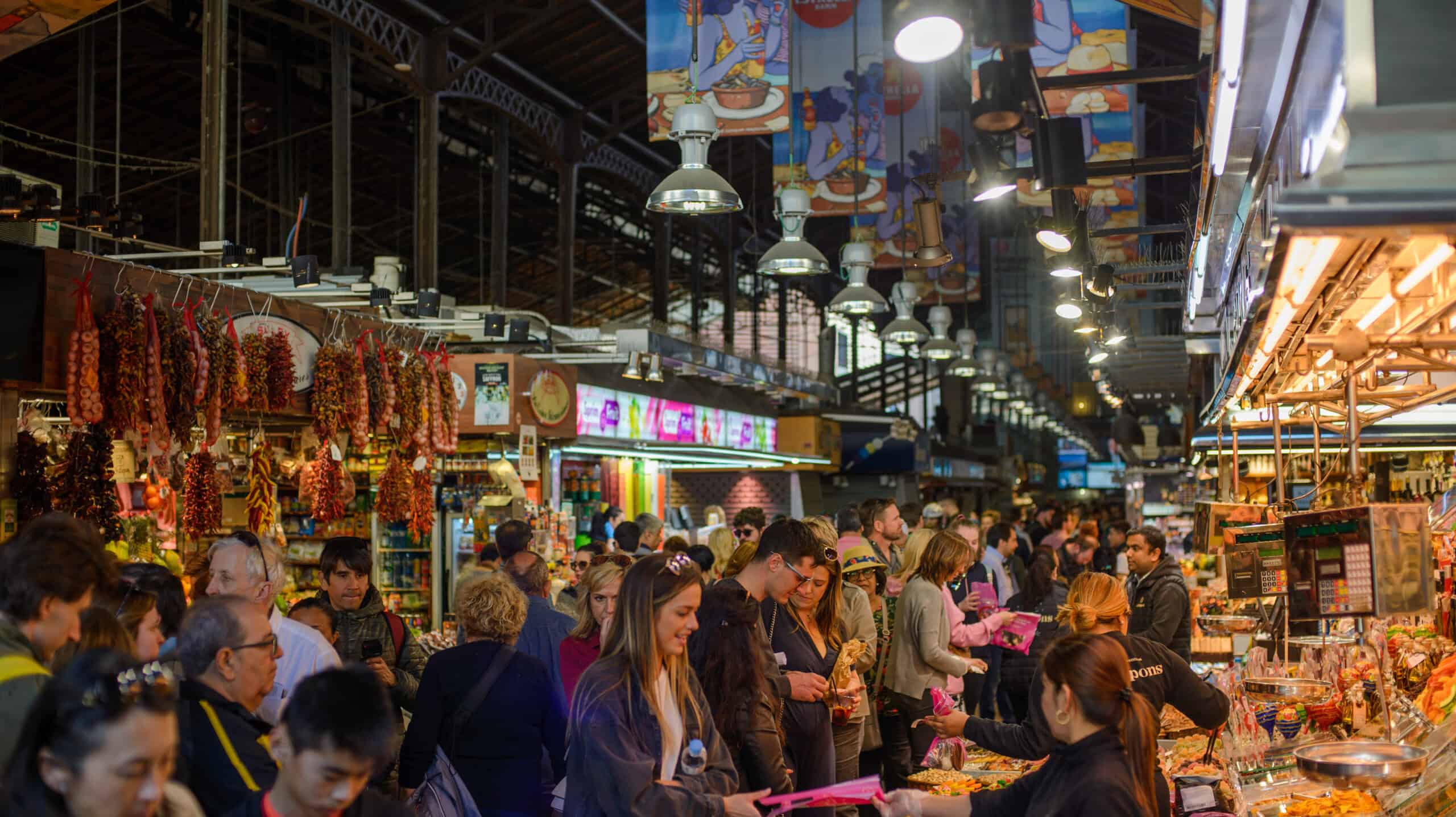
What La Boqueria Looks Like Inside
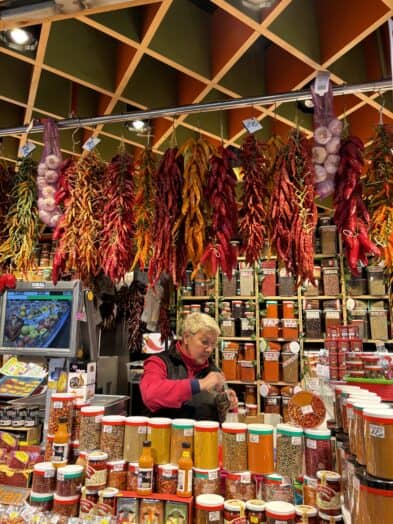
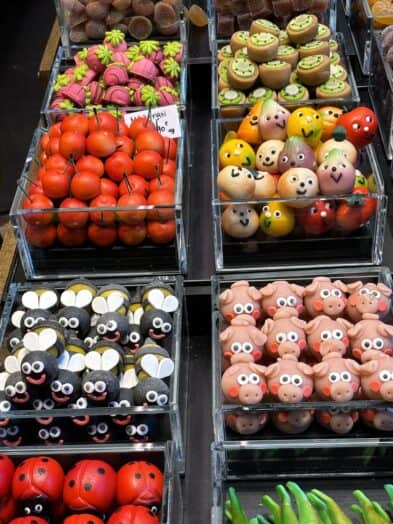
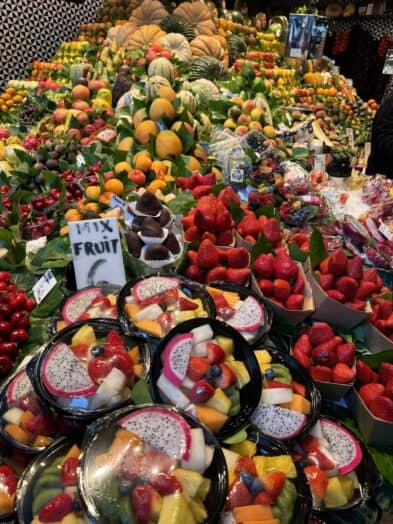
The moment I stepped inside, I understood why people talk about La Boqueria the way they do. The colors hit you first — vivid pyramids of fresh fruit, hanging legs of jamón, towers of spices in every shade from saffron gold to deep paprika red. Then the smells: fresh seafood, cured meat, roasting peppers, and somewhere underneath it all, the faint sweetness of chocolate. Then the noise — vendors calling out, knives on cutting boards, the constant hum of a market in full swing.
I’ve had the fantasy of being locked inside a department store overnight. La Boqueria is my version of that fantasy, except the merchandise is jamón and fresh oysters and churros con chocolate. I was completely and utterly in heaven.
The market covers about 2,500 square meters and houses more than 300 stalls. The front section near the entrance is the most touristy — bright fruit cups and juice stands designed for photos. Push past that into the interior and you’ll find where locals actually shop: serious seafood vendors, whole fish on ice, butchers with cuts you won’t find anywhere else, and cheese stalls that will make you want to rethink your entire approach to cheese.
→ Check out the top-rated food tours in La Boqueria
What to Eat at La Boqueria
Come hungry. This is not a market you breeze through — it’s a market you graze through, slowly, with no particular agenda. We ended up eating both lunch and dinner in the market because the food was SO good!
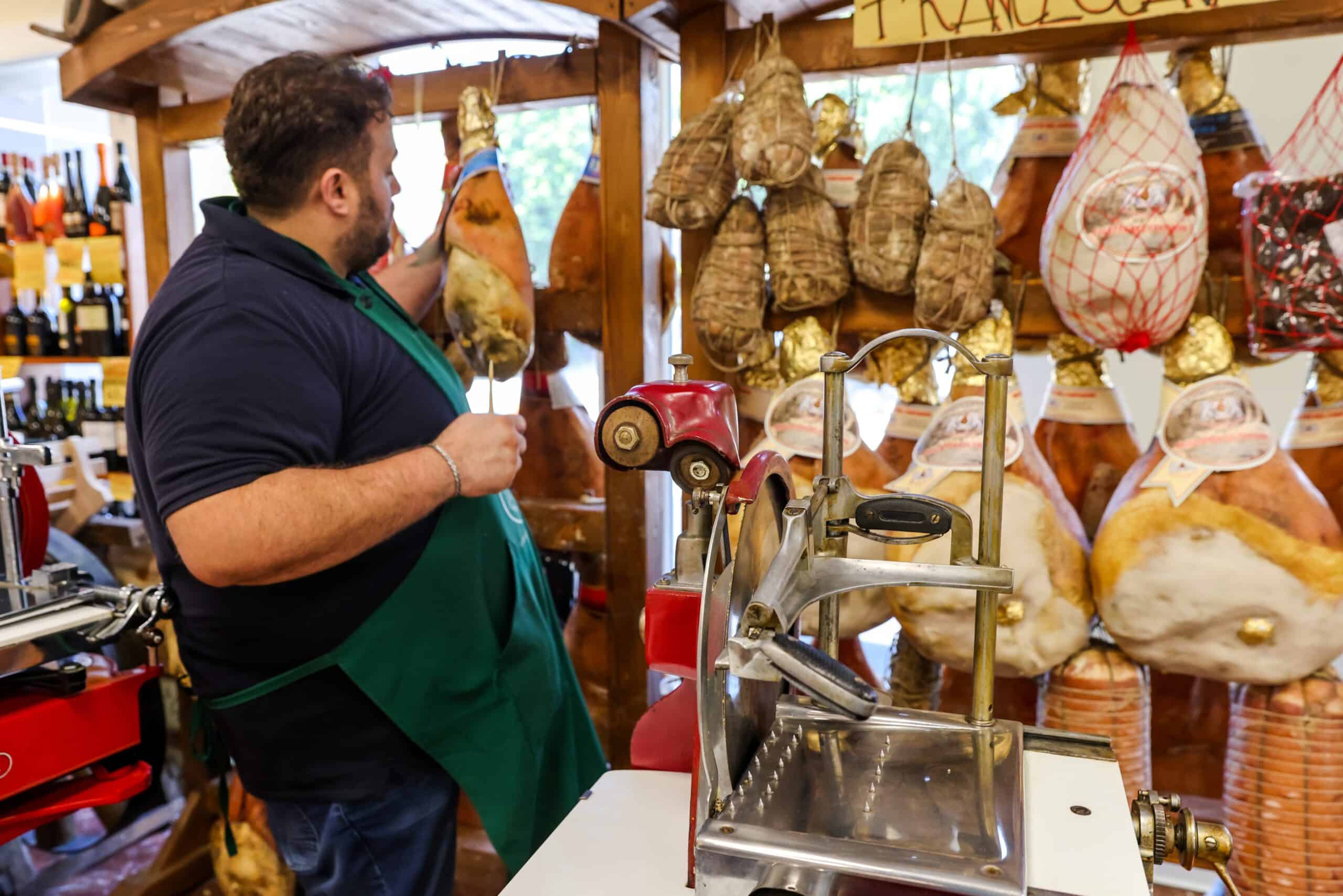
Here’s what not to miss:
Jamón Ibérico — You’re in Spain, where jamón is a way of life. The Iberian ham here is the real thing — deeply marbled, nutty, sliced paper-thin. Order it with a piece of rustic bread and don’t rush it.
Fresh Seafood — The seafood section is extraordinary. Oysters, razor clams, prawns, squid, percebes (barnacles, a Galician delicacy worth trying at least once) — all of it impossibly fresh. Pull up a stool at one of the seafood bars and order a plate with a glass of cold white wine. This is the move.
Fruit Juices — The fresh juice stalls near the entrance are genuinely worth the tourist-zone pricing. Combinations like mango-pineapple or dragon fruit-strawberry are spectacular. Get one for the walk.
Churros con Chocolate — Crispy, slightly greasy in the best possible way, dipped in thick dark chocolate. Not an every-day food. Today is the day.
Saffron and Spices — Buy saffron here. Spanish saffron is among the best in the world and the price at La Boqueria is far better than what you’ll pay at a specialty shop back home. It also travels beautifully.
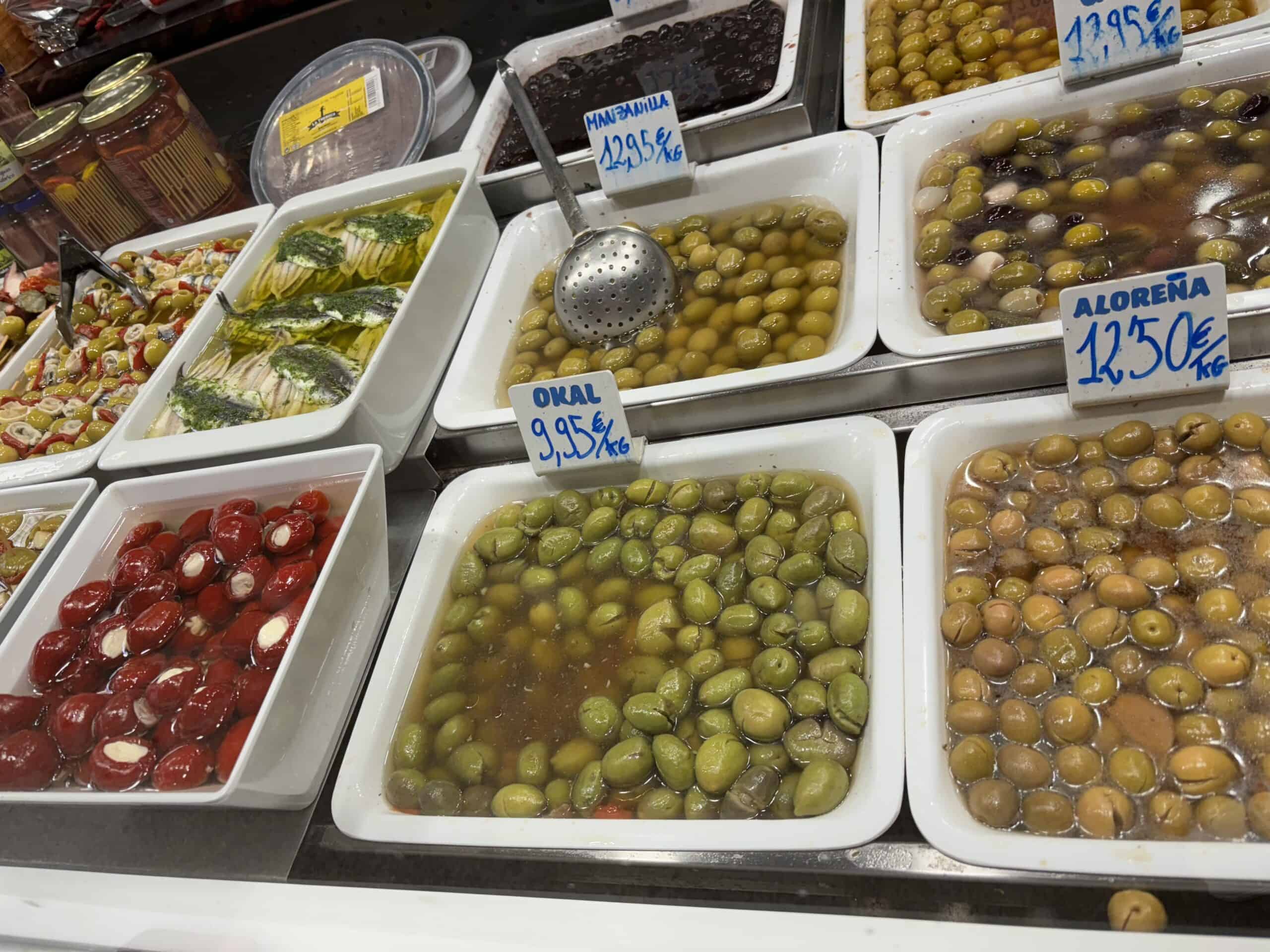
Pintxos and Tapas — Several stalls sell ready-to-eat tapas. Grab a few pintxos — small bites on bread — and wander while you eat. This is perfectly acceptable behavior at La Boqueria.
→ Take a street food tour of Barcelona that includes a visit to the market
The Best Restaurants Inside La Boqueria
The market isn’t just stalls — some of Barcelona’s most beloved counter restaurants are tucked inside. These are not tourist traps. They are genuinely excellent.
El Quim de la Boqueria is my top recommendation. Counter seating only, which means you watch your food being cooked in front of you. Order the fried eggs with baby squid — it sounds simple and it’s extraordinary. The seasonal specials are always worth asking about. Arrive when it opens or expect to wait.
Bar Pinotxo is a Barcelona institution. This tiny tapas bar has been serving the same loyal crowd for decades and the food reflects that confidence — chickpeas with black pudding, grilled prawns, market-fresh whatever is best that day. The owner, Juanito, is legendary. If he’s there, say hello.
Kiosko Universal is where to go if seafood is your priority. Grilled shellfish, octopus, razor clams — all cooked to order right in front of you. The simplicity is the point. Fresh ingredients, live fire, nothing else required.
Paella Bar Boqueria serves classic Spanish rice dishes including seafood paella and fideuà, the noodle-based alternative that I’d argue is even better. Sit down, order the fideuà, and take your time.
Organic’s is the market’s best option for vegetarians and health-conscious travelers — fresh smoothies, salads, and plant-based dishes made with market produce. Not an afterthought; genuinely good food.
Is La Boqueria Worth Visiting?
I want to address this directly because you’ll find plenty of travel writers who will tell you La Boqueria is overrated, too touristy, and not worth your time. I disagree — with one caveat.
The front of the market, near the La Rambla entrance, is tourist-facing and priced accordingly. The fruit cups and juice stalls are fine but not why you’re here. If you stop at the entrance, take a few photos, and leave, you will be underwhelmed and the skeptics will be right.
Walk past that section. Go deep into the market. Find the seafood vendors and the jamón counters and the spice stalls. Sit down at El Quim or Bar Pinotxo and eat a proper meal. That version of La Boqueria — the one that’s been feeding Barcelona for 800 years — is absolutely worth your time.
What to Buy at La Boqueria to Take Home
Beyond eating your way through the market, La Boqueria is one of the best places in Barcelona to buy quality Spanish food products to take home. Tip: Take an extra tote bag to get your goodies home. What to buy at La Boqueria:
Saffron — Buy it here. Spanish saffron travels well in a small sealed tin and costs a fraction of specialty store prices back home.
Jamón — Many vendors sell vacuum-packed sliced jamón Ibérico that is airline-approved and travels beautifully. It makes an extraordinary gift.
Pimentón — Spanish smoked paprika in its various heat levels. A small tin of La Vera pimentón will transform your cooking at home.
Turron — If you visit in autumn or winter, the nougat vendors will be out in force. Buy a few bars. You won’t regret it.
Olive Oil — Several stalls sell high-quality Catalan olive oils. Small bottles pack easily and are a worthwhile souvenir.
→ Even better? Learn to make paella as part of your market tour!
Insider Tips for Visiting La Boqueria
Go before 10am. The market opens at 8am and the early hours are when locals shop, the stalls are at their freshest, and the crowds are manageable. By noon on any given day, the main aisles are difficult to move through. By 2pm it’s genuinely unpleasant if you’re trying to browse rather than push through. Early morning is a different experience entirely.
Bring cash. Many vendors — especially the smaller stalls and the counter restaurants — prefer cash. Have euros on hand. There are ATMs nearby on La Rambla if you need them.
Walk past the entrance stalls. The tourist-facing stalls near the entrance charge tourist prices for tourist-quality food. Walk deeper into the market. The quality and the prices both improve significantly once you’re past the first three rows.
Taste before you buy. Vendors actively encourage sampling. Try the jamón before you commit to a portion, taste the olives, sample the cheese. This is how La Boqueria is supposed to work.
Book a food tour if you want context. A guided food tour of La Boqueria is genuinely worthwhile if it’s your first time in Barcelona. A good guide will take you to the stalls worth knowing, explain what you’re looking at in the seafood section, and get you into Bar Pinotxo with a seat. Book a La Boqueria food tour here.
Don’t go on Monday. The fish market is closed on Mondays. The overall market is open but the seafood vendors — some of the best in the building — are not. Plan accordingly.
Most importantly, book a tour before your trip. Guided market tours book up fast!
→ Check out the top-rated food tours in La Boqueria
How to Get to La Boqueria
La Boqueria is located at La Rambla 91 in central Barcelona, making it one of the easiest attractions in the city to reach.
By Metro: Take the L3 (green line) to Liceu station. Exit onto La Rambla and the market entrance is directly in front of you. It’s a one-minute walk from the turnstile to the market door.
On Foot: If you’re staying anywhere in the Gothic Quarter, El Raval, or near Plaça de Catalunya, La Boqueria is walkable. La Rambla is a straight shot from Plaça de Catalunya down toward the waterfront and the market is roughly halfway along.
By Taxi or Rideshare: Ask to be dropped on La Rambla near Carrer del Carme. The market entrance will be immediately visible.
The market is open Monday through Saturday, 8am to 8:30pm. Closed Sundays.
What to Do Near La Boqueria
La Boqueria’s location on La Rambla puts you within easy walking distance of some of Barcelona’s best attractions. After eating your way through the market, here’s where to go:
La Rambla — Walk the full length of the boulevard from Plaça de Catalunya down to the Columbus Monument at the waterfront. Street performers, flower stalls, and some of the best people-watching in Europe.
The Gothic Quarter (Barri Gòtic) — Turn left off La Rambla just past La Boqueria and you’re in one of the best-preserved medieval neighborhoods in Europe. Get lost in the narrow streets, find the Roman ruins beneath the city at the Barcelona History Museum, and stumble into whatever café looks good.
Palau Güell — Antoni Gaudí’s extraordinary mansion is a five-minute walk from La Boqueria. Less visited than Sagrada Família but arguably more interesting for what it reveals about Gaudí’s creative development. Book tickets in advance.
Gran Teatre del Liceu — One of Europe’s great opera houses, right on La Rambla steps from the market. Even if you’re not catching a performance, the building is worth a look.
Plaça Reial — A beautiful colonnaded square two minutes from La Boqueria, lined with palm trees, restaurants, and bars. Good for a post-market glass of cava and a rest.
→ Book one of these top-rated and discounted tours before they sell out
Where to Stay Near La Boqueria in Barcelona
Barcelona is an easy city to navigate but staying centrally means La Boqueria, the Gothic Quarter, and La Rambla are all walkable from your hotel door. Here are two properties I can personally recommend from my recent stay:
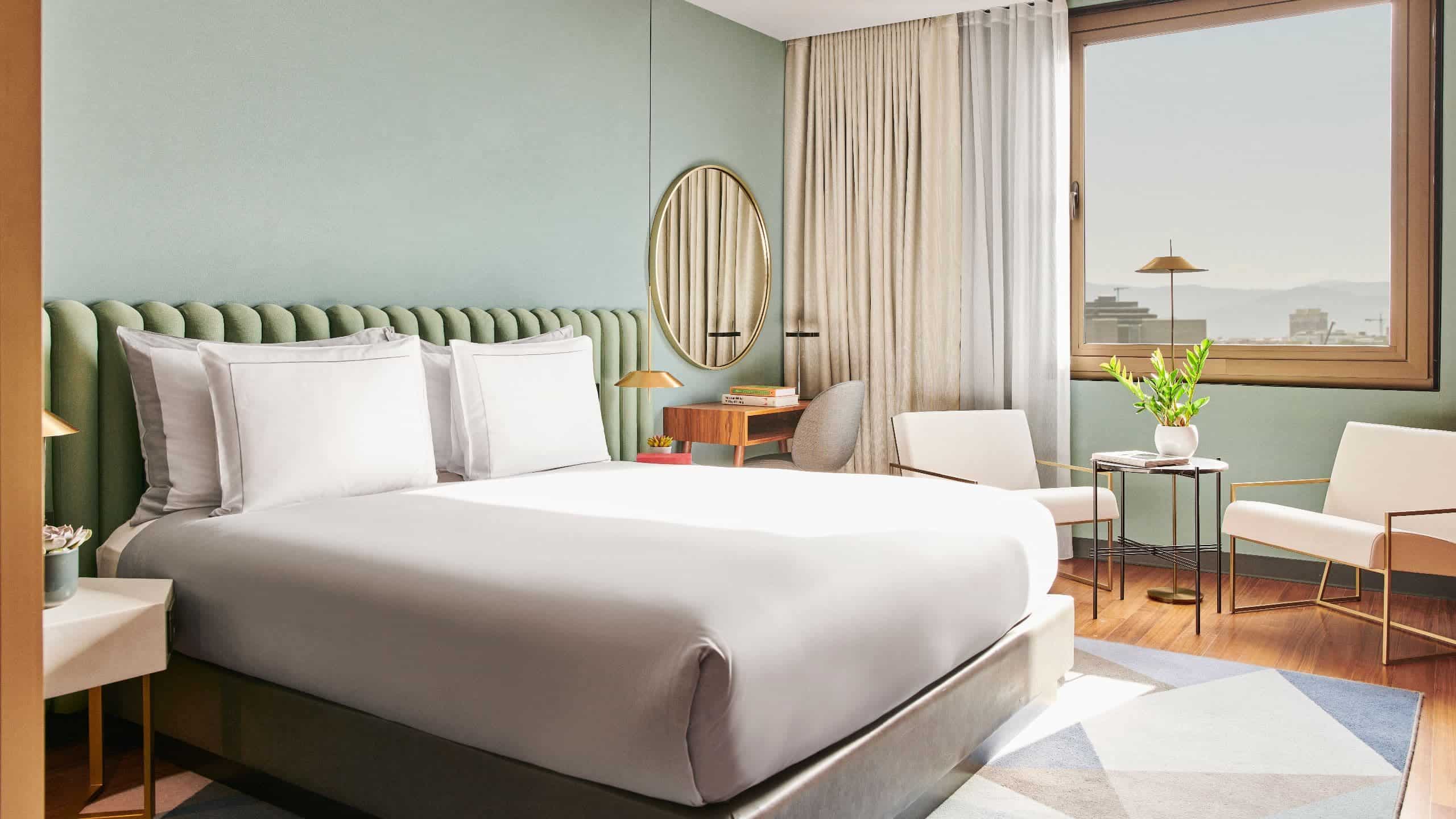
Grand Hyatt Barcelona offers what you’d expect from a Grand Hyatt — beautifully appointed rooms, a rooftop terrace with panoramic city views, a full-service spa, and multiple dining options serving Mediterranean cuisine. It’s the right choice if you want a luxury base with easy access to the city’s central attractions.
→ Check rates at this beautiful property for your travel dates now
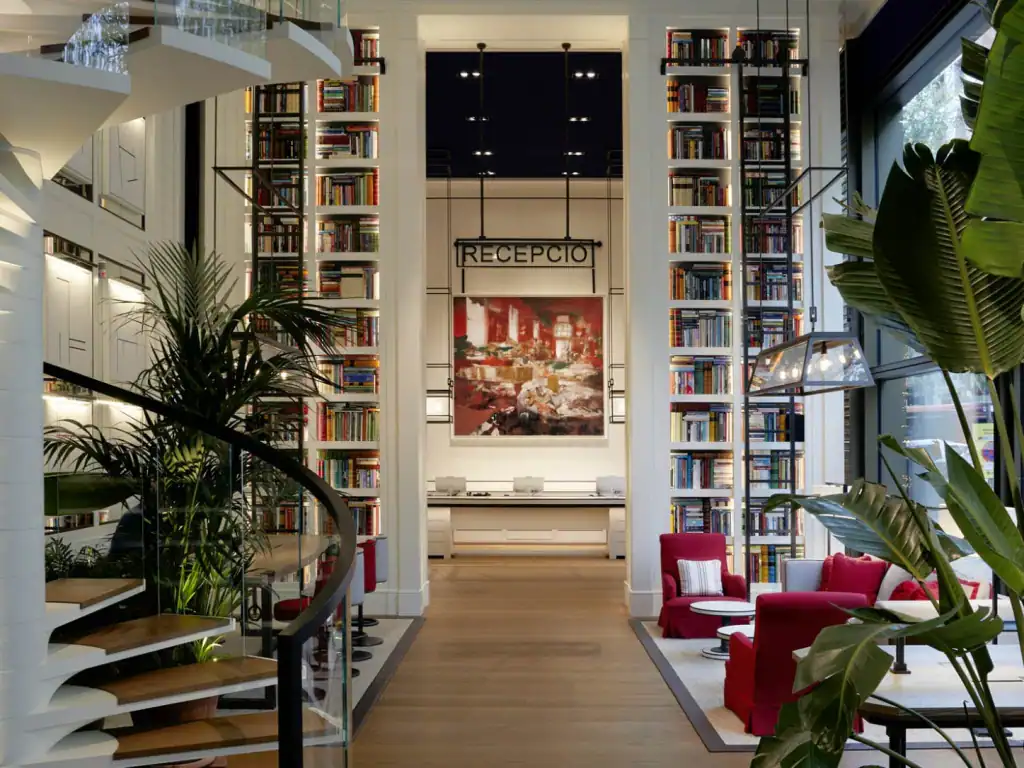
Seventy Barcelona is my pick if boutique is more your style. The interiors are genuinely stylish rather than generically hotel-chic, the rooftop bar is excellent for evening cocktails, and the personalized service feels more like a small property than the larger luxury hotels. Its central location is ideal for exploring on foot.
→ See if this chic hotel is available for your dates
My general advice for Barcelona: stay central. The metro is excellent but Barcelona is a city that rewards walking, and being centrally located means you can wander back to your hotel between the market and dinner without planning a route.
→ Check rates in Barcelona for your travel dates now
Planning Your Barcelona Trip
La Boqueria pairs perfectly with a full day in central Barcelona. Here’s how I’d structure it:
Start at La Boqueria before 10am for the market at its best. Eat breakfast at Bar Pinotxo or El Quim. Spend an hour or two browsing and buying. Walk La Rambla down to the Columbus Monument, then cut back through the Gothic Quarter. Lunch at a tapas bar in the Gothic Quarter. Afternoon at Palau Güell or the Picasso Museum. Dinner somewhere that isn’t on La Rambla itself — that’s where the real Barcelona restaurant scene lives.
For getting around the wider city, Barcelona’s metro is efficient and inexpensive. A T-Casual card (10 trips) covers most of what you need. Taxis and rideshares are readily available for longer distances or late nights.
Frequently Asked Questions About La Boqueria Barcelona
Is La Boqueria worth visiting? Yes — with the right approach. The front section near the La Rambla entrance is tourist-facing and easy to dismiss, but walk deeper into the market and you’ll find one of the great food markets in Europe. The seafood vendors, jamón counters, and counter restaurants like El Quim and Bar Pinotxo are genuinely excellent and worth your time. Go early, push past the entrance stalls, and you’ll understand why La Boqueria has been feeding Barcelona for 800 years.
What is the best time to visit La Boqueria? Before 10am is the sweet spot. The market opens at 8am and the early hours are when locals shop, the produce is at its freshest, and the aisles are actually navigable. By noon the crowds are significant. By 2pm on a busy day it can feel genuinely overwhelming. If an early morning visit isn’t possible, late afternoon after 4pm is the next best option when the lunch rush has cleared.
How long should I spend at La Boqueria? Plan for at least 90 minutes to two hours if you want to browse properly, eat something at one of the counter restaurants, and shop for items to take home. If you’re doing a serious sit-down meal at El Quim or Bar Pinotxo add another 45 minutes. A quick walk-through takes about 30 minutes but you’ll miss most of what makes the market worth visiting.
Is La Boqueria free to enter? Yes, entry to La Boqueria is completely free. You pay only for what you eat and buy inside the market.
What should I eat at La Boqueria? The non-negotiables are jamón Ibérico, fresh seafood (oysters and razor clams especially), and the fresh fruit juices near the entrance. If you’re sitting down for a meal, order the fried eggs with baby squid at El Quim de la Boqueria or the chickpeas with black pudding at Bar Pinotxo. Both sound unusual and both are extraordinary. End with churros con chocolate if you have any room left.
Can you eat breakfast at La Boqueria? Absolutely, and I’d argue it’s one of the best ways to start a day in Barcelona. Bar Pinotxo opens early and serves a legendary breakfast — the tortilla, the grilled prawns, and the house cava are all worth ordering before 9am. El Quim opens a little later but is equally good for a proper market breakfast.
Is La Boqueria cash only? Many vendors and the smaller counter restaurants prefer cash, though some larger stalls now accept cards. To avoid any awkward moments, bring cash. There are ATMs on La Rambla nearby if you need them.
What metro stop is La Boqueria? Liceu on the L3 green line. Exit the station onto La Rambla and the market entrance is directly in front of you — it’s about a one-minute walk from the metro exit to the market door.
Is La Boqueria open on Sundays? No. La Boqueria is open Monday through Saturday, 8am to 8:30pm, and is closed on Sundays. Also worth knowing: the fish market is closed on Mondays, so if fresh seafood is a priority, Tuesday through Saturday is your window.
Is La Boqueria good for vegetarians? Yes, more than you might expect from a market famous for jamón and seafood. Organic’s inside the market serves fresh smoothies, salads, and plant-based dishes made with market produce. The fresh fruit and juice stalls, the cheese vendors, and the spice stalls all have plenty to offer vegetarians. The fruit cups and juices near the entrance are vegetarian-friendly and genuinely good.
What should I buy at La Boqueria to take home? Saffron is the best souvenir — Spanish saffron is world-class, the prices at La Boqueria are fair, and it travels beautifully in a small sealed tin. Vacuum-packed jamón Ibérico is airline-approved and makes an extraordinary gift. Pimentón (Spanish smoked paprika), turron if you visit in winter, and small bottles of Catalan olive oil are all worth carrying home.
Is La Boqueria safe? The market itself is safe, but La Rambla is one of the highest pickpocket areas in Barcelona. Keep your bag in front of you, use a crossbody rather than a backpack, and don’t leave your phone on the table at the counter restaurants. Be aware of your surroundings entering and exiting the market, particularly in the crowded midday hours.
Can you do a food tour of La Boqueria? Yes, and I recommend it for first-time visitors. A good guide will take you directly to the stalls worth knowing, explain the seafood and charcuterie on offer, and often has relationships with the counter restaurants that mean you skip the queue. (add GetYourGuide or Viator affiliate link here)
How do I get from La Boqueria to Sagrada Família? The easiest route is the L2 or L5 metro from Universitat or Passeig de Gràcia stations to Sagrada Família station — about 15 minutes total. Alternatively it’s a 30-minute walk through the Eixample neighborhood, which is a pleasant way to see a different side of Barcelona.