
Rome vs. Florence: Which Italian City Should You Visit?
This post may contain affiliate links. If you make a purchase through one of these links, I may earn a small commission at no additional cost to you.
Rome or Florence? It is a difficult choice because both cities deliver exactly what many travelers want from Italy: extraordinary art, historic streets, memorable meals and enough beauty to fill an entire camera roll.
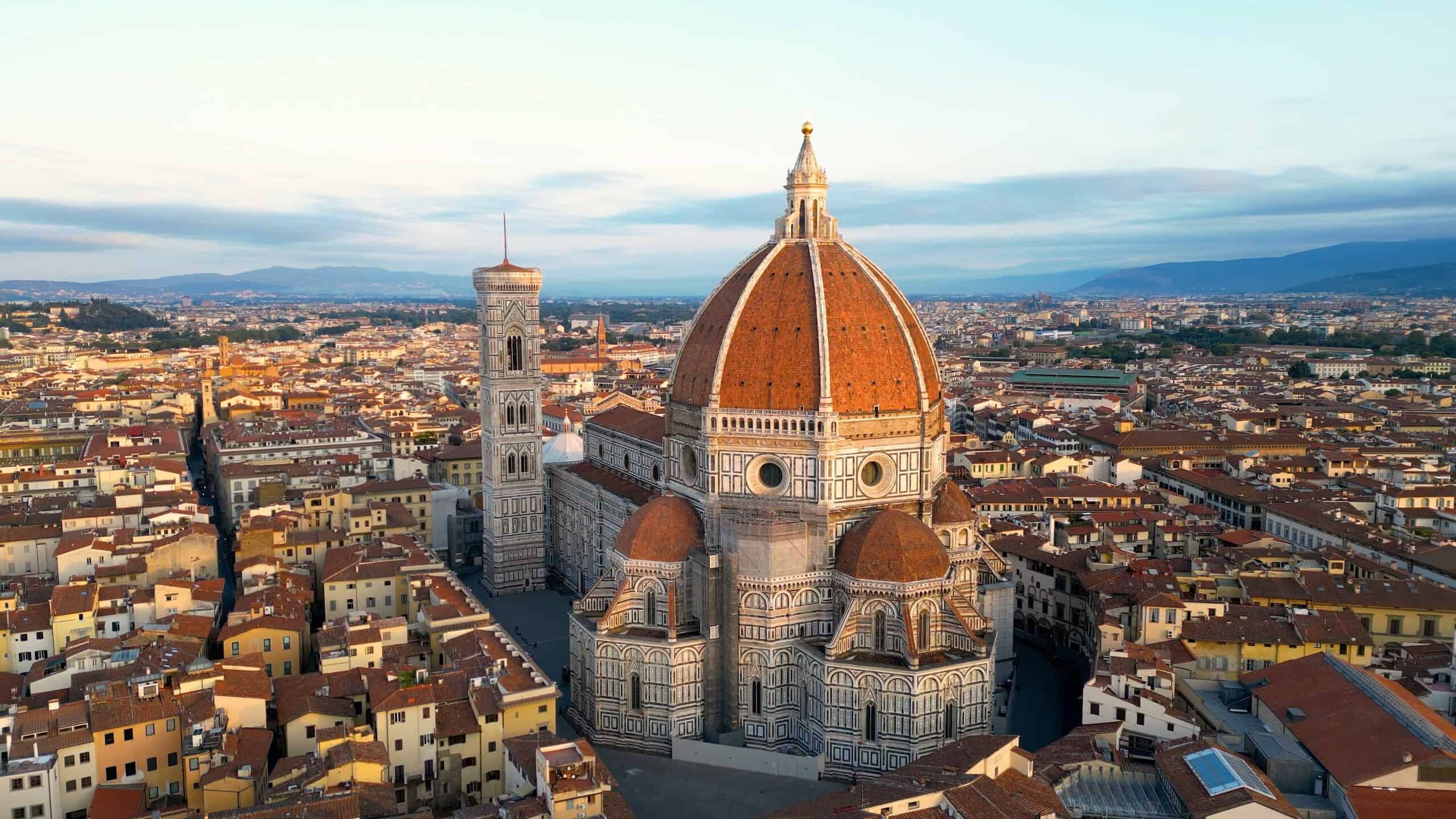
But Rome and Florence are not interchangeable. Rome is vast, layered and sometimes chaotic. Ancient ruins, Baroque fountains, lively neighborhoods and Vatican treasures compete for your attention. Florence is smaller, more walkable and centered on the Renaissance. Its greatest sights are concentrated within a compact historic center, while the Tuscan countryside begins just beyond the city.
My short answer is this: choose Rome for ancient history, iconic landmarks, energetic neighborhoods and a city that can fill a week. Choose Florence for Renaissance art, a more manageable pace, Tuscan food and wine, and easy access to the countryside.
I know Rome especially well. When we lived in Milan, my husband frequently worked at the U.S. Embassy in Rome, and the children and I often went with him. What began with a four-week summer stay turned into an enduring relationship with the city and with the hotel I have returned to on every visit since.
Rome vs. Florence at a Glance
| Choose Rome if you want… | Choose Florence if you want… |
|---|---|
| The Colosseum, Roman Forum and Pantheon | The Uffizi, Michelangelo’s David and the Duomo |
| A large, energetic capital | A compact, highly walkable historic center |
| Distinct neighborhoods and nightlife | Renaissance beauty at nearly every turn |
| Roman pasta, pizza and street food | Tuscan steak, markets and regional wine |
| Enough attractions for four or more days | A rewarding two- or three-day city break |
| Day trips to Tivoli or the Castelli Romani | Easy trips into the Tuscan countryside |
Is Rome or Florence Better for First-Time Visitors?
Rome is the better choice if this is your first trip to Italy and you want to see the country’s most internationally recognizable sights. The Colosseum, Roman Forum, Pantheon, Trevi Fountain, Spanish Steps and Vatican can fill several days before you even begin exploring neighborhoods such as Trastevere or the Jewish Ghetto.
Florence is the better choice if you want Italy to feel manageable. You can walk between the Duomo, Piazza della Signoria, Ponte Vecchio, the Uffizi and the Accademia without spending much of the day in transit. Florence still attracts enormous crowds, but its compact layout makes it easier to build an efficient itinerary.
For travelers with a full week, the best answer is to visit both. High-speed trains connect Rome and Florence in roughly an hour and a half, making this one of the easiest two-city itineraries in Italy.
What Rome Is Really Like
Rome is not a city you neatly complete. Its history appears in layers: an ancient column beside a busy road, a Renaissance palace built over Roman foundations or a neighborhood church containing art that would anchor a museum elsewhere.
That abundance is Rome’s greatest strength, but it can also make the city feel overwhelming. The major sights are spread out, the streets can be congested and the most famous attractions require advance reservations. A first visit is easier when you divide the city geographically rather than crossing back and forth for individual landmarks.
Combine the Colosseum and Roman Forum on one day, the Pantheon and historic center on another, and devote a separate morning to the Vatican. Leave time for Trastevere, Campo de’ Fiori, the Jewish Ghetto or a long lunch. Rome becomes far more enjoyable when every day is not treated as a race.
Book a guided Colosseum and Roman Forum tour
Compare Vatican Museums and Sistine Chapel tours
Rome has also introduced a small fee for close-up access to the basin area of the Trevi Fountain as part of its crowd-management efforts. Rules can change, so check the official tourism site before your trip rather than relying on an older itinerary.
What Florence Is Really Like
Florence offers an extraordinary concentration of art and architecture within a relatively small area. Brunelleschi’s dome dominates the skyline, Michelangelo’s David is housed at the Accademia, and the Uffizi contains one of the world’s most important collections of Renaissance art.
The city’s compact size is convenient, but it can also make Florence feel crowded. Visitors tend to converge on the same few streets and attractions. Timed reservations are strongly recommended for the Uffizi and Accademia, particularly from spring through fall. Reserve the Duomo climb in advance as well if reaching the top of the dome is important to you.
Book a guided Uffizi and Accademia tour
Florence is best experienced by alternating major museums with time outside. Walk across the Ponte Vecchio into Oltrarno, browse artisan workshops, visit the Boboli Gardens or climb to Piazzale Michelangelo for a view over the city.
My Long Relationship With Rome
Rome became part of our family life while we were living in Milan. My husband traveled there frequently for work at the U.S. Embassy, and the children and I would join him. For our first four-week summer stay, I chose Rose Garden Palace near Via Veneto. I fell in love with the hotel and have stayed there on every visit since.
Its location is one reason it works so well. It is close enough to walk to the Spanish Steps, Villa Borghese and the historic center, but it provides a calmer place to return to after a busy day. The courtyard, wellness center and sauna make it feel more restorative than many hotels positioned directly in Rome’s most congested tourist streets.
Spending several weeks in Rome also taught me that the city is better when you stop trying to conquer it. Some days should be built around a major sight. Others should revolve around a neighborhood, a market or a meal.
Rome vs. Florence for Food Lovers
Rome and Florence are both exceptional food cities, but their regional cuisines are very different.
Rome is the better choice for travelers who love pasta, pizza and casual neighborhood eating. Its defining dishes include carbonara, cacio e pepe, amatriciana and gricia. You will also find supplì, thin Roman-style pizza, artichokes prepared alla romana or alla giudia, and excellent gelato.
A food tour is one of the best ways to move beyond the restaurants clustered around the major monuments. Trastevere is popular for evening food tours, while Campo de’ Fiori and the Jewish Ghetto offer different perspectives on Roman culinary history.
Compare Rome pasta and tiramisu classes
Florence is the gateway to Tuscan cuisine. Expect ribollita, pappa al pomodoro, crostini, handmade pasta, pecorino, cured meats and bistecca alla fiorentina. The Mercato Centrale is convenient for sampling several foods, although the upper food hall is more polished and visitor-oriented than a traditional neighborhood market.
Florence has a particular advantage for hands-on food experiences. You can take a market-based cooking class in the city or leave the historic center for a class at a Tuscan farmhouse. The latter adds countryside scenery and often includes wine, making it more than a standard cooking lesson.
Browse Florence market and cooking classes
Book a Tuscan farmhouse cooking experience
Choose Rome for pasta traditions, neighborhood food tours and a broader urban dining scene. Choose Florence if you want Tuscan ingredients, steak, wine and a cooking class connected to the countryside.
Rome vs. Florence for Art and History
Rome wins for the breadth of its history. Ancient Rome, the early Christian era, the Renaissance, the Baroque period and modern Italian life all occupy the same city. Few destinations can match the experience of visiting the Colosseum in the morning, the Pantheon in the afternoon and a Baroque piazza after dinner.
Florence wins for Renaissance art. The Uffizi, Accademia, Bargello, Palazzo Vecchio and churches throughout the city hold works by Michelangelo, Botticelli, Leonardo da Vinci, Donatello and other artists whose influence extends far beyond Tuscany.
Choose Rome if you are fascinated by civilizations and layers of history. Choose Florence if you want to focus deeply on the Renaissance and see an astonishing amount of art without traveling across a vast city.
Which City Has Better Day Trips?
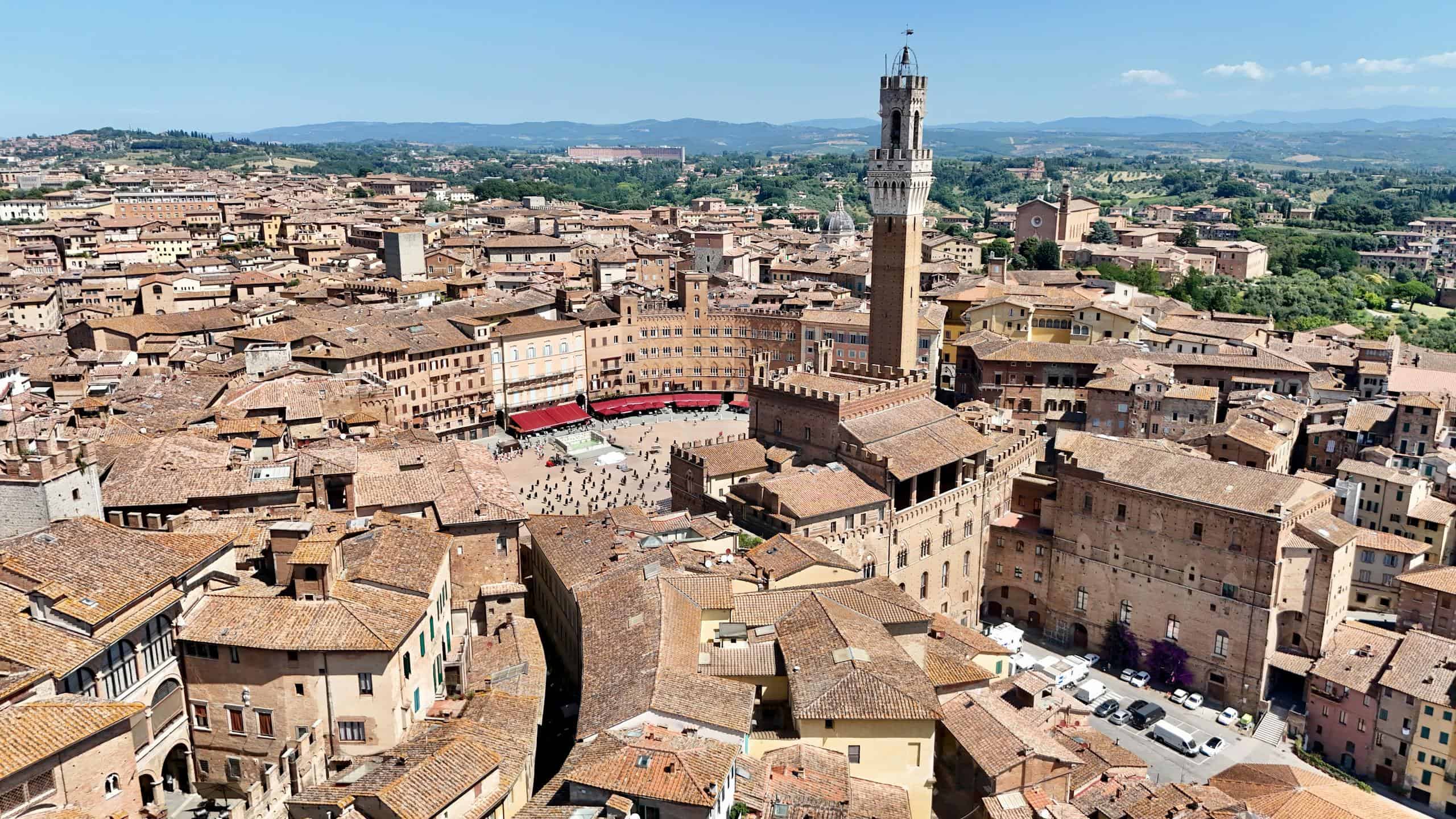
Florence has the stronger selection of classic Italian day trips. Siena, San Gimignano, Chianti, Lucca and Pisa are all within reach. Wine lovers can visit Chianti wineries without renting a car, while travelers who want a slower experience can spend a day at a Tuscan farmhouse or vineyard.
Book a Tuscany wine tour from Florence
Compare Siena, San Gimignano and Chianti tours
Rome also offers worthwhile excursions. Tivoli combines Villa d’Este and Hadrian’s Villa, while Orvieto, Frascati and the Castelli Romani provide alternatives to another day in the capital. Pompeii can be visited from Rome, but it makes for a long day; Naples is a better base if Pompeii is a major priority.
Is Rome or Florence More Crowded?
Both cities struggle with overtourism. Rome receives more visitors overall, but its size disperses them across a much larger area. The Vatican Museums, Colosseum, Trevi Fountain and streets around the Pantheon can be extremely congested.
Florence is smaller, so crowds can feel more concentrated. The area between the Duomo, Piazza della Signoria and Ponte Vecchio becomes particularly busy during the day. The Uffizi and Accademia require careful scheduling even though they are close together.
In either city, reserve major attractions before arrival and book the earliest practical time slot. Then balance those sights with less structured time in Trastevere or Prati in Rome, or Oltrarno in Florence.
Where to Stay in Rome
Where you stay in Rome can significantly affect your experience because the city is large and its major attractions are spread across several neighborhoods. The historic center is the most convenient for first-time visitors, Trastevere is best for atmosphere and nightlife, and Prati offers a quieter base near the Vatican. The area around Via Veneto and Villa Borghese provides central access with a little more breathing room.
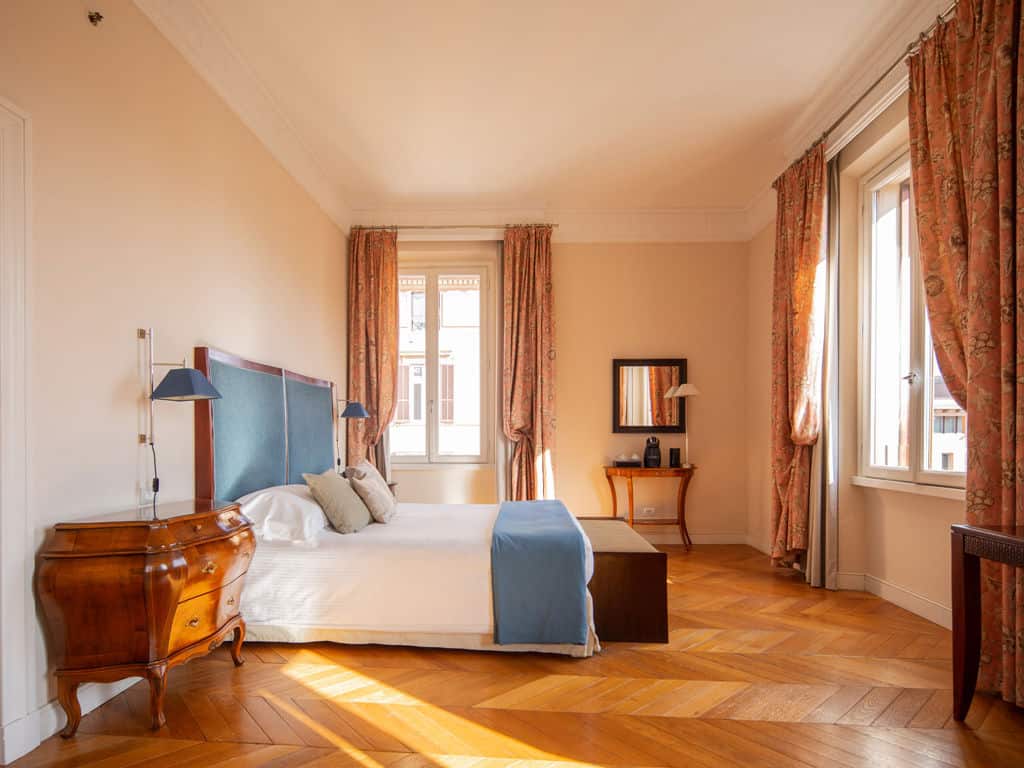
Rose Garden Palace is my personal choice in Rome. I first booked it for a four-week summer stay when we were living in Milan and my husband was working at the U.S. Embassy. I fell in love with the hotel and have returned on every visit since. Its location near Via Veneto places you within walking distance of the Spanish Steps and Villa Borghese, while its courtyard, wellness center and sauna provide a welcome retreat from Rome’s crowds.
Palazzo Navona is an excellent choice for travelers who want to stay in the heart of historic Rome. This boutique hotel is close to Piazza Navona, the Pantheon, Campo de’ Fiori and many of the city’s best restaurants. Its rooftop terrace is a particularly appealing place to have a drink while looking across Rome’s domes and rooftops. Choose it for sightseeing convenience, although the central location generally comes with higher rates.
Hotel Santa Maria offers a quieter, more intimate stay in Trastevere. Set around a peaceful courtyard in a former convent, it feels removed from the city even though restaurants, wine bars and lively neighborhood streets are right outside. It is a strong choice for couples and food lovers who want to experience Rome after many daytime visitors have left Trastevere.
Hotel Isa is a stylish boutique hotel on the Prati side of the Tiber, between the Vatican and Rome’s historic center. Castel Sant’Angelo, Piazza Navona, St. Peter’s Square and the Spanish Steps are all within walking distance. The rooftop terrace, where breakfast is served and evening drinks overlook St. Peter’s dome, makes it especially attractive for couples who want a central but less hectic base.
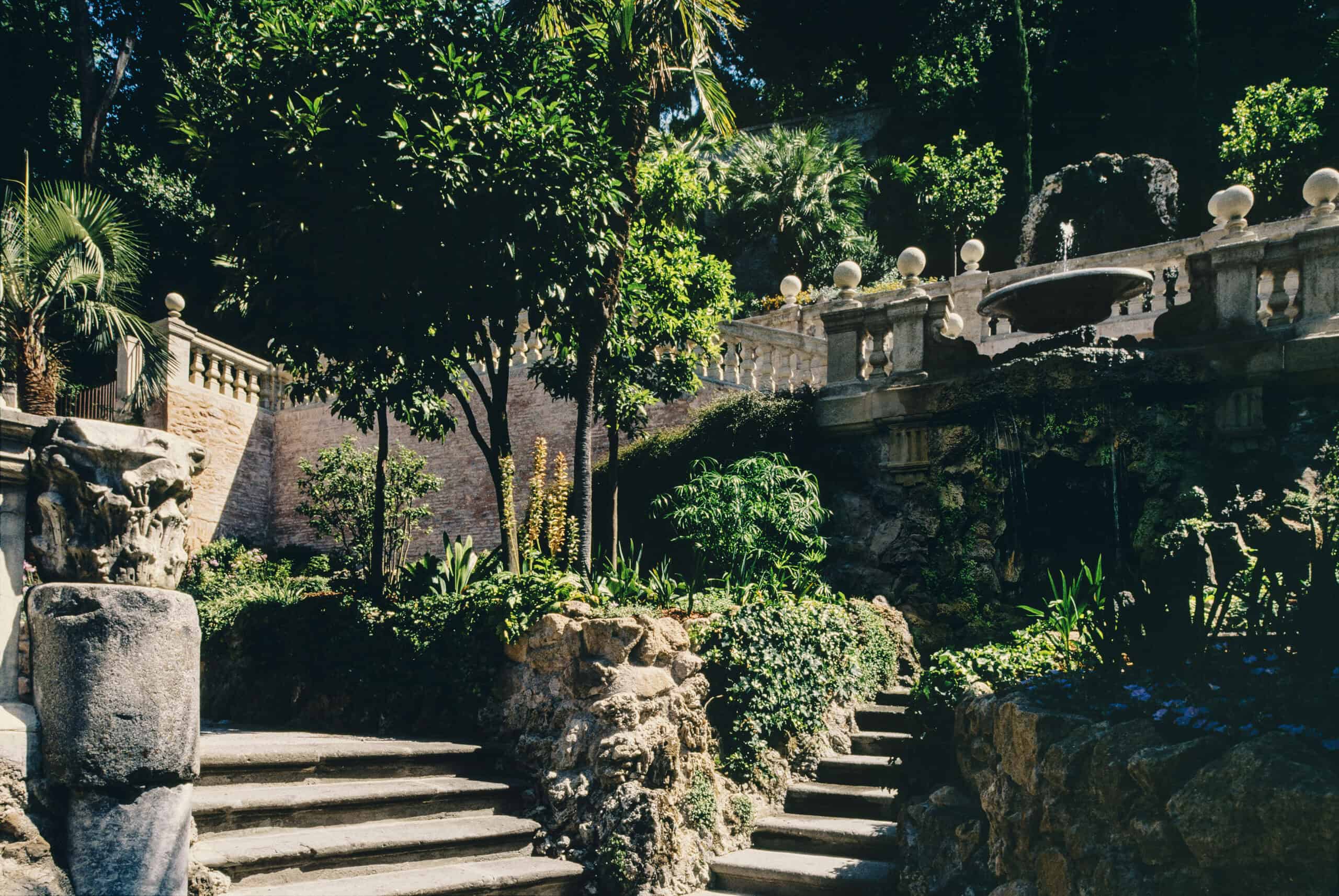
Hotel de Russie is the luxury choice for travelers who want exceptional service and one of Rome’s most prestigious locations. It sits between Piazza del Popolo and the Spanish Steps, with Villa Borghese nearby. The hotel’s private garden provides an unusually tranquil setting in central Rome. It is undeniably expensive, but it is a memorable splurge for a special trip.
Where to Stay in Florence
Florence’s historic center is the best place to stay on a first visit because nearly all of the major attractions are within walking distance. Staying near the Duomo offers maximum convenience, while Santa Maria Novella is practical for train travelers. Oltrarno feels more residential and atmospheric, but requires walking across the river to reach several headline sights.
Hotel Davanzati is a welcoming, family-run hotel in the historic center, close to Piazza della Signoria, the Uffizi and the Duomo. It offers traditional Florentine character without the rates associated with the city’s luxury hotels. Santa Maria Novella Station is also within walking distance, making it a particularly practical option for travelers arriving by train.
Hotel Brunelleschi is one of the best choices for travelers who want a luxurious stay beside the Duomo. The hotel incorporates a medieval tower and historic buildings while offering contemporary rooms and upscale service. Its central location makes it easy to return to the hotel between museum visits, which can be especially valuable during Florence’s hot and crowded summer afternoons.
Hotel Lungarno is a sophisticated luxury hotel overlooking the Arno near the Ponte Vecchio. Many rooms and public spaces provide river views, and the location is convenient for both the historic center and Oltrarno. Choose it for romance, polished design and the pleasure of waking up beside the river rather than directly amid the crowds surrounding the Duomo.
25hours Hotel Piazza San Paolino is a more playful and contemporary alternative to Florence’s traditional hotels. Its design is inspired by Dante’s Divine Comedy, with rooms based on heaven and hell. The hotel also has lively public spaces, a garden, sauna and restaurants, and its Santa Maria Novella location is convenient for the train station and historic center. It is best for travelers who prefer personality and energy over conventional Florentine elegance.
Hotel Calimala combines contemporary boutique style with an exceptionally central location near Piazza della Repubblica and Piazza della Signoria. Its rooftop restaurant and bar provide views over Florence, while the Uffizi, Duomo and Ponte Vecchio are all within an easy walk. It is a strong choice for couples who want modern rooms, nightlife and immediate access to the city’s principal sights.
How Many Days Do You Need in Rome and Florence?
Rome deserves at least four full days. Five days is better if you want to visit the Vatican, ancient sites and several neighborhoods without turning every day into a marathon.
Florence needs at least two full days, although three allows time for both major museums and a slower exploration of Oltrarno. Add another day for a Tuscan wine tour, Siena or a countryside cooking experience.
For a combined trip, plan seven to nine days: four or five nights in Rome and three or four in Florence. Travel between the cities by high-speed train rather than renting a car. A car is unnecessary in either historic center and creates more problems than it solves.
Rome or Florence: My Final Verdict
Rome is the better choice for a first trip to Italy if you want ancient history, major landmarks and the energy of a large city. It can be crowded and chaotic, but it also offers endless opportunities to step away from a checklist and discover a neighborhood, restaurant or small church you had not planned to visit.
My own connection to Rome makes it difficult to be entirely impartial. After spending weeks there with my family and returning repeatedly to Rose Garden Palace, Rome feels like more than a collection of famous sights. It is a city I know through everyday routines as well as monumental experiences.
Florence is the better choice for travelers who want a smaller, more walkable city centered on Renaissance art, Tuscan food and wine. It delivers an extraordinary amount in a relatively short visit and makes an ideal base for exploring the surrounding countryside.
Choose Rome for history, neighborhoods and a city that keeps unfolding. Choose Florence for art, walkability and Tuscany. If your itinerary allows, visit both. They are close enough to combine easily and different enough that neither makes the other feel repetitive.
Frequently Asked Questions About Rome vs. Florence
Is Rome better than Florence? Rome is better for ancient history, iconic landmarks, nightlife and a wider variety of neighborhoods. Florence is better for Renaissance art, walkability and easy access to Tuscany.
Which is cheaper, Rome or Florence? Prices depend heavily on travel dates and location. Rome offers a wider range of neighborhoods and accommodations, while Florence’s compact center can become expensive during peak season. Compare hotel prices for your exact dates before choosing.
Is Rome or Florence better for food? Rome is better for pasta, pizza, street food and neighborhood food tours. Florence is better for Tuscan cuisine, steak, regional wine and countryside cooking experiences.
Is Rome or Florence more walkable? Florence is more walkable because its major attractions are concentrated in a compact historic center. Rome requires more transportation and careful geographic planning.
Which city is better for a short trip? Florence is easier to experience in two or three days. Rome deserves at least four days and can easily fill a week.
Can you visit Rome and Florence on the same trip? Yes. Frequent high-speed trains connect the cities in roughly an hour and a half. A seven- to nine-day trip provides enough time to see both without rushing excessively.