

7 Less-Crowded Alternatives to Europe’s Most Popular Cities
This post may contain affiliate links. If you make a purchase through one of these links, I may earn a small commission at no additional cost to you.
Europe’s most famous cities are famous for a reason. Rome’s ruins, Barcelona’s architecture, Parisian cafés and Amsterdam’s canals belong on any traveler’s wish list.
But there is a point when popularity begins to interfere with the experience. When every major attraction requires a timed ticket, every sidewalk feels congested and dinner reservations must be made weeks ahead, you can spend more time managing crowds than enjoying the destination.
I felt this recently in Lisbon. It is a beautiful city, but it was far more crowded than I expected. Heavy traffic and steep streets also made getting around more challenging. A private tuk-tuk tour turned out to be the best way to see a lot of the city without spending the entire day navigating traffic and hills.
Porto, on the other hand, felt more approachable to me. It is not a hidden destination, but its compact center, riverfront setting and connection to Portugal’s port-wine culture made it easier to settle into and enjoy. One of the highlights of my visit was a tasting at Graham’s Port Lodge in Vila Nova de Gaia, overlooking Porto and the Douro River.
That experience made me think about the other European cities that provide many of the qualities travelers want without quite as much congestion and pressure.
If you want great food, historic neighborhoods, interesting hotels and memorable experiences, consider these alternatives to Europe’s most heavily visited cities.
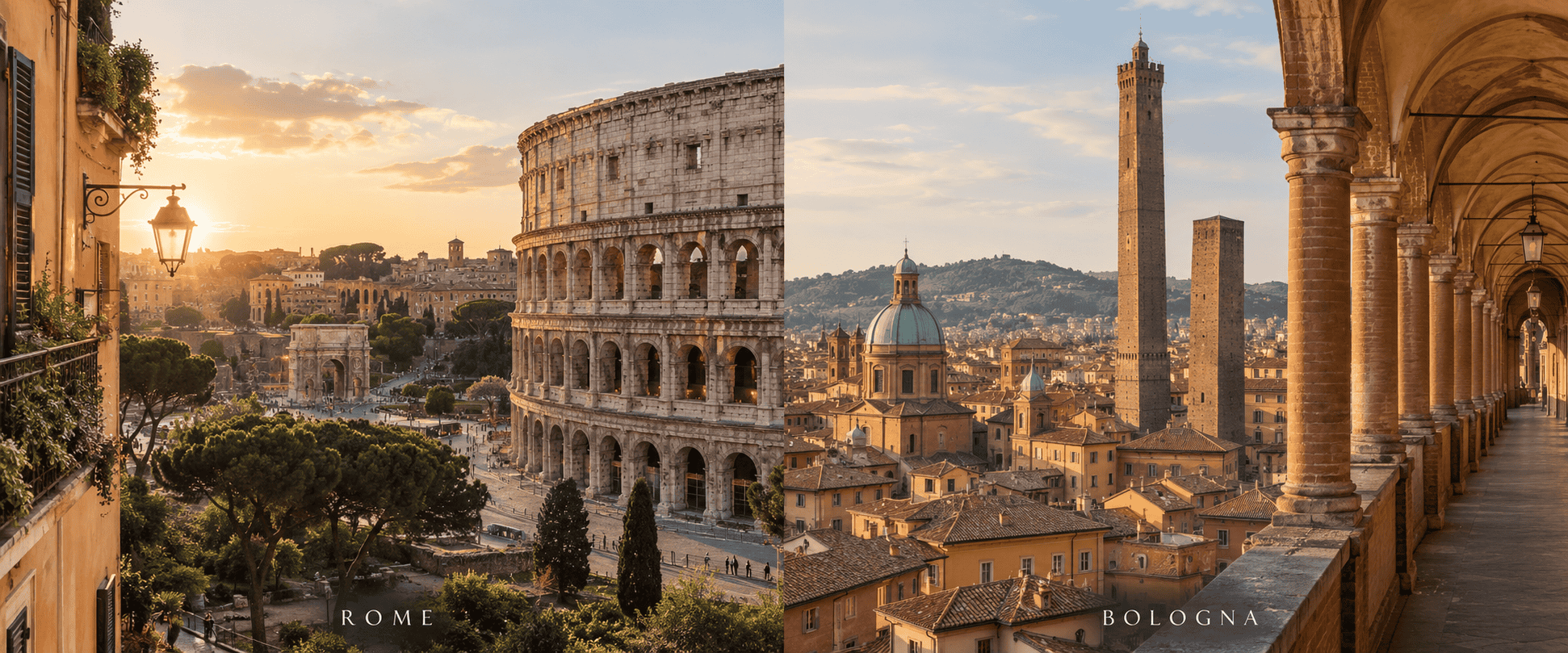
Choose Bologna Instead of Rome
Rome offers some of the most important historic attractions in Europe. It also attracts enormous numbers of visitors, particularly around the Colosseum, Trevi Fountain, Vatican Museums and Spanish Steps.
Bologna cannot replicate ancient Rome, and it shouldn’t try. It is the better choice when your idea of Italy revolves around food, markets and long meals rather than checking famous monuments off a list.
The capital of Emilia-Romagna is known for its miles of covered porticoes, medieval towers and one of Europe’s oldest universities. More importantly for food-focused travelers, Bologna is surrounded by the region responsible for Parmigiano Reggiano, prosciutto di Parma, traditional balsamic vinegar and fresh egg pasta.
Spend your time exploring the Quadrilatero market district, climbing to the Sanctuary of the Madonna di San Luca and sitting down to tagliatelle al ragù. Bologna also makes an excellent base for food-focused day trips to Modena, Parma and the surrounding countryside.
It is still a popular Italian city, particularly on weekends and during major trade fairs, but the overall experience is generally less dominated by international tourism than central Rome.
Best for: Food lovers, market enthusiasts and travelers who prefer experiencing a city to racing between major monuments.
Where to stay: Look near Piazza Maggiore for your first visit or in Santo Stefano for a quieter neighborhood atmosphere.
Hotel recommendation: Art Hotel Commercianti occupies a historic building beside the Basilica of San Petronio and places you in the heart of the old city.
Tour to book: A Bologna food tour with pasta, cheese, cured meats and local wine is the natural introduction to the city.
Read next: Rome vs. Florence: Which Italian City Should You Visit?
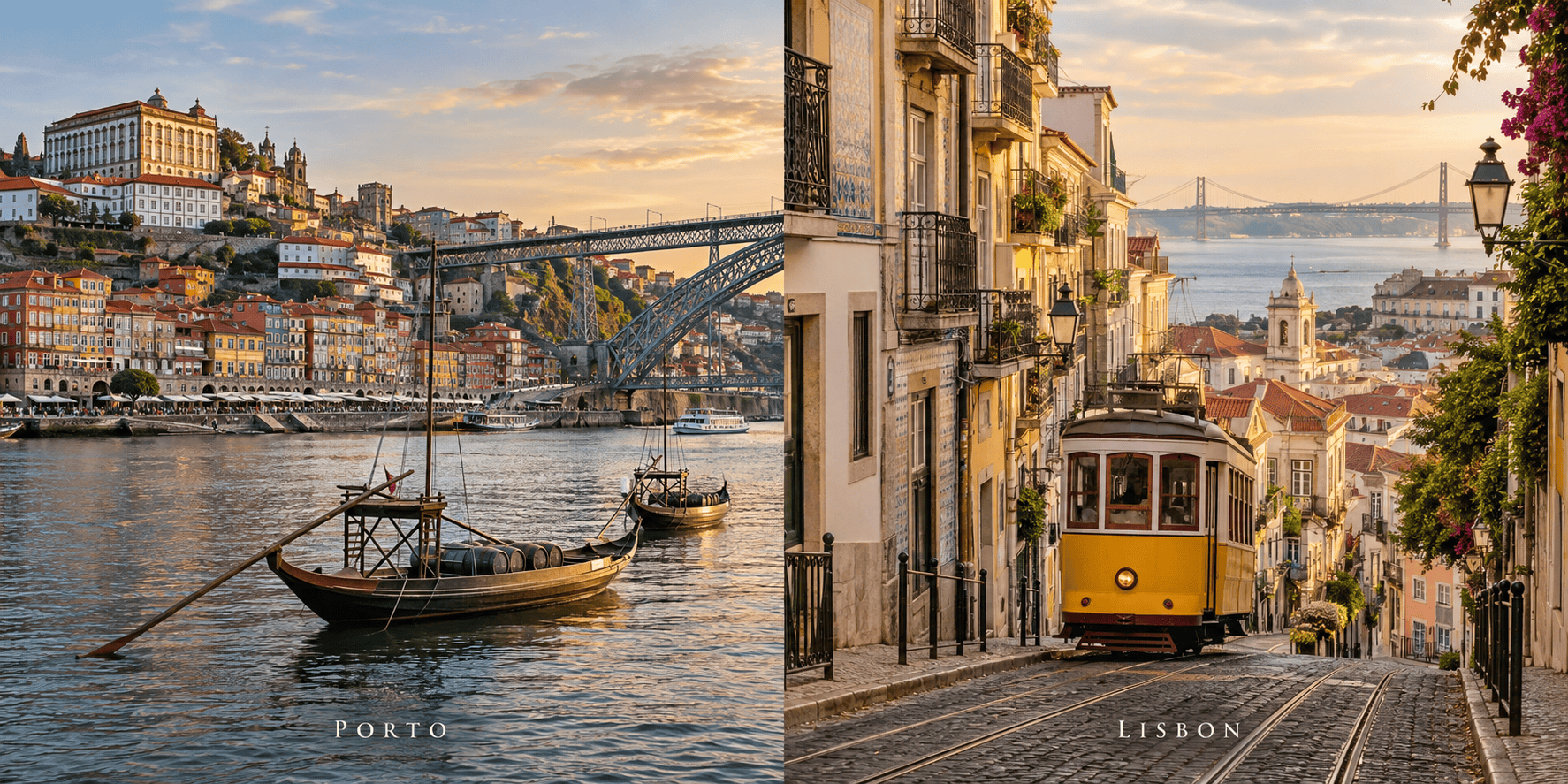
Choose Porto Instead of Lisbon
Lisbon has grand plazas, tiled buildings, historic trams and sweeping views over the Tagus River. It also has steep hills, heavy traffic and increasingly congested historic neighborhoods.
Porto offers a somewhat more compact experience. You can explore the Ribeira waterfront, cross the Dom Luís I Bridge and visit the port lodges of Vila Nova de Gaia without feeling as if you need to conquer an enormous capital city.
Porto is not crowd-free. Tourism has grown rapidly, and places such as Livraria Lello and the riverfront can become extremely busy. Visit during spring or fall and explore early in the day if you want a more relaxed experience.
For me, the real pleasure of Porto was its connection to port wine. My tasting at Graham’s Port Lodge combined wine, history and one of the best views of Porto. Even if you do not consider yourself a port drinker, touring one of the historic lodges adds important context to the city.
Best for: Wine lovers, couples and travelers who want a compact city with atmospheric river views.
Where to stay: Ribeira is convenient but busy. Cedofeita offers restaurants and shops with a more residential atmosphere. Vila Nova de Gaia is ideal if views and port lodges are your priorities.
Hotel recommendation: Torel Avantgarde is a stylish boutique hotel with Douro River views and a location slightly removed from the busiest riverfront streets.
Tour to book: Reserve a guided port-lodge tour or take a day trip through the Douro Valley for vineyard visits, tastings and a river cruise.
Read next: Porto vs. Lisbon: Which Portuguese City Should You Visit?
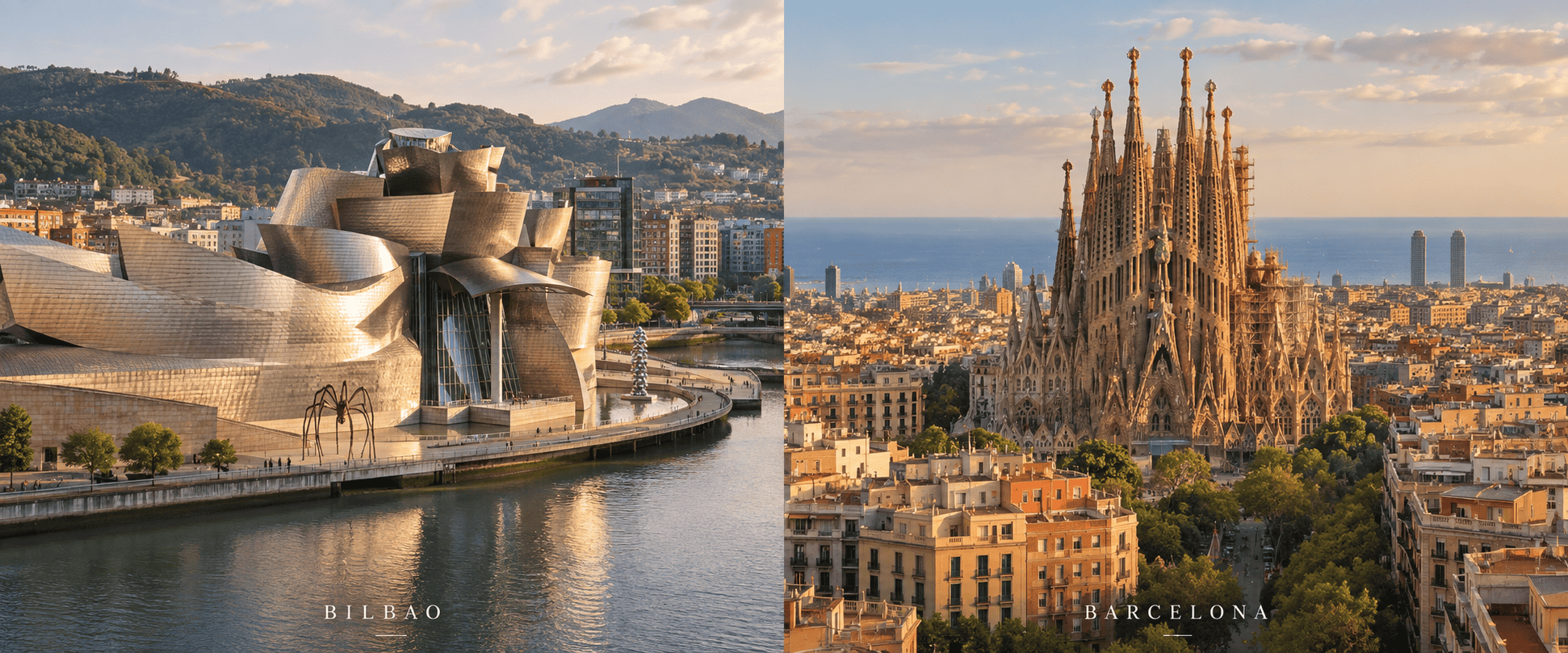
Choose Bilbao Instead of Barcelona
Barcelona is exciting, architecturally distinctive and filled with excellent food. It is also one of Europe’s most visited cities, and its principal attractions can feel relentlessly busy.
Bilbao provides an entirely different Spanish experience, as I learned on my recent trip there. This former industrial city has reinvented itself as a destination for contemporary architecture, Basque cooking and art.
The Guggenheim Museum is the obvious landmark, but Bilbao is more than a single museum. Walk along the Nervión River, explore the narrow lanes of Casco Viejo and sample pintxos in small bars around Plaza Nueva. Instead of committing to one large dinner, move between several bars and try one or two specialties in each.
Bilbao is compact and comfortable to explore on foot. You can also use it as a base for visiting the Basque coast, San Sebastián or the Rioja Alavesa wine region.
It does not have Barcelona’s Mediterranean beaches or Gaudí landmarks. What it offers is an excellent food-and-culture trip that often feels more grounded in everyday local life.
Best for: Art lovers, architecture enthusiasts and travelers who plan their days around food.
Where to stay: Abando is convenient for the Guggenheim and riverfront, while Casco Viejo places you close to pintxos bars and historic streets.
Hotel recommendation: The Artist Grand Hotel of Art faces the Guggenheim and has one of the best-located terraces in the city.
Tour to book: A small-group pintxos tour is the best introduction to Basque food and the customs surrounding it.
Read next: Madrid vs. Barcelona: Which Spanish City Is Better for You?
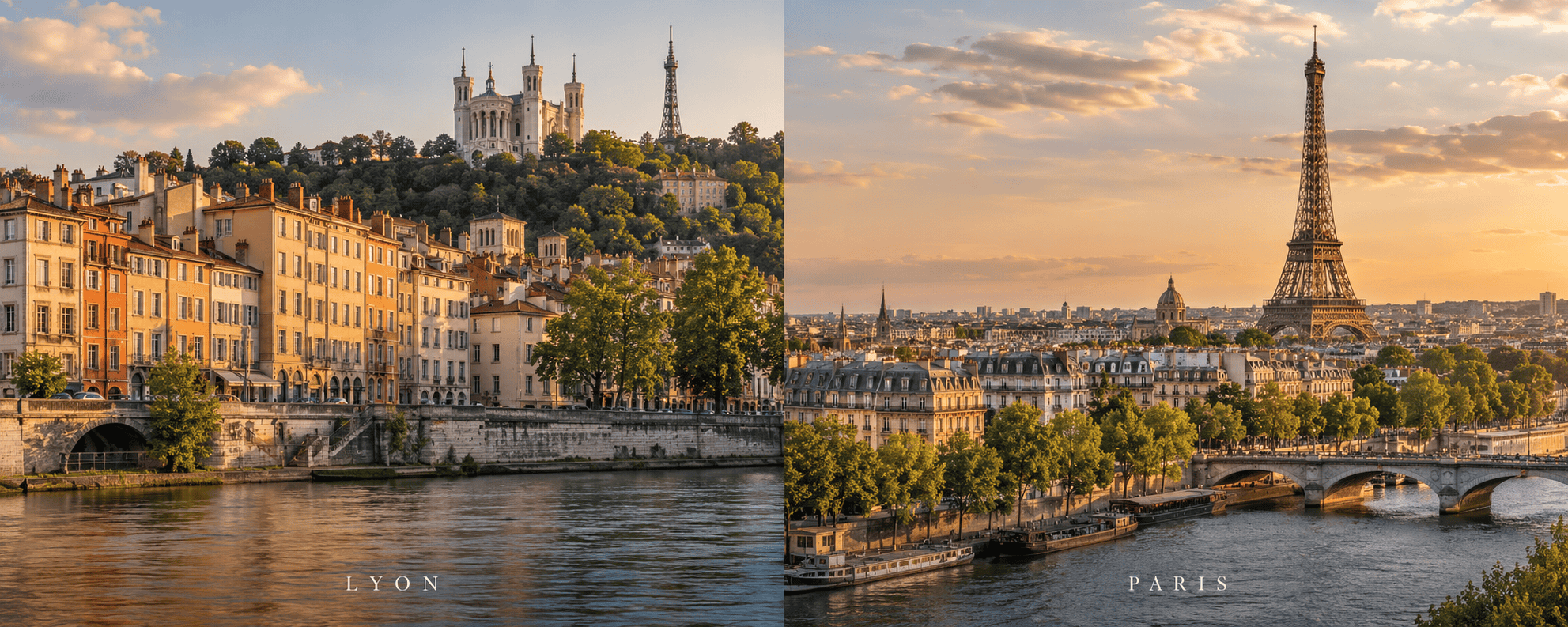
Choose Lyon Instead of Paris
It is difficult to imagine a first trip to France without Paris. However, if you have already visited the capital or care more about food than famous monuments, Lyon may be a more satisfying choice.
Lyon sits at the meeting point of the Rhône and Saône rivers and has one of France’s most celebrated culinary traditions. Its historic center includes Renaissance buildings, hidden passageways known as traboules and inviting squares lined with cafés.
Traditional bouchons serve hearty Lyonnaise cooking, while Les Halles de Lyon Paul Bocuse brings many of the region’s finest food producers under one roof. The city also provides easy access to the wineries of Beaujolais and the northern Rhône Valley.
Lyon is a substantial city, not a sleepy village, so there is plenty to do over three or four days. What it generally lacks is the constant pressure surrounding Paris’s most famous attractions.
Best for: Serious food lovers, repeat visitors to France and travelers who enjoy exploring on foot.
Where to stay: Presqu’île is convenient for restaurants and shopping. Vieux Lyon is atmospheric but busier during the day. Croix-Rousse has a more neighborhood-oriented feel.
Hotel recommendation: Villa Maïa offers an elegant retreat on Fourvière Hill with views over the city.
Tour to book: Consider a Vieux Lyon food tour or a Beaujolais wine-country day trip.
Browse Lyon food and wine tours
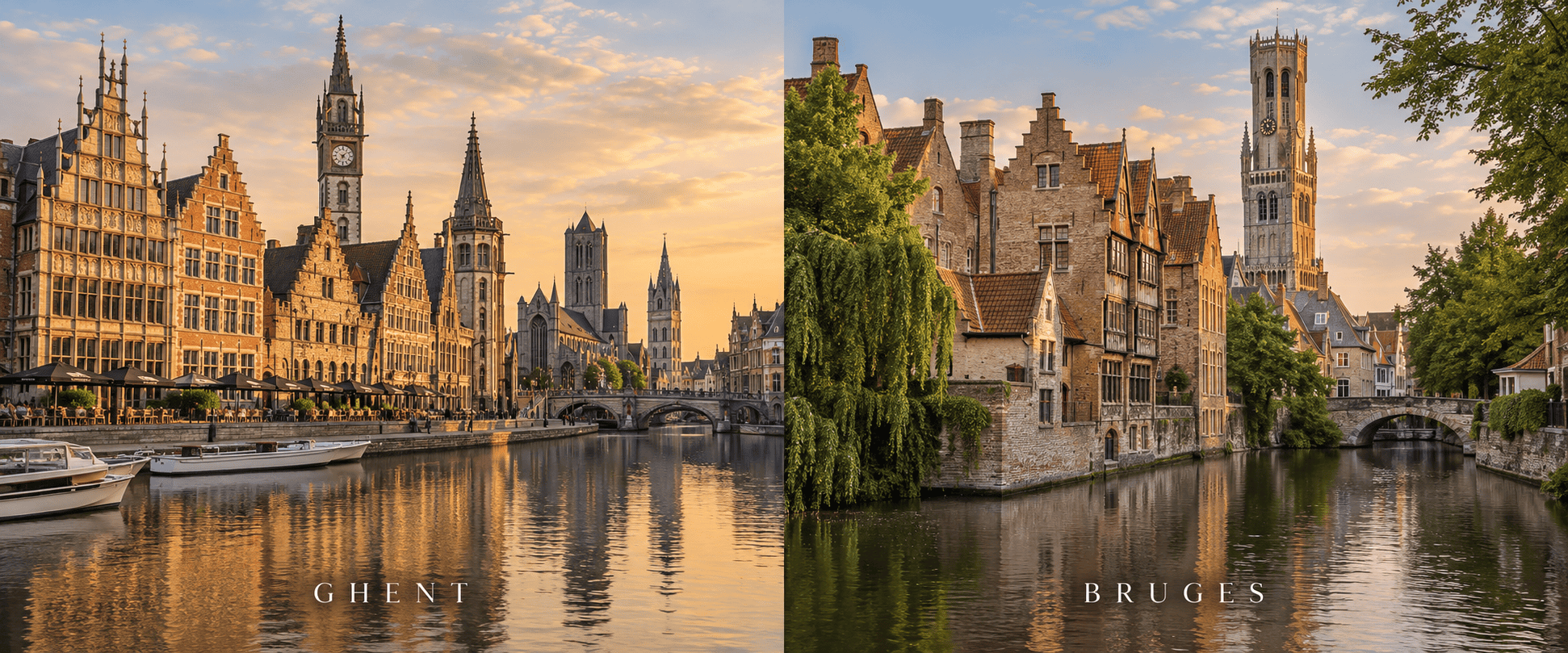
Choose Ghent Instead of Bruges
Bruges is one of Europe’s most picturesque medieval cities. Its compact historic center is also visited by a large number of day-trippers.
Ghent offers canals, ornate guild houses, medieval architecture and Flemish food, but it feels more like a living university city than a carefully preserved attraction.
The Castle of the Counts, St. Bavo’s Cathedral and the Graslei waterfront provide plenty of historic interest. After seeing them, you can explore independent shops, restaurants and neighborhoods where local life continues beyond the primary sightseeing streets.
Ghent becomes especially appealing in the evening, after many day visitors have departed. Staying overnight allows you to enjoy its illuminated waterfront and find a café or beer bar without rushing back to another city.
Best for: Travelers who like historic cities but want contemporary restaurants, nightlife and local energy as well.
Where to stay: The historic center is convenient for first-time visitors. The area around Prinsenhof is quieter while remaining within walking distance of the main sights.
Hotel recommendation: Pillows Grand Boutique Hotel Reylof combines a historic setting with a garden, spa and easy access to the center.
Tour to book: A guided history and food tour can introduce you to Flemish specialties, local beer and the city’s medieval landmarks.
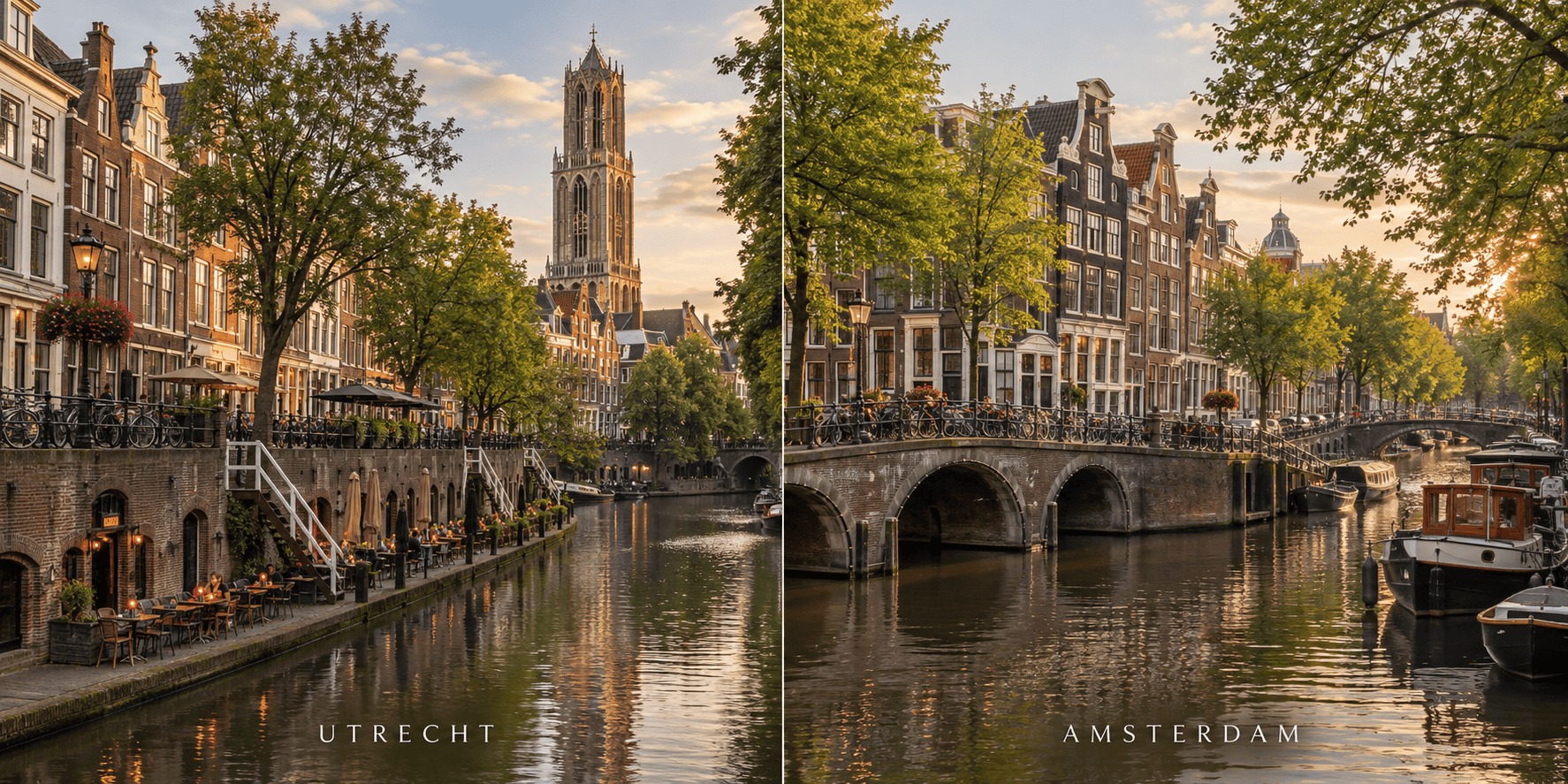
Choose Utrecht Instead of Amsterdam
Amsterdam’s canals and museums remain compelling, but its central streets can become extremely crowded. Utrecht offers canals, bicycles, historic architecture and a lively café culture about 30 minutes from Amsterdam by train.
The city’s most distinctive feature is its two-level canal system. Along the Oudegracht, former wharf cellars have been transformed into restaurants, shops and terraces beside the water.
Climb the Dom Tower, visit the Museum Catharijneconvent or simply walk the canals without trying to follow an ambitious sightseeing schedule. Utrecht has a large student population, giving it plenty of restaurants and energy while retaining a more intimate scale than Amsterdam.
You can even divide your stay between the two cities. Spend a night or two in Amsterdam for its major museums and then move to Utrecht for a calmer conclusion to your trip.
Best for: Canal lovers, independent travelers and anyone seeking a relaxed Dutch city break.
Where to stay: The Museum Quarter is scenic and convenient. Wittevrouwen is a pleasant neighborhood with cafés and restaurants outside the busiest center.
Hotel recommendation: Mother Goose Hotel is a small boutique property in the historic center, within easy walking distance of the canals.
Tour to book: Explore the canals by boat or join a walking tour covering the old city and Dom Tower.
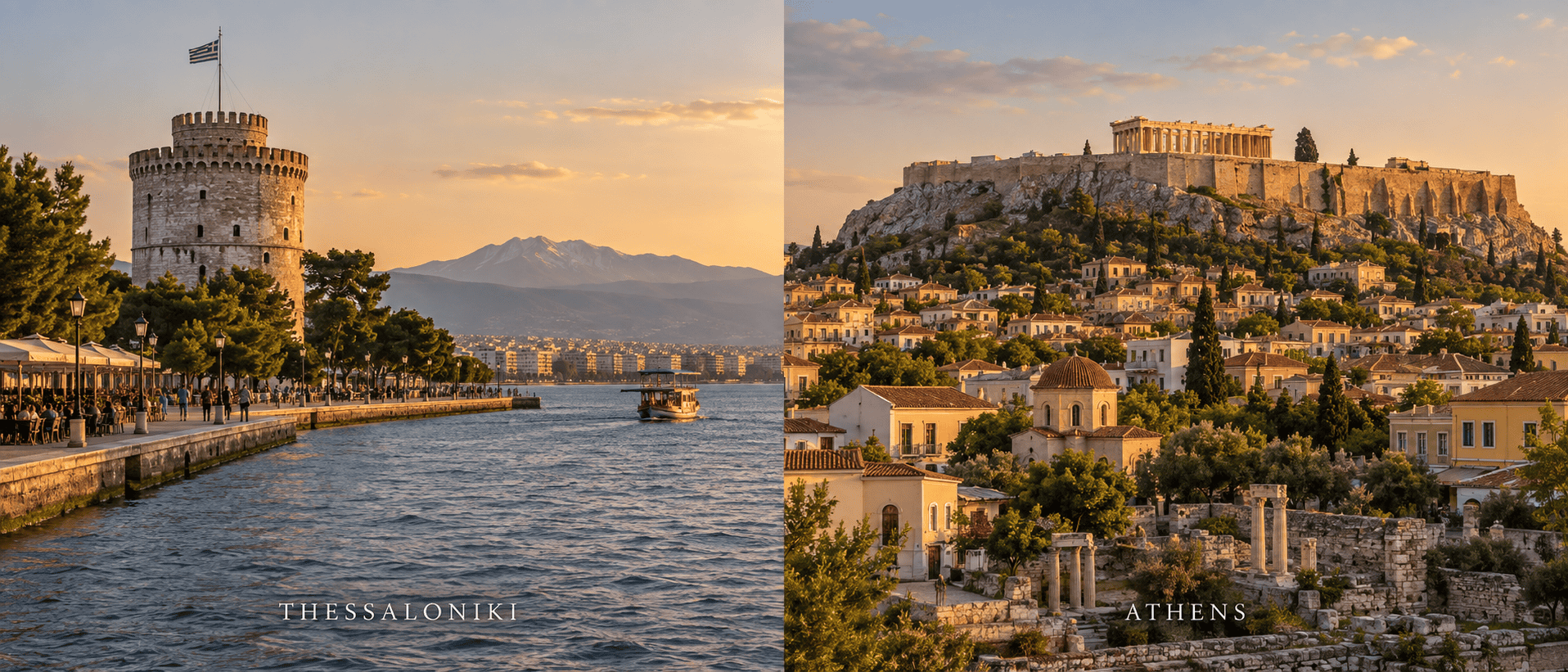
Choose Thessaloniki Instead of Athens
Athens is essential if the Acropolis and the foundations of ancient Greece are your priorities. If you are looking for a Greek city centered on food, waterfront evenings and overlapping layers of history, consider Thessaloniki.
Greece’s second-largest city reflects Roman, Byzantine, Ottoman and Jewish influences. You can visit the White Tower, explore the markets, see remarkable Byzantine churches and walk along the waterfront at sunset.
Thessaloniki is also one of Greece’s best food destinations. Its cooking has been shaped by people arriving from across the Balkans, Asia Minor and the eastern Mediterranean. Markets, bakeries, tavernas and modern restaurants make food an integral part of the experience rather than something added between sightseeing stops.
It remains a busy working city, but it generally feels less dominated by international visitors than the areas surrounding Athens’s best-known attractions.
Best for: Greek food, layered history and travelers who enjoy cities with an authentic everyday rhythm.
Where to stay: The area near Aristotelous Square is convenient for first-time visitors. Ladadika has restaurants and nightlife, while Ano Poli offers history and city views.
Hotel recommendation: ON Residence occupies a restored waterfront building and places you close to the promenade and central restaurants.
Check Thessaloniki hotel rates
Tour to book: Begin with a market and food tour, then consider a day trip to nearby wineries or the archaeological site of Vergina.
How to Find a Less-Crowded European Destination
Choosing a less-touristed destination does not have to mean sacrificing good hotels, restaurants or cultural attractions. The best alternatives usually share several qualities with their famous counterparts.
Look for a city in the same country or region with good rail or air connections. Decide what you truly want from the better-known destination. If your reason for visiting Rome is Italian food rather than ancient ruins, Bologna might suit you better. If Barcelona appeals because of Spanish food and urban culture rather than Gaudí, Bilbao becomes a convincing alternative.
Avoid relying too heavily on the phrase “hidden gem.” Truly undiscovered European cities are increasingly rare, and places described that way can still become crowded during festivals, cruise calls and summer weekends.
Traveling in April, May, late September or October can sometimes make more difference than switching destinations. Even popular cities become more enjoyable when you avoid the busiest weeks and visit major attractions early in the morning.
Should You Skip Europe’s Famous Cities Completely?
Not necessarily. I would never tell a first-time visitor who has dreamed of seeing Rome or Paris that another destination is exactly the same. It isn’t.
The better question is whether the famous city delivers the experience you personally want.
If seeing the Colosseum has been a lifelong dream, go to Rome and plan carefully. If you simply want wonderful Italian meals, atmospheric streets and a few days immersed in Italian culture, Bologna may be the better trip.
You can also combine the two. Spend two or three days seeing the essential sights in a major city, then continue by train to a smaller destination where you can slow down.
The places we remember most are not always the ones with the most famous landmarks. Often, they are the cities where we found an inviting neighborhood restaurant, lingered over a glass of wine or wandered without needing a reservation for every hour of the day.
Rome, Lisbon, Barcelona, Paris and Amsterdam remain worth visiting. But they are no longer the only obvious choices.
Bologna, Porto, Bilbao, Lyon, Ghent, Utrecht and Thessaloniki offer exceptional food, culture and history with a little more room to experience them. And sometimes, having that room is what turns a busy sightseeing trip into a place you genuinely enjoy.