
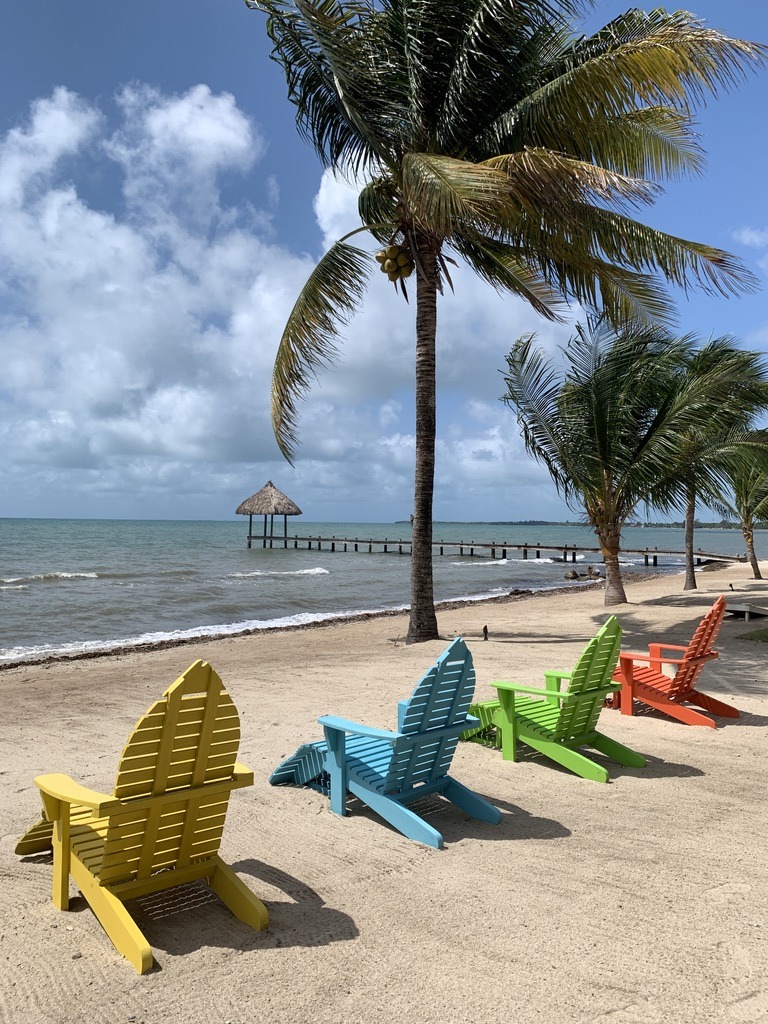
Caribbean Islands Outside the Hurricane Belt: The Safest Places to Book
This post may contain affiliate links. If you book or purchase through them, I may earn a small commission at no extra cost to you. I only recommend places and products I genuinely love.
Many travelers assume the Caribbean is completely off-limits during hurricane season, but that’s not actually true. Several Caribbean islands sit outside the main hurricane belt or are far less likely to experience major storms, making them excellent choices for summer and early fall travel.
What makes this even better is that this is often when you’ll find lower hotel rates, fewer crowds, and easier restaurant reservations at some of the Caribbean’s best resorts.
If you’re planning a Caribbean trip between June and November, these are the islands I would personally prioritize for better weather, beautiful beaches, and resorts that are still worth the splurge. If you’re planning a cold-weather escape, I’ve also compared the best Caribbean islands to visit in winter, including which are warmest, easiest to reach and best for families.

Quick Caribbean Travel Planning Links
- Compare Caribbean hotel prices here: Hotel comparisons
- Reserve a rental car here: Discover Cars
- Compare travel insurance here: Travel Insurance Master
- Browse top Caribbean excursions here: Get Your Guide
| Island | Best For | Best Time to Visit | Hotel Style | Best Excursion |
|---|---|---|---|---|
| Aruba | First-time visitors | Year-round | Large resorts | Catamaran cruise |
| Curaçao | Food lovers | Summer/Fall | Boutique hotels | Klein Curaçao day trip |
| Barbados | Luxury travelers | Winter/Spring | Elegant resorts | Rum tours |
| Bonaire | Divers | Year-round | Small resorts | Snorkeling tours |
Safest Caribbean Islands To Book Outside the Hurricane Belt
→ Aruba (most reliable, lowest rainfall)
→ Curaçao (best mix of culture + beaches)
→ Bonaire (best for diving, least crowded)
→ Barbados (edge of belt, still low risk)
→ Grenada (lush + quieter)
→ Trinidad & Tobago (least touristy, very low risk)
→ St. Vincent & the Grenadines (remote + scenic)
Why Some Caribbean Islands Are Outside the Hurricane Belt
The short answer is geography. Hurricanes that form in the eastern Atlantic typically travel westward and northward, which means the islands closest to South America — particularly those in the southern Caribbean — are largely bypassed. The ABC islands (Aruba, Bonaire, Curaçao) sit just north of Venezuela, so far south that the atmospheric conditions needed to sustain hurricanes rarely exist there. Other islands like Grenada, Trinidad and Tobago, and Barbados also sit at the southern or southeastern edge of the storm corridor.
No destination is completely immune — Grenada took a direct hit from Hurricane Ivan in 2004 and felt effects from Hurricane Beryl in 2024 — but the islands below have historically low hurricane strike rates and offer a dramatically safer bet for June through November travel than their northern counterparts.
Aruba (Safest Overall — Best for Easy, Worry-Free Travel)
Best for: Travelers who want the easiest, most reliable Caribbean trip with consistently good weather, great resorts, and zero stress about hurricane season

Of all the Caribbean islands outside the hurricane belt, Aruba is the most reliably storm-free. The island averages about 18 inches of rainfall per year, its trade winds are almost constant, and its dry, sunny weather is essentially year-round. The last hurricane to even graze Aruba was Hurricane Felix in 2007, which caused minor damage. Since then — nothing.
I’ve visited Aruba several times and consider it one of the friendliest islands in the entire Caribbean. Eagle Beach consistently ranks among the world’s top beaches (it earns it — the sand is impossibly white and the water color is that improbable turquoise), but Aruba has more going on than its coastline. Arikok National Park offers hiking through rugged desert terrain, natural pools, and cave paintings. Oranjestad, the capital, is compact and colorful with Dutch colonial architecture and good food. And the dining scene across the island punches well above its weight for a place so focused on beach tourism.
Top things to do in Aruba
- Eagle Beach — swimming, sunbathing, and one of the best sunsets in the Caribbean
- Arikok National Park — caves, natural pools, hiking trails, and iguanas everywhere
→ Don’t miss out on one of the island’s famous jeep tours to the natural pool and caves - Get out on the water and see the bluest ocean ever!
→ This is my favorite Aruba Catamaran and Snorkeling Cruise - A sunset cruise is the best way to unwind from the day
→ This Aruba Sunset Sailing Cruise is top-rated - Oranjestad — the capital, worth an afternoon for architecture, markets, and local food
- ATVs are the best way to explore the island
→ These book up fast because they’re quite popular; don’t miss out and book one today
→ See more top-rated tours and activities in Aruba
Where to stay in Aruba
Best for couples:
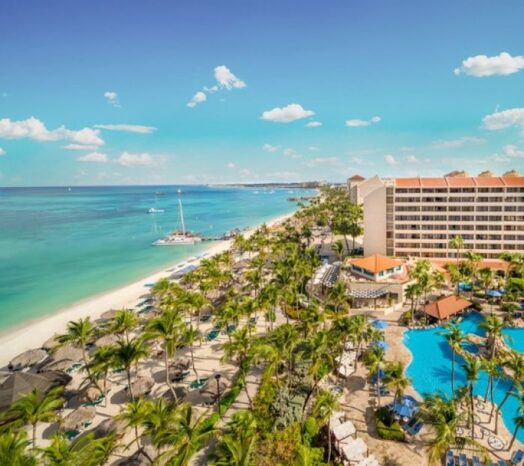
Renaissance Wind Creek Aruba Resort sits right in Oranjestad and offers two distinct experiences — the adults-only Marina Hotel and the family-friendly Ocean Suites. The resort’s private Renaissance Island is the headline attraction: flamingos actually walk the beach.
🏖️ Wake up steps from the beach here
Best luxury hotel:
The Ritz-Carlton, Aruba is on Palm Beach and delivers everything you’d expect from the brand — beachfront cabanas, fine dining, a vibrant casino, exceptional service. If you want to splurge, this is where to do it.
🏖️ Plan your vacation while rates are still reasonable
Best for families:
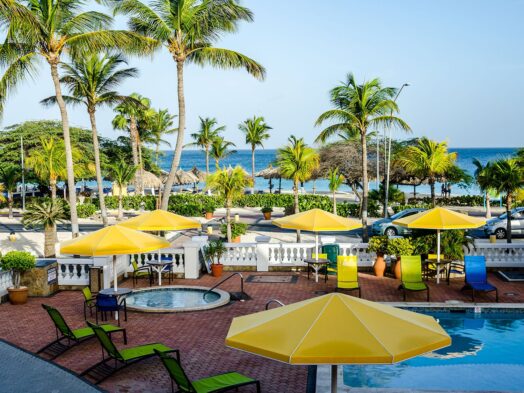
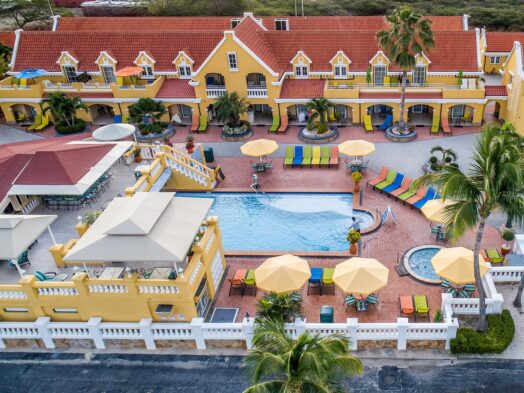
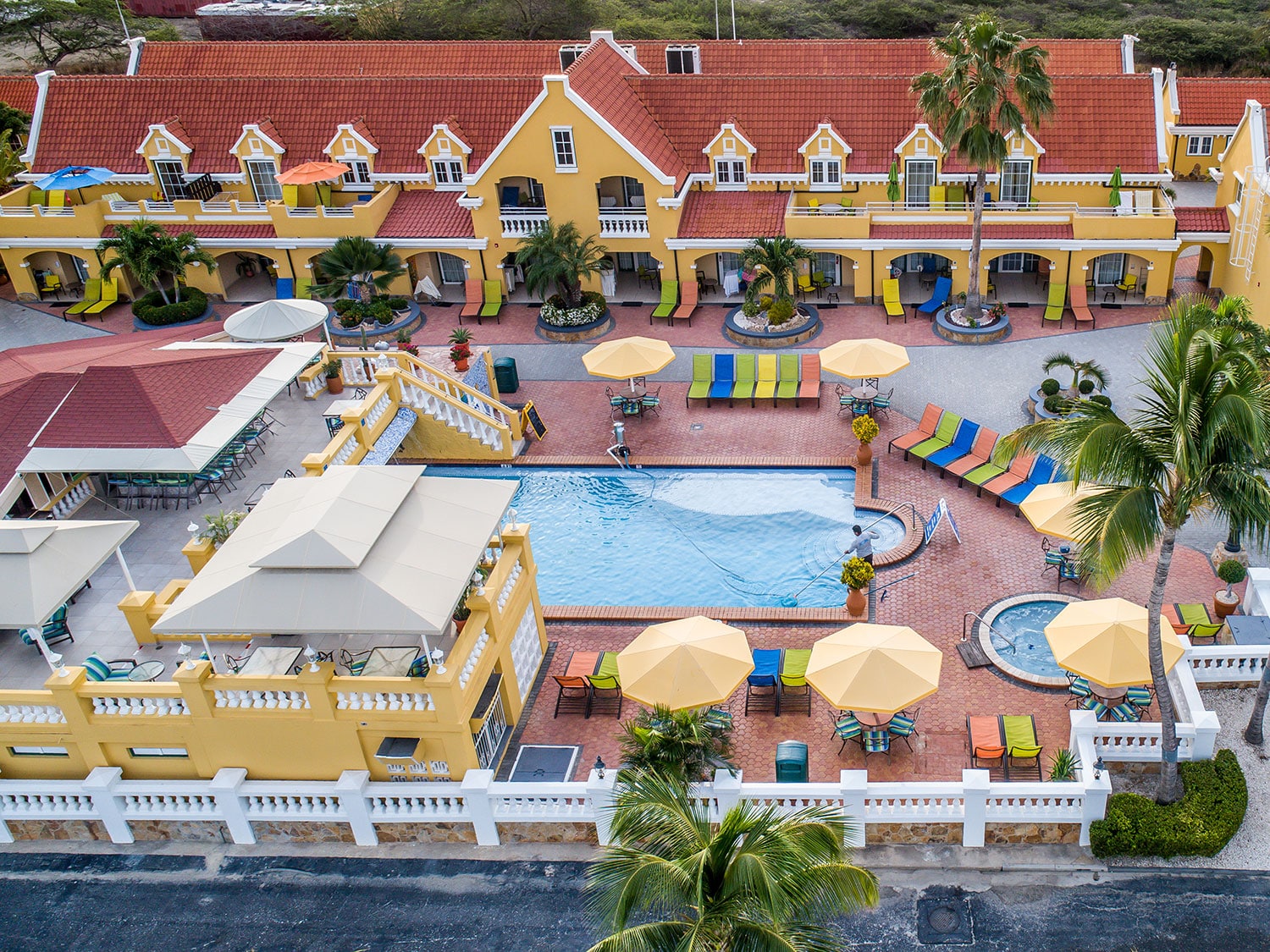
Amsterdam Manor Beach Resort is a boutique property I’ve written about previously as a guest. It’s a Dutch colonial-style boutique hotel situated across from Eagle Beach, eco-certified, with a genuinely excellent on-site restaurant. Intimate, charming, and significantly more personality than the big resort properties.
🏖️ Stay where the beach is literally outside your door
→ Check current prices in Aruba before your dates sell out; this island is popular!
Bonaire (Best for Diving + Quiet Trips)
Best for: Travelers who prioritize diving, snorkeling, and a quiet, uncrowded island with minimal resort development

Bonaire’s claim to hurricane immunity is strong. No hurricane has ever made direct landfall on the island in recorded history, and its annual hurricane strike risk sits around 2.2%. Its position just north of Venezuela puts it south of the typical storm tracks and close enough to the equator that the atmospheric dynamics required to sustain a hurricane rarely take hold.
What brings people here is the water. Bonaire is one of the premier diving destinations in the world — the Bonaire National Marine Park wraps nearly the entire island, and access is straightforward from shore (no boat required for most sites). Snorkelers do extremely well here too. On land, Washington Slagbaai National Park covers the northern third of the island with hiking trails, bird watching, and deserted beaches. Flamingos congregate at the salt pans in the south.
Bonaire is not a resort island in the typical sense. It’s quiet, un-crowded, and deeply committed to conservation. If that sounds like your speed, it’s an extraordinary place.
Top things to do in Bonaire
- Bonaire National Marine Park — world-class shore diving and snorkeling, no boat needed
→ Travelers love this Bonaire Snorkeling Excursion - Take a Chill and Grill Catamaran Tour
→ Check availability for this popular tour for your dates - Salt pans and flamingo sanctuary — a surreal landscape worth the drive south
→ Swim with the sea turtles - Washington Slagbaai National Park — hiking, bird watching, and beautiful isolation
→ See what other travelers love to do on Bonaire
Where to stay in Bonaire
Best luxury resort: Harbour Village Beach Club
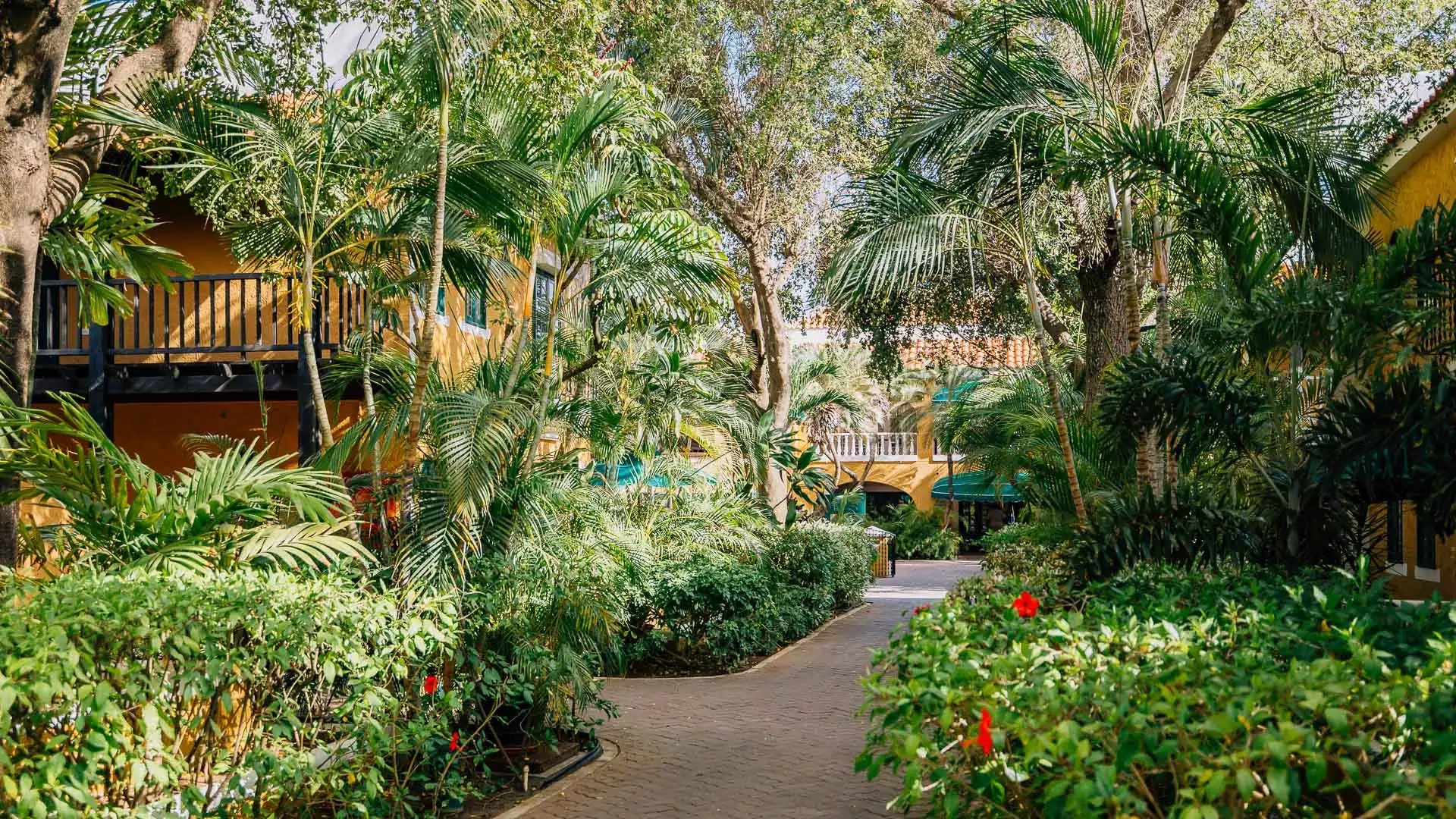
Bonaire’s most upscale property — private white-sand beach, full-service spa, world-class dive operation, waterfront dining. It’s the choice if you want luxury with direct access to the reef.
🏖️ This is where to stay if you want the full experience
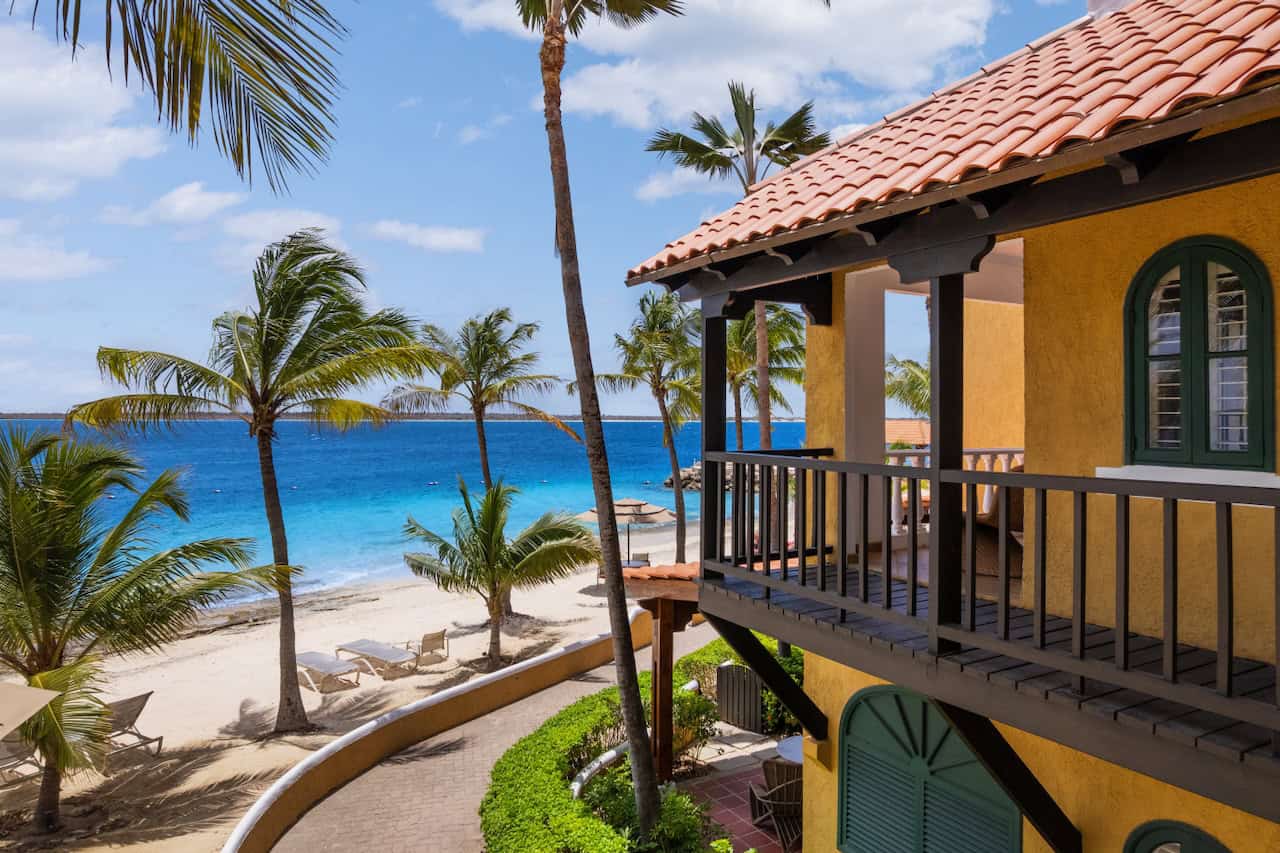
Best boutique hotel: Bellafonte Luxury Oceanfront Hotel
A boutique retreat with breathtaking sea views, a private pier for snorkeling and diving, and a genuinely intimate atmosphere. Beautifully designed suites, personalized service, and the kind of tranquility that’s genuinely hard to find.
🏖️ Book now for the best combination of views and locations
→ Compare rates now — the best rooms in Bonaire go quickly here
Curaçao (Best for Culture + Food Without Hurricane Risk)
Best for: Travelers who want a mix of beaches, culture, and standout food in a more vibrant, less touristy setting than Aruba

Curaçao is my favorite of the ABC islands for anyone who wants something beyond the beach. The island’s capital, Willemstad, is a UNESCO World Heritage Site — the candy-colored Dutch colonial buildings lining the waterfront are legitimately stunning in person, the Queen Emma Bridge swings open to let ships pass through the harbor, and there’s a growing food and arts scene that feels more like a European city than most Caribbean destinations. Curaçao’s Tourist Board actually runs hurricane preparedness seminars for the entire tourism sector, so the island takes its safety infrastructure seriously.
The diving and snorkeling are excellent (reefs are in good condition), the beaches range from resort-serviced to completely deserted, and Christoffel National Park offers hiking to panoramic views. The food scene draws from African, European, and Latin influences and is genuinely worth exploring.
Top things to do in Curaçao

- Willemstad — the UNESCO-listed capital; walk across the floating Queen Emma Bridge
→ Do not miss this tour and food tasting of the city - Sail aboard a yacht to paradise at Klein Curacao
→ This Klein Curaçao Catamaran Day Trip is the absolute best - This island has so many places to explore
→ Book this off-road ATV tour and you’ll see it all - Hato Caves — ancient limestone caves with stalactites and Amerindian petroglyphs
→ Take an underwater aquafari; these book up fast! - Christoffel National Park — hiking trails through rugged terrain with sweeping island views
→ See the top-rated activities in Curacao that other travelers love
Where to stay in Curaçao
Best for couples: Avila Beach Hotel
The oldest operating hotel in Curaçao and sits in Willemstad on a private beach. Historic charm meets genuine luxury here — beautifully designed rooms, excellent dining, and a spa, all wrapped in the kind of tropical elegance that newer properties just can’t replicate.
🏖️ Book soon for this private beach stay

Best for luxury lovers: Baoase Luxury Resort
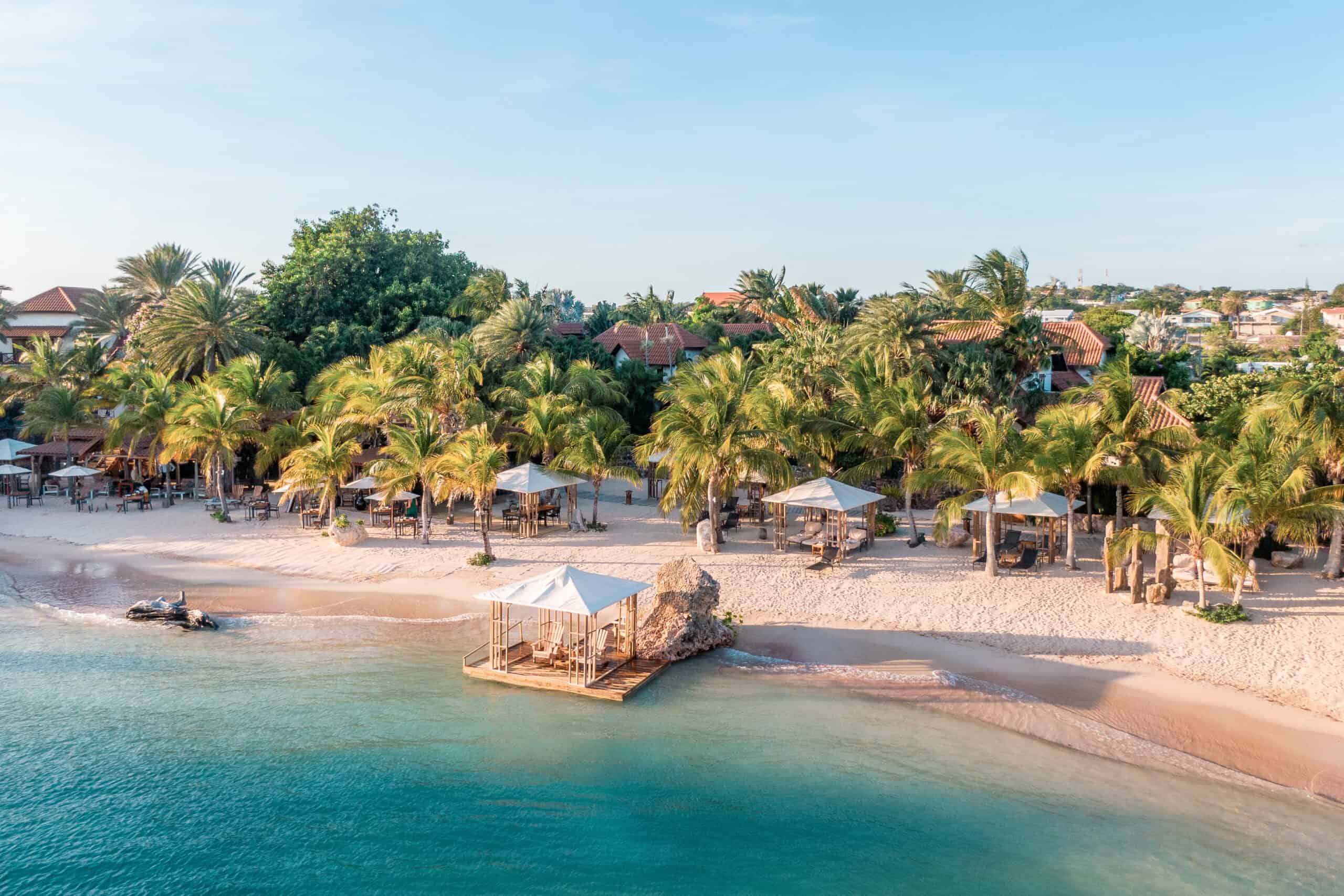
A five-star, Balinese-inspired retreat with private villas, a stunning beachfront, gourmet dining, and the sort of rarefied seclusion that makes it ideal for a honeymoon or a serious splurge. It consistently ranks as one of the top resort experiences in the entire Caribbean.
🏖️ Book the resort people can’t stop talking about
→ Check availability in Curacao for your dates before prices jump
Aruba vs Curaçao vs Bonaire (Which Should You Choose?)
Aruba = easiest, most resorts, most “American-friendly”
Curaçao = best culture + food scene
Bonaire = best for diving + least crowded
Trinidad & Tobago (Best for Culture + Lowest Storm Risk)
Best for: Travelers who care more about culture, food, and authenticity than resorts

Trinidad and Tobago sit at the southern end of the Caribbean island chain, just off the Venezuelan coast, which places them well outside the main hurricane corridor. The twin-island nation does occasionally experience intense tropical rainfall during storm season, but direct hurricane hits are extremely rare.
The two islands offer completely different experiences, which is part of their appeal. Trinidad is lively, diverse, and culturally rich — home to one of the greatest carnivals in the world, a serious food scene (the street food alone is worth the flight), and the Asa Wright Nature Centre, a birding destination of international standing. Maracas Beach is gorgeous and famously the place to eat bake and shark, a local specialty you’ll think about long after you’ve left.
Tobago is the quieter counterpart: pristine beaches, clear water, lush rainforest, and excellent diving at Buccoo Reef. If your goal is to actually decompress, Tobago delivers.
Top things to do in Trinidad and Tobago
- Maracas Beach (Trinidad) — scenic and lively; eat bake and shark here, not optional
→ Explore Maracas Beach and the food scene - Caroni Bird Sanctuary (Trinidad) — mangrove tours to spot the Scarlet Ibis at sunset
- Pigeon Point Beach (Tobago) — iconic thatched jetty, turquoise water, classic Caribbean scene
- Buccoo Reef (Tobago) — snorkeling and glass-bottom boat tours over living coral
→ Book a glass bottom boat tour for your trip
→ Find the best activities in Trinidad and Tobago
Where to stay in Trinidad and Tobago
Best for a rooftop pool: Hyatt Regency Trinidad
A modern waterfront hotel in Port of Spain with a rooftop infinity pool, excellent dining, and a full-service spa. Well located for exploring Trinidad’s cultural scene, and a very solid choice for travelers splitting time between the two islands.
🏖️ Grab an oceanfront room before they sell out
Best for a private beach: Coco Reef Resort & Spa (Tobago)
A colonial-style beachfront retreat with a private white-sand beach, lush gardens, a spa, and a calm, unhurried atmosphere that suits Tobago perfectly. Gourmet dining, water activities, and genuine island charm.
🏖️ This is the hotel people regret not booking sooner
→ View current deals and availability for your stay in Trinidad and Tobago
Barbados (Best Balance of Safety + Food + Walkability)
Best for: Travelers who want a polished Caribbean experience with great restaurants, easy logistics, and low hurricane risk

Barbados sits at the far southeastern edge of the Caribbean, which gives it more protection than most. Direct hurricane strikes are historically infrequent — the last major impact was in 1955, and while the island isn’t impervious to tropical weather, it’s far better positioned than the islands of the northern and eastern Caribbean.
What I love about Barbados is how much it offers beyond the beach (though the beaches are excellent). Bridgetown has a genuine historic center, the rum culture is extraordinary, and the food scene spans everything from roadside fish fry stands to some of the most acclaimed restaurants in the region. The west coast beaches are calm and ideal for swimming; the east coast is wilder, with powerful surf. Harrison’s Cave is genuinely impressive underground, and St. Nicholas Abbey is a working rum distillery in a beautifully preserved historic plantation house.
Top things to do in Barbados
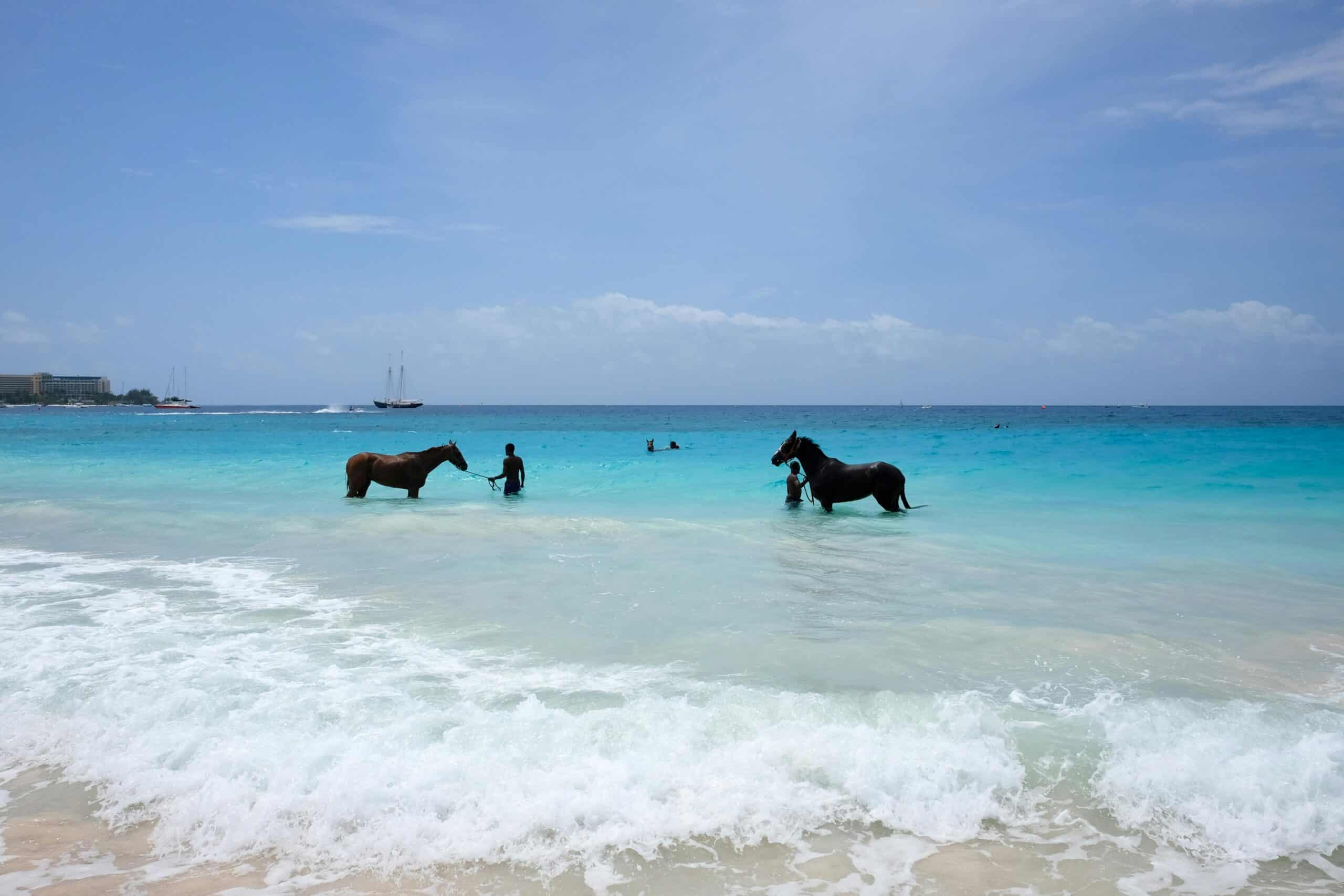
- Harrison’s Cave — a limestone cave with dramatic stalactites and underground streams
→ Don’t miss the zipline and monkey experience; book it here - Carlisle Bay — snorkeling with sea turtles, accessible from the beach
→ Book this popular catamaran tour and snorkel with turtles - St. Nicholas Abbey — historic plantation house and rum distillery; one of the best tours on the island
- Crane Beach — stunning elevated beach on the southeast coast, one of the most dramatic in the Caribbean
→ Find fun things to do in Barbados
Where to stay in Barbados
Best for families: The Sandpiper
A family-owned boutique hotel on the west coast — intimate, beautifully designed, and consistently regarded as one of the finest small hotels in the Caribbean. Chic Caribbean-inspired interiors, exceptional dining, and the kind of personalized service that makes a real difference.
🏖️ Secure your stay before the best rooms disappear

Best for luxury lovers: Fairmont Royal Pavilion
A classic Barbados beachfront resort on the Platinum Coast — elegant, impeccably maintained, and set directly on the beach. World-class dining, stunning ocean views, and a refined atmosphere without feeling stiff.
🏖️ See why travelers never want to leave this resort
→ See what’s still available in Barbados for your travel dates (this fills fast)
St. Vincent & the Grenadines (Best for Remote, High-End Escape)
Best for: Travelers who want privacy, sailing, and a more exclusive feel

St. Vincent and the Grenadines doesn’t get direct hurricane hits most years, though indirect effects — strong winds and heavy rain — can occur. What it does get is a level of natural beauty and authenticity that’s increasingly hard to find in the Caribbean. Limited international flight access keeps the crowds manageable, and the islands have developed a following among sailors, yachters, and travelers who specifically want something untouched.
The chain includes 32 islands and cays, with Bequia, Mustique, Mayreau, and the Tobago Cays Marine Park being the standouts. The marine park is genuinely world-class for snorkeling — coral reefs, sea turtles, and crystal-clear visibility. La Soufrière volcano on St. Vincent is a challenging but rewarding hike with panoramic views across the island chain.
Top things to do in St. Vincent and the Grenadines
- Visit the Pirates of the Caribbean film site and see amazing dark view waterfalls
→ Book the trip that avoids the crowds - La Soufrière Volcano hike — demanding, spectacular, not to be missed
→ This is the tour everyone talks about – see why - Bequia — the most accessible Grenadine island; laid-back, beautiful, with excellent sailing culture
- Mustique — celebrity-favorite private island; day trips possible from nearby Bequia
→ Find the best-rated experience for your trip
Where to stay in St. Vincent and the Grenadines
Best boutique hotel: Bequia Beach Hotel
A boutique retreat on Friendship Bay Beach that manages to feel both elegant and genuinely Caribbean. Stylish rooms, excellent food, lush gardens, and a laid-back atmosphere that’s authentic rather than manufactured. A wonderful base for exploring the Grenadines.
🏖️ Upgrade your trip with a stay travelers rave about
Best for exploring the island: Grenadine House
A colonial-era property with harbor views, a well-regarded restaurant serving local cuisine, and comfortable, characterful accommodations. A solid base for exploring the island before heading south through the chain.
🏖️ This resort alone is worth the trip

→See which rooms are still open in St. Vincent and the Grenadines for your dates
Grenada (Best for Lush Scenery + Quiet, Underrated Luxury)
Best for: Travelers who want something more natural, less crowded, and still elevated

Full disclosure: Grenada took a serious hit from Hurricane Ivan in 2004 and felt Hurricane Beryl’s effects in 2024, so it belongs in a different category from the ABC islands in terms of pure storm immunity. That said, Grenada’s historical hurricane strike rate is significantly lower than most of the northern Caribbean, and it remains a far safer bet during hurricane season than Martinique, St. Lucia, or any of the Leeward Islands.
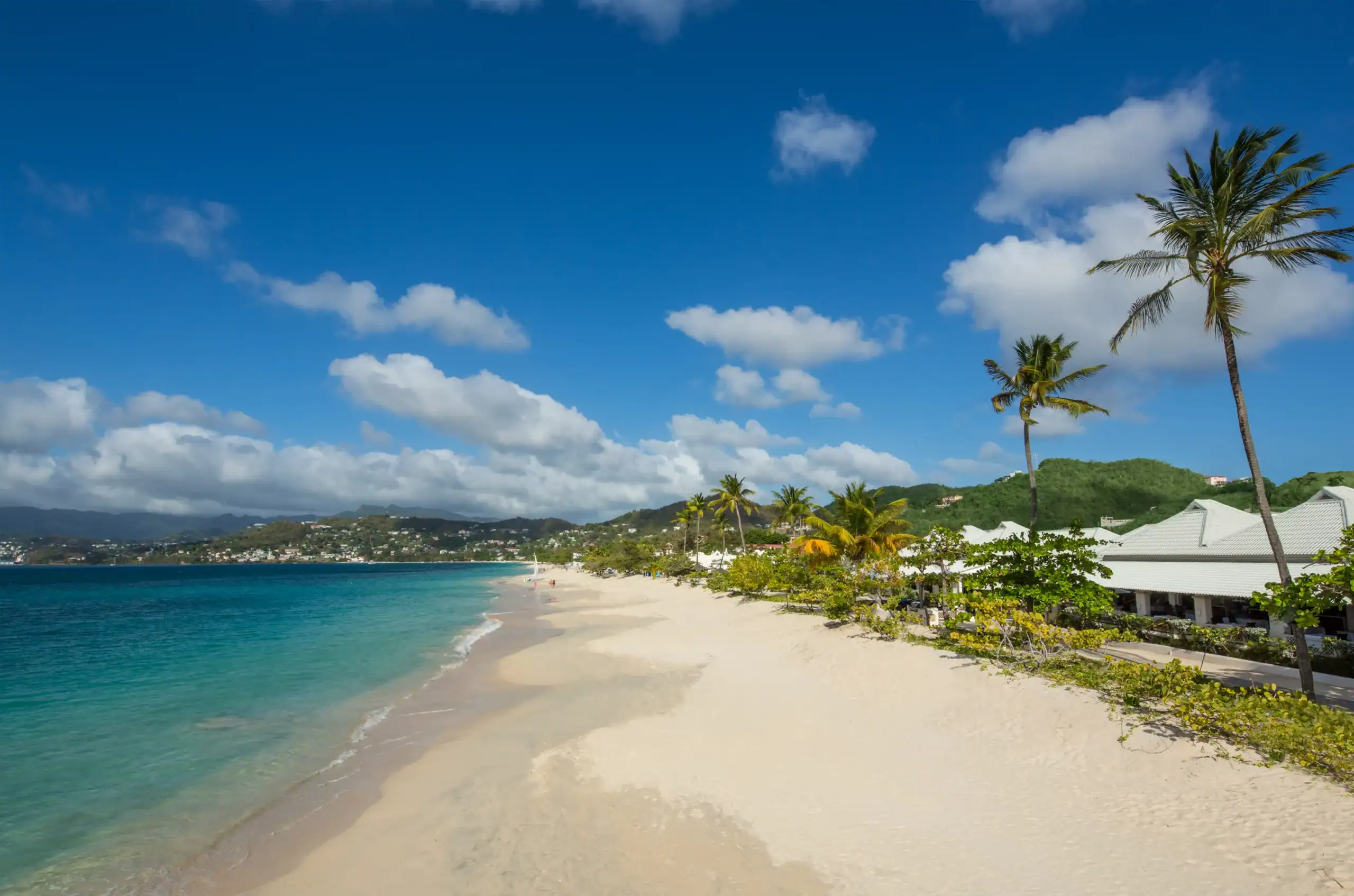
I traveled here years ago with my husband and cannot wait to return. For food travelers specifically, Grenada is exceptional. The island produces nutmeg, cinnamon, cloves, turmeric, and cocoa — it’s called the Spice Island, and the description is apt. The food and spice tours are legitimately fascinating. Grand Anse Beach is gorgeous. And the underwater sculpture park — a collection of concrete sculptures sunk in the harbor — is one of the most unusual and memorable snorkeling experiences in the entire Caribbean.
Top things to do in Grenada
- Grand Anse Beach — a two-mile stretch of powdery white sand, one of the Caribbean’s best
- Underwater Sculpture Park — strange, beautiful, and completely unique; snorkel or dive to explore
→ See which snorkel tours are most popular - Annandale Falls — a lush tropical waterfall accessible on a short hike
- Spice plantation tours — nutmeg, cinnamon, cocoa; worth half a day easily
→ This small group spice and chocolate tour books up fast; don’t miss it
→ Explore available tours for your travel dates
Where to stay in Grenada
Best for families: Spice Island Beach Resort
An all-inclusive family-owned resort right on Grand Anse Beach — spacious suites, superb dining, a world-class spa, and the kind of personal service you’d expect from a property that’s been in the same family for decades. One of the most acclaimed resorts in the Caribbean.
🏖️ Don’t wait too long — this is one of the island’s most-booked hotels
Best for privacy: Calabash Luxury Boutique Hotel
A secluded, family-owned retreat on a private beach — suites and villas (some with private pools), an on-site restaurant by the late Gary Rhodes, and a holistic spa. Intimate, refined, and deeply relaxing.
🏖️ Check rates for your travel dates now
→ Check prices now — availability changes quickly on this island
When to Travel to the Caribbean Without Hurricane Risk
June–Nov = risky generally
ABC islands = safe even then
Peak storms = Aug–Oct
Should You Buy Travel Insurance for Caribbean Travel?
YES, even on these islands. No destination is 100% hurricane-proof, and travel insurance covers a lot more than storms — flight cancellations, medical emergencies, lost luggage, and trip interruptions for any number of reasons. I buy it on every trip, and I’d encourage you to do the same.
Is hurricane season a good time to visit the Caribbean? For the islands listed in this post, absolutely. Hurricane season runs June through November, and the ABC islands in particular offer their usual excellent weather during this period. You’ll also find lower prices and fewer crowds.
Which Caribbean island is completely safe from hurricanes? No island is completely immune, but Aruba, Bonaire, and Curaçao have the lowest historical hurricane strike rates in the Caribbean. Bonaire has never had a direct hurricane landfall on record.
What’s the difference between “outside the hurricane belt” and “hurricane-proof”? The hurricane belt refers to the geographic zone where most Atlantic hurricanes track. Islands outside or at the southern edge of this zone are statistically far less likely to be hit, but weather is not predictable with certainty. Lower risk is not zero risk.
When is the peak of hurricane season? Hurricane activity typically peaks from late August through mid-October, which is when the risk is highest for northern Caribbean islands. The southern Caribbean islands in this post remain relatively calm during this period.
Do I need travel insurance for these islands during hurricane season? Yes. Travel Insurance Master covers trip cancellations, medical emergencies, and weather-related disruptions — I use it and recommend it for every trip. Get a quote here.
More Caribbean Resort Guides
Where to go:
Caribbean Islands Outside the Hurricane Belt: The Safest Places to Book in 2026
Where to Go in the Caribbean This Summer (No Crowds, Better Prices)
Best Caribbean Islands During Hurricane Season (Including August Travel Picks)
The Best Caribbean Islands to Visit for Christmas in 2026
All-inclusives:
The Best Caribbean All-Inclusive Resorts for Families in 2026
Best Caribbean All-Inclusive Resorts for Food Lovers (2026)
The Best All-Inclusive Resorts for Couples in the Caribbean
The Best All-Inclusive Beach Resorts on Each Caribbean Island
For foodies:
Best Caribbean All-Inclusive Resorts for Food Lovers (2026)
Which Caribbean Island Has the Best Food? (Real Picks by Travel Style)
Antigua:
Best Adults-Only Resorts in Antigua for Couples
Aruba:
The Ultimate Guide to Eagle Beach, Aruba
Dominican Republic:
Where to Stay in Punta Cana: Best Resorts and Areas for Every Type of Traveler
BVIs:
British Virgin Islands Travel Guide: Where to Stay, What to Do, and Why You Need Your Passport
Mexico:
Where to Stay in Riviera Maya: Best Areas, Resorts, and What Each Is Known For (2026)
Where to Stay in Cancun: Best Areas, Resorts, and What Each Is Known For (2026)
Turks & Caicos:
Is Grace Bay Beach Worth It? An Honest Guide to Turks and Caicos