
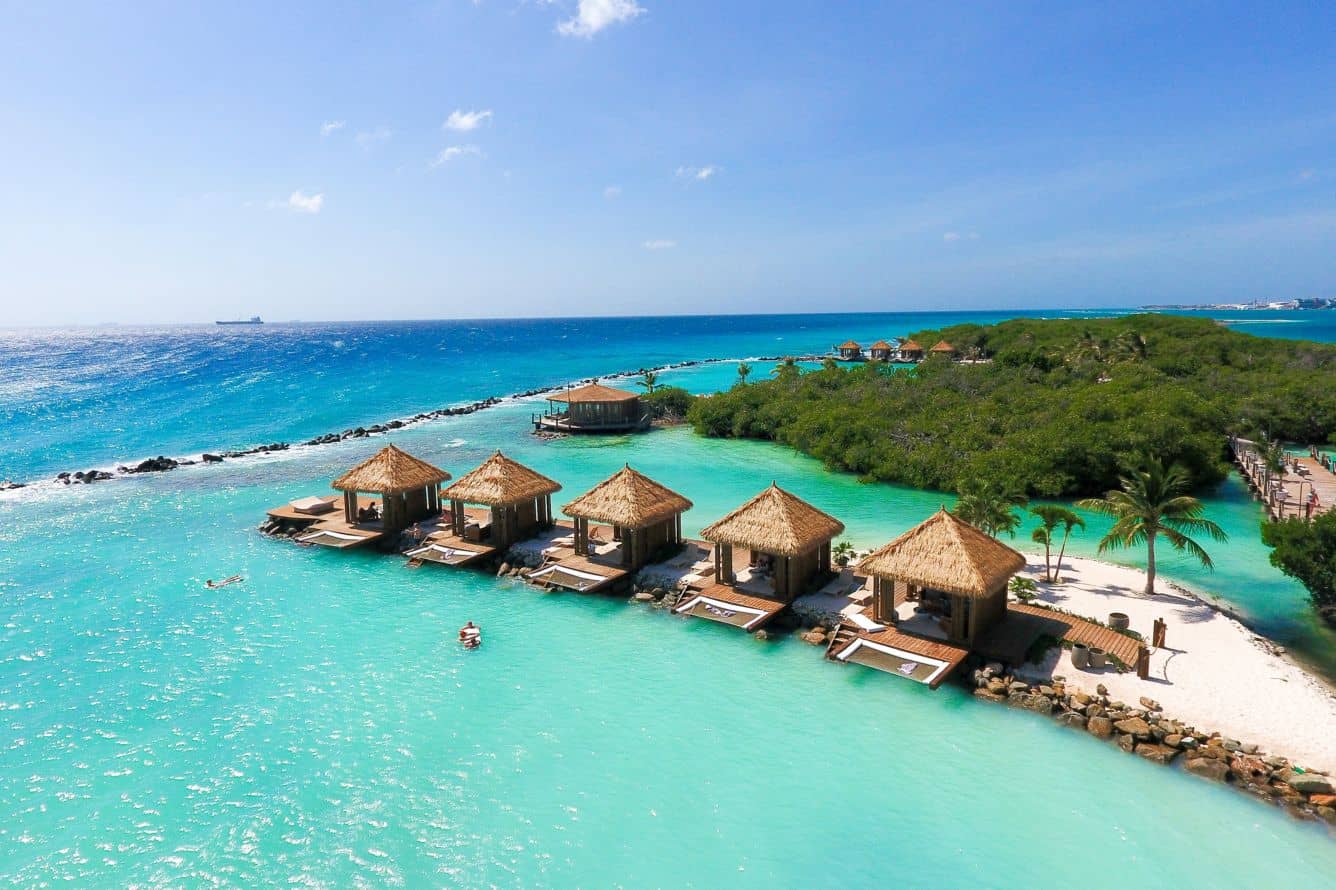
Turks & Caicos vs Aruba: An Honest Comparison
Both destinations appear on every list of the Caribbean’s best. Both deliver genuinely world-class beaches, a strong resort infrastructure, and the kind of clear turquoise water that makes people immediately start planning a return trip. Both are safe, easy to navigate, and well-served by direct flights from major U.S. cities.
And yet they are remarkably different experiences.
After spending considerable time at both destinations, here’s what actually separates them — and how to decide which one belongs on your itinerary.
The Short Answer
Choose Turks & Caicos if you want the most pristine, achingly beautiful beach in the Caribbean and a destination built around quiet luxury and natural perfection.
Choose Aruba if you want guaranteed sunshine, a livelier atmosphere, more to do beyond the beach, and better value for your money.
The Beaches
This is where Turks & Caicos makes its strongest argument. Grace Bay Beach is consistently ranked among the best beaches in the world — and for good reason. The sand is powdery white, the water is an almost unreal shade of turquoise, and the beach stretches for twelve miles with enough space that it never feels crowded even in peak season. If you are choosing a Caribbean destination primarily for the beach experience, it is genuinely difficult to argue against Grace Bay.

Aruba’s Eagle Beach is no slouch. It is wide, calm, uncrowded, and beautiful — one of the better beaches in the Caribbean. Palm Beach, the more developed stretch to the north, is livelier with watersports vendors and beach bars, which some travelers love and others find too busy. The water is consistently calm thanks to Aruba’s location outside the hurricane belt, and the trade winds keep temperatures comfortable even at peak midday heat.
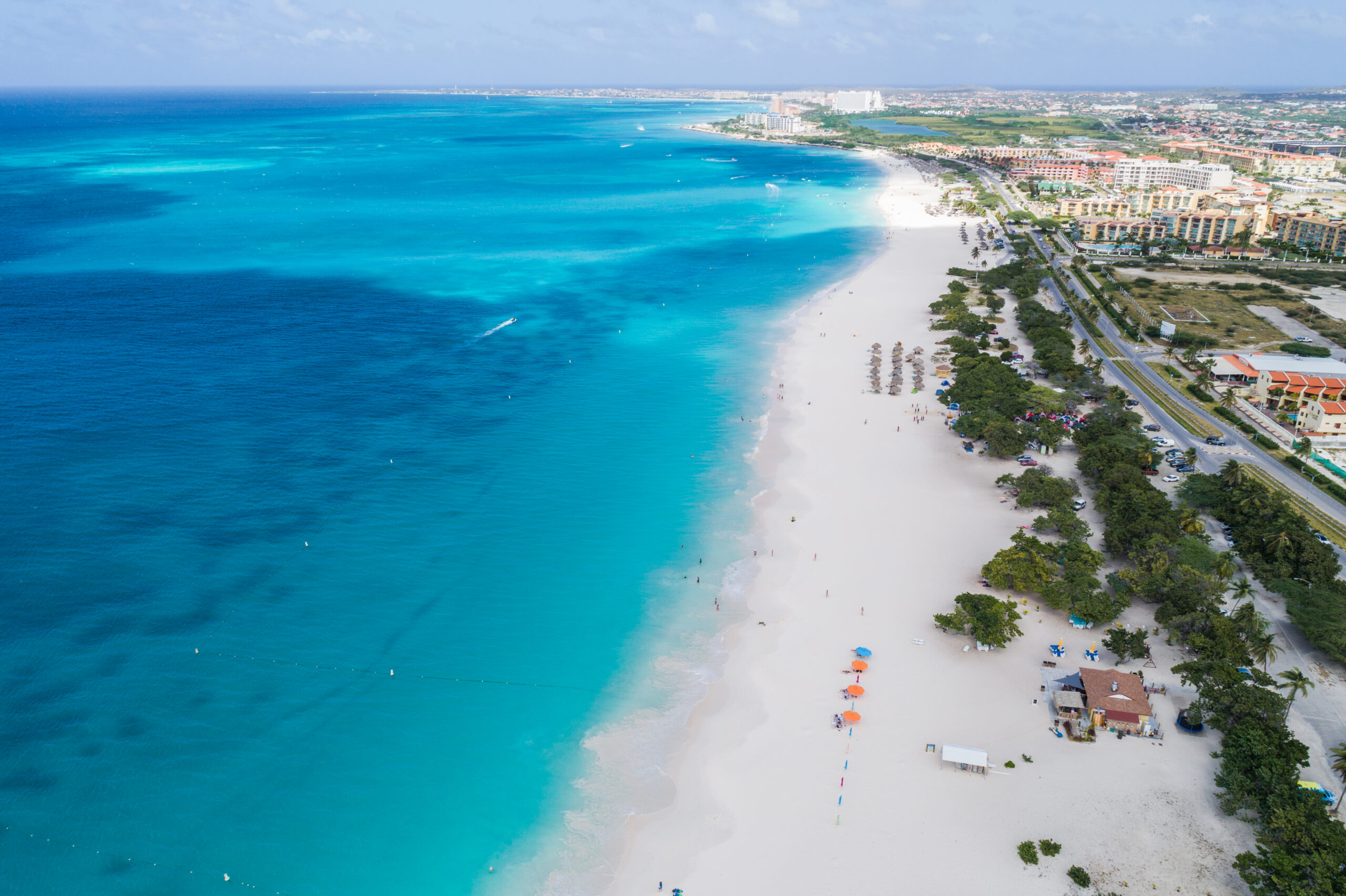
Edge: Turks & Caicos — Grace Bay is in a category of its own.
Weather and Hurricane Risk
This is Aruba’s strongest card and it’s a significant one. Aruba sits well outside the Caribbean hurricane belt, which means it enjoys reliably sunny weather year-round with very low storm risk. If you’re traveling between June and November and want weather certainty, Aruba is one of the safest choices in the entire Caribbean.
Turks & Caicos sits within the hurricane belt and is more exposed to tropical weather systems during hurricane season. The destination has been affected by major storms in recent years. Traveling in peak season (December through April) largely eliminates this concern, but for summer and fall travel Aruba carries significantly less weather risk.
Edge: Aruba for year-round weather reliability.
The Vibe
Turks & Caicos is quiet, refined, and oriented almost entirely toward the beach and the water. The restaurant scene on Providenciales is stronger than most people expect — Grace Bay Road has genuinely good dining options — but the destination doesn’t have a nightlife scene, a cultural center, or much to do beyond water-based activities. That’s precisely what its devotees love about it. It asks nothing of you except to relax.
Aruba is more animated. Oranjestad, the capital, is a walkable, colorful town with Dutch colonial architecture, local restaurants, and a genuine sense of place. The main hotel strip along Palm Beach has a lively bar and restaurant scene. There’s more organized activity — jeep tours across the desert interior, the California Lighthouse, the natural pool at Arikok National Park, Aruba’s famous Friday night street party in San Nicolas. For travelers who want something to do when they’re not on the beach, Aruba delivers options that Turks & Caicos simply doesn’t.
Edge: Aruba for activity and atmosphere beyond the beach.
Food
Turks & Caicos has improved its dining scene significantly in recent years. Grace Bay has a handful of genuinely good restaurants — Coco Bistro, Somewhere Café, and Da Conch Shack for local flavor are worth seeking out. Resort dining at the higher-end properties is strong. But the island’s small size and high cost of importing ingredients means dining out is expensive and the options are limited compared to a larger destination.
Aruba’s food scene reflects its multicultural history — Dutch, Venezuelan, and Caribbean influences all show up on local menus. The local specialty is keshi yena, a stuffed cheese dish with Dutch roots, and fresh seafood is excellent. Oranjestad’s restaurant scene is diverse and more affordable than Turks & Caicos at the mid-range level.
Edge: Aruba for variety and value. Edge: Turks & Caicos for high-end resort dining.
Cost
Turks & Caicos is one of the most expensive destinations in the Caribbean. There is no local currency — the U.S. dollar is used exclusively — and the combination of high-end resort infrastructure and import costs means everything from meals to activities to accommodation carries a premium price. Budget travel is essentially not an option here. This is a luxury destination and prices reflect that.
Aruba is expensive by general Caribbean standards but more accessible than Turks & Caicos. Mid-range hotels and local restaurants make it possible to have a genuinely good trip without spending at the top tier the entire time.
Edge: Aruba for value at every price point.
Getting There
Both destinations are well-served by direct flights from major U.S. East Coast cities. Aruba has more gateway airports and slightly more flight options, particularly from the Midwest and Southeast. Turks & Caicos primarily routes through Providenciales, which has good connections but fewer options overall.
Edge: Aruba for flight accessibility.
Who Should Choose Turks & Caicos
- Travelers for whom the beach is the entire point of the trip
- Couples seeking quiet luxury and seclusion
- Honeymooners who want perfection over activity
- Snorkelers and divers — the reef system here is exceptional
- Anyone willing to pay a premium for an unmatched beach experience
Who Should Choose Aruba
- Travelers who want guaranteed sunshine regardless of when they go
- Anyone traveling June through November who wants weather certainty
- Couples or groups who want more to do beyond the beach
- Travelers who want a lively atmosphere and dining variety
- Anyone working with a budget that doesn’t stretch to Turks & Caicos prices
The Bottom Line
Turks & Caicos is for the traveler who wants to be stopped in their tracks by a beach. Aruba is for the traveler who wants a complete destination experience — great beach included, but with enough else going on to fill a week without feeling like you’ve run out of things to do.
Neither is a wrong answer. They’re just different trips.
Best Resorts to Book
Turks & Caicos:
- Beaches Turks & Caicos — best all-inclusive, ideal for families
- Amanyara — best ultra-luxury
- The Palms Turks & Caicos — best mid-luxury option
- Grace Bay Club — best for couples
Aruba:
- Bucuti & Tara Beach Resort — best adults-only, Eagle Beach
- Amsterdam Manor — best boutique
- Manchebo Beach Resort — best for wellness travelers
- Divi Aruba All Inclusive — best value all-inclusive
Also worth reading:
- The Ultimate Guide to Eagle Beach Aruba
- Is Grace Bay Beach Worth It? An Honest Guide to Turks & Caicos
- Caribbean Islands Outside the Hurricane Belt